The Sensor Street
Uma história gratuita em inglês de nível C1 para estudantes, para ler online em 5 idiomas, com opção de ouvir no app gratuito Storyteller.
When a city pilot turns their lane into a street of sensors, the neighbours argue over privacy and convenience at a meeting that reveals who they all are.
Essa foi a prévia! Ouça a história completa no app gratuito Storyteller. Baixar o app
O áudio não está disponível no momento.
The notice arrives in every letterbox on the same Monday, printed on paper thick enough to suggest that someone at the council has been rewarded for it. Cranmore Lane, a hundred and forty metres of terraced houses, one bakery and one shuttered chemist, has been selected as the city's first "responsive street." Over the next quarter, the lampposts will be fitted with sensors that measure traffic, noise and footfall, and the data will, the notice promises, be "anonymised, aggregated and used to improve everyday life." Sten reads the last phrase twice. He has lived on the lane for nineteen years and cannot think of anything about everyday life that needs improving, except possibly the lamp outside number nine, which has flickered since spring.
O aviso chega a todas as caixas de correio na mesma segunda-feira, impresso em papel grosso o bastante para sugerir que alguém na prefeitura foi premiado por isso. A Cranmore Lane, cento e quarenta metros de casas geminadas, uma padaria e uma farmácia de portas fechadas, foi escolhida como a primeira "rua responsiva" da cidade. Ao longo do próximo trimestre, os postes serão equipados com sensores que medem trânsito, ruído e movimento de pedestres, e os dados, promete o aviso, serão "anonimizados, agregados e usados para melhorar a vida cotidiana". Sten lê a última expressão duas vezes. Ele mora na rua há dezenove anos e não consegue pensar em nada na vida cotidiana que precise de melhoria, exceto talvez o poste em frente ao número nove, que pisca desde a primavera.
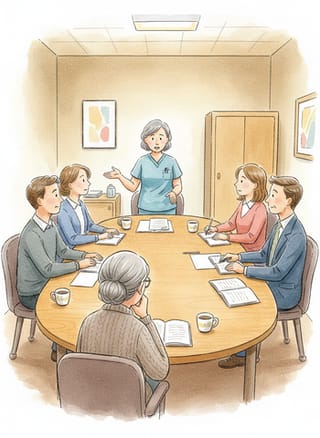
The residents' meeting takes place in the back room of the bakery, where the chairs have been borrowed from a church and nobody agrees on how to arrange them. Rita, who runs the lane's recycling rota with a tenderness bordering on cruelty, is first on her feet. "I want to know who owns the numbers," she says. "Not who collects them. Who owns them." A young man from the council, holding a tablet like a shield, replies that the data belongs to the public, and Rita says that this is precisely what she is afraid of.
A reunião de moradores acontece nos fundos da padaria, onde as cadeiras foram emprestadas de uma igreja e ninguém concorda sobre como arrumá-las. Rita, que administra o rodízio de reciclagem da rua com uma ternura que beira a crueldade, é a primeira a ficar de pé. "Quero saber quem é dono dos números", diz ela. "Não quem coleta. Quem é dono." Um rapaz da prefeitura, segurando um tablet como um escudo, responde que os dados pertencem ao público, e Rita diz que é exatamente disso que ela tem medo.
Mona speaks next, and the room, which has been murmuring, settles. She is eighty-one and lives alone at number nine. "Last February I fell on the ice at half past six in the morning," she says, "and I lay there for forty minutes, on a street I have lived on for fifty years. If a lamp had known I was there, I would have been very glad of a lamp that knew." Nobody answers at once, and in the silence Sten becomes aware of how many of his neighbours are studying their own hands.
Mona fala em seguida, e a sala, que murmurava, se aquieta. Ela tem oitenta e um anos e mora sozinha no número nove. "Em fevereiro passado eu caí no gelo às seis e meia da manhã", diz, "e fiquei ali quarenta minutos, numa rua onde moro há cinquenta anos. Se um poste soubesse que eu estava lá, eu teria ficado muito feliz com um poste que soubesse." Ninguém responde de imediato, e no silêncio Sten percebe quantos vizinhos estão estudando as próprias mãos.
The argument that follows is less about sensors than about the street itself. The baker wants the footfall figures, quite openly, to show his landlord that the shop is busy. A couple with a baby want the noise readings to stay low, and the man who plays the trumpet at number twenty-two would prefer that they did not exist. Somebody asks whether the sensors can hear voices. The council man says no, a little too quickly, and then says he will find out, which is worse.
A discussão que se segue trata menos de sensores do que da própria rua. O padeiro quer os números de movimento, abertamente, para mostrar ao proprietário que a loja é movimentada. Um casal com um bebê quer que as leituras de ruído se mantenham baixas, e o homem que toca trompete no número vinte e dois preferiria que elas não existissem. Alguém pergunta se os sensores conseguem ouvir vozes. O rapaz da prefeitura diz que não, rápido demais, e depois diz que vai se informar, o que é pior.
Sten, who came intending to object, discovers that he cannot say what he objects to. Having spent most of his working life as a surveyor, he knows exactly what it is to measure a place: the odd intimacy of it, the way figures flatten a house into a list. What troubles him is not that the lane will be counted but that it will be counted accurately, and that the count will become the version of the street that matters. If the sensors had arrived twenty years earlier, he thinks, they would have recorded a very different lane, one with children on the pavement until dark, and nobody would have thought to mourn the difference.
Sten, que veio com a intenção de protestar, descobre que não sabe dizer a que se opõe. Tendo passado a maior parte da vida profissional como agrimensor, sabe exatamente o que é medir um lugar: a estranha intimidade disso, o modo como os números achatam uma casa numa lista. O que o incomoda não é a rua ser contada, mas ser contada com exatidão, e a contagem virar a versão da rua que importa. Se os sensores tivessem chegado vinte anos antes, pensa ele, teriam registrado uma rua muito diferente, com crianças na calçada até escurecer, e ninguém teria pensado em lamentar a diferença.
The vote is taken by a show of hands, which seems to him the most old-fashioned and therefore the most reassuring part of the evening. Eleven are in favour, nine against, four abstaining, Rita among them; she explains, scowling, that she wants the data to exist so that she can keep checking it. Sten abstains too, and is surprised by how much the gesture feels like a decision.
A votação é feita por mãos erguidas, o que lhe parece a parte mais antiquada e, por isso, mais tranquilizadora da noite. Onze a favor, nove contra, quatro abstenções, entre elas Rita; ela explica, de cara fechada, que quer que os dados existam para poder continuar conferindo-os. Sten se abstém também, e se surpreende com o quanto o gesto parece uma decisão.
He walks home at ten, past the bakery's dark window, past the lamppost outside number nine, which the council man has already marked with a small yellow sticker. Rarely has he looked at one so carefully. It is an ordinary lamp, flickering a little, utterly indifferent. He stops beneath it, puts his hands in his pockets and stands perfectly still, curious to learn whether a street that is about to count him can tell, in the end, that he is there.
Ele volta para casa às dez, passando pela vitrine escura da padaria, pelo poste em frente ao número nove, que o rapaz da prefeitura já marcou com um pequeno adesivo amarelo. Raramente olhou um poste com tanta atenção. É uma lâmpada comum, piscando um pouco, totalmente indiferente. Ele para embaixo dela, enfia as mãos nos bolsos e fica perfeitamente imóvel, curioso para saber se uma rua que está prestes a contá-lo consegue, no fim das contas, perceber que ele está ali.