The Sensor Street
一个面向英语学习者的免费 C1 级英语故事,可用 7 种语言在线阅读,也可以在免费的 Storyteller 应用中收听。
When a city pilot turns their lane into a street of sensors, the neighbours argue over privacy and convenience at a meeting that reveals who they all are.
试听结束!在免费的 Storyteller 应用中收听完整故事。 下载应用
音频暂时无法播放。
The notice arrives in every letterbox on the same Monday, printed on paper thick enough to suggest that someone at the council has been rewarded for it. Cranmore Lane, a hundred and forty metres of terraced houses, one bakery and one shuttered chemist, has been selected as the city's first "responsive street." Over the next quarter, the lampposts will be fitted with sensors that measure traffic, noise and footfall, and the data will, the notice promises, be "anonymised, aggregated and used to improve everyday life." Sten reads the last phrase twice. He has lived on the lane for nineteen years and cannot think of anything about everyday life that needs improving, except possibly the lamp outside number nine, which has flickered since spring.
通知在同一个星期一送到了每一家的信箱里,印在厚得足以让人觉得议会里有人因此得了奖励的纸上。克兰莫尔巷,一百四十米长的联排房屋,一家面包店,一家关了门的药房,被选为全市第一条“智能响应街道”。在接下来的一个季度里,路灯杆上将装上传感器,测量车流、噪音和人流,通知保证,这些数据将“经过匿名化和汇总,用于改善日常生活”。斯滕把最后那半句读了两遍。他在这条巷子里住了十九年,想不出日常生活里有什么需要改善,除非是九号门外那盏灯,从春天起它就一直闪个不停。
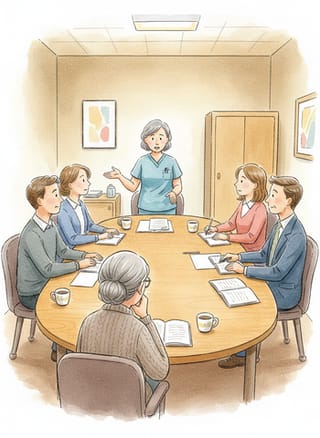
The residents' meeting takes place in the back room of the bakery, where the chairs have been borrowed from a church and nobody agrees on how to arrange them. Rita, who runs the lane's recycling rota with a tenderness bordering on cruelty, is first on her feet. "I want to know who owns the numbers," she says. "Not who collects them. Who owns them." A young man from the council, holding a tablet like a shield, replies that the data belongs to the public, and Rita says that this is precisely what she is afraid of.
居民会议在面包店的后屋举行,椅子是从教堂借来的,对怎么摆放,没有人意见一致。丽塔负责巷子里的垃圾分类轮值表,用一种近乎残酷的温柔来管理它,她第一个站起来。“我想知道,数字归谁所有,”她说,“不是谁来收集,是谁拥有。”一位来自议会的年轻人,把平板电脑像盾牌一样举着,回答说数据属于公众,丽塔说,这恰恰是她担心的。
Mona speaks next, and the room, which has been murmuring, settles. She is eighty-one and lives alone at number nine. "Last February I fell on the ice at half past six in the morning," she says, "and I lay there for forty minutes, on a street I have lived on for fifty years. If a lamp had known I was there, I would have been very glad of a lamp that knew." Nobody answers at once, and in the silence Sten becomes aware of how many of his neighbours are studying their own hands.
接着发言的是莫娜,原本一直嗡嗡低语的屋子安静了下来。她八十一岁,独自住在九号。“去年二月,我早上六点半在冰上摔了一跤,”她说,“在一条我住了五十年的街上,我躺了四十分钟。要是有一盏灯知道我在那里,我会很高兴有一盏知道的灯。”一时没有人回答,在这片寂静里,斯滕察觉到,有多少邻居都在低头端详自己的手。
The argument that follows is less about sensors than about the street itself. The baker wants the footfall figures, quite openly, to show his landlord that the shop is busy. A couple with a baby want the noise readings to stay low, and the man who plays the trumpet at number twenty-two would prefer that they did not exist. Somebody asks whether the sensors can hear voices. The council man says no, a little too quickly, and then says he will find out, which is worse.
随后的争论,与其说是关于传感器,不如说是关于这条街本身。面包店老板想要人流数据,他毫不掩饰,是为了向房东证明店里生意兴隆。带着婴儿的一对夫妇希望噪音读数一直保持在低位,而住在二十二号、吹小号的那个男人,则宁愿它们根本不存在。有人问传感器是不是能听见说话声。议会的那个人说不能,说得有点太快,接着又说他去查一查,这就更糟了。
Sten, who came intending to object, discovers that he cannot say what he objects to. Having spent most of his working life as a surveyor, he knows exactly what it is to measure a place: the odd intimacy of it, the way figures flatten a house into a list. What troubles him is not that the lane will be counted but that it will be counted accurately, and that the count will become the version of the street that matters. If the sensors had arrived twenty years earlier, he thinks, they would have recorded a very different lane, one with children on the pavement until dark, and nobody would have thought to mourn the difference.
斯滕本是抱着反对的念头来的,却发现自己说不出到底反对什么。他一生大部分时间都在做测量员,对测量一个地方是怎么回事,再清楚不过:那种奇特的亲密感,数字把一座房子压成一张清单的方式。让他不安的,并不是这条巷子会被计数,而是它会被精确地计数,而这份计数,会成为这条街真正重要的版本。他想,如果这些传感器早二十年到来,它们记录下来的会是一条很不一样的巷子,孩子们在人行道上玩到天黑,却没有人会想到去惋惜这种差别。
The vote is taken by a show of hands, which seems to him the most old-fashioned and therefore the most reassuring part of the evening. Eleven are in favour, nine against, four abstaining, Rita among them; she explains, scowling, that she wants the data to exist so that she can keep checking it. Sten abstains too, and is surprised by how much the gesture feels like a decision.
表决是举手进行的,在他看来,这是整个晚上最老派的,因此也是最让人安心的部分。十一票赞成,九票反对,四票弃权,丽塔也在其中;她皱着眉解释说,她希望数据存在,这样她就可以一直核查。斯滕也弃了权,没想到这个举动竟那样像一个决定。
He walks home at ten, past the bakery's dark window, past the lamppost outside number nine, which the council man has already marked with a small yellow sticker. Rarely has he looked at one so carefully. It is an ordinary lamp, flickering a little, utterly indifferent. He stops beneath it, puts his hands in his pockets and stands perfectly still, curious to learn whether a street that is about to count him can tell, in the end, that he is there.
十点,他走路回家,经过面包店黑着的橱窗,经过九号门外的那根灯柱,议会那个人已经在上面贴了一张小小的黄色贴纸。他很少这样仔细地端详一根灯柱。那只是一盏普通的灯,微微闪烁,完全漠不关心。他在灯下站住,双手插进口袋,一动不动地站着,好奇地想知道,一条即将给他计数的街,到头来能不能察觉到他在这里。