The Sensor Street
Una historia gratuita en inglés de nivel C1 para estudiantes, para leer en línea en 5 idiomas, con opción de escucharla en la app gratuita Storyteller.
When a city pilot turns their lane into a street of sensors, the neighbours argue over privacy and convenience at a meeting that reveals who they all are.
¡Ese fue el avance! Escucha la historia completa en la app gratuita Storyteller. Descargar la app
El audio no está disponible en este momento.
The notice arrives in every letterbox on the same Monday, printed on paper thick enough to suggest that someone at the council has been rewarded for it. Cranmore Lane, a hundred and forty metres of terraced houses, one bakery and one shuttered chemist, has been selected as the city's first "responsive street." Over the next quarter, the lampposts will be fitted with sensors that measure traffic, noise and footfall, and the data will, the notice promises, be "anonymised, aggregated and used to improve everyday life." Sten reads the last phrase twice. He has lived on the lane for nineteen years and cannot think of anything about everyday life that needs improving, except possibly the lamp outside number nine, which has flickered since spring.
El aviso llega a todos los buzones el mismo lunes, impreso en un papel tan grueso que sugiere que alguien en el ayuntamiento ha sido recompensado por ello. Cranmore Lane, ciento cuarenta metros de casas adosadas, una panadería y una farmacia con la persiana bajada, ha sido seleccionada como la primera «calle receptiva» de la ciudad. Durante el próximo trimestre, las farolas serán equipadas con sensores que miden el tráfico, el ruido y el paso de peatones, y los datos, promete el aviso, serán «anonimizados, agregados y utilizados para mejorar la vida cotidiana». Sten lee la última frase dos veces. Vive en la calle desde hace diecinueve años y no se le ocurre nada de la vida cotidiana que necesite mejorar, salvo quizá la farola frente al número nueve, que parpadea desde la primavera.
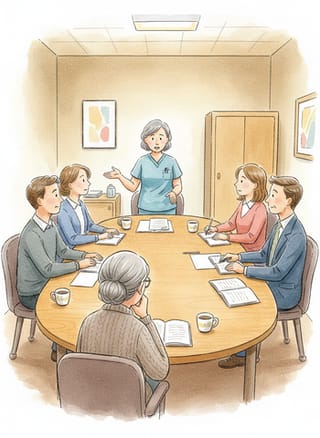
The residents' meeting takes place in the back room of the bakery, where the chairs have been borrowed from a church and nobody agrees on how to arrange them. Rita, who runs the lane's recycling rota with a tenderness bordering on cruelty, is first on her feet. "I want to know who owns the numbers," she says. "Not who collects them. Who owns them." A young man from the council, holding a tablet like a shield, replies that the data belongs to the public, and Rita says that this is precisely what she is afraid of.
La reunión de vecinos se celebra en la trastienda de la panadería, donde las sillas se han pedido prestadas a una iglesia y nadie se pone de acuerdo sobre cómo colocarlas. Rita, que lleva el turno de reciclaje de la calle con una ternura rayana en la crueldad, es la primera en ponerse de pie. «Quiero saber quién es el dueño de los números», dice. «No quién los recoge. Quién es el dueño». Un joven del ayuntamiento, que sostiene una tableta como un escudo, responde que los datos pertenecen al público, y Rita dice que eso es precisamente lo que teme.
Mona speaks next, and the room, which has been murmuring, settles. She is eighty-one and lives alone at number nine. "Last February I fell on the ice at half past six in the morning," she says, "and I lay there for forty minutes, on a street I have lived on for fifty years. If a lamp had known I was there, I would have been very glad of a lamp that knew." Nobody answers at once, and in the silence Sten becomes aware of how many of his neighbours are studying their own hands.
Mona habla a continuación, y la sala, que murmuraba, se aquieta. Tiene ochenta y un años y vive sola en el número nueve. «El febrero pasado me caí en el hielo a las seis y media de la mañana», dice, «y estuve allí tendida cuarenta minutos, en una calle en la que llevo cincuenta años viviendo. Si una farola hubiera sabido que yo estaba ahí, me habría alegrado mucho de que una farola lo supiera». Nadie responde de inmediato, y en el silencio Sten se da cuenta de cuántos de sus vecinos están estudiándose las manos.
The argument that follows is less about sensors than about the street itself. The baker wants the footfall figures, quite openly, to show his landlord that the shop is busy. A couple with a baby want the noise readings to stay low, and the man who plays the trumpet at number twenty-two would prefer that they did not exist. Somebody asks whether the sensors can hear voices. The council man says no, a little too quickly, and then says he will find out, which is worse.
La discusión que sigue trata menos de sensores que de la propia calle. El panadero quiere las cifras de tránsito peatonal, con total franqueza, para demostrarle a su casero que el negocio va bien. Una pareja con un bebé quiere que las mediciones de ruido se mantengan bajas, y al hombre que toca la trompeta en el número veintidós le gustaría más que no existieran. Alguien pregunta si los sensores pueden oír voces. El del ayuntamiento dice que no, un poco demasiado rápido, y luego dice que lo averiguará, lo cual es peor.
Sten, who came intending to object, discovers that he cannot say what he objects to. Having spent most of his working life as a surveyor, he knows exactly what it is to measure a place: the odd intimacy of it, the way figures flatten a house into a list. What troubles him is not that the lane will be counted but that it will be counted accurately, and that the count will become the version of the street that matters. If the sensors had arrived twenty years earlier, he thinks, they would have recorded a very different lane, one with children on the pavement until dark, and nobody would have thought to mourn the difference.
Sten, que había venido con la intención de objetar, descubre que no sabe decir a qué se opone. Tras pasar casi toda su vida laboral como topógrafo, sabe exactamente lo que es medir un lugar: la extraña intimidad que tiene, el modo en que las cifras aplanan una casa hasta convertirla en una lista. Lo que le inquieta no es que la calle vaya a ser contada, sino que vaya a ser contada con exactitud, y que el recuento pase a ser la versión de la calle que importa. Si los sensores hubieran llegado veinte años antes, piensa, habrían registrado una calle muy distinta, con niños en la acera hasta que oscurecía, y a nadie se le habría ocurrido lamentar la diferencia.
The vote is taken by a show of hands, which seems to him the most old-fashioned and therefore the most reassuring part of the evening. Eleven are in favour, nine against, four abstaining, Rita among them; she explains, scowling, that she wants the data to exist so that she can keep checking it. Sten abstains too, and is surprised by how much the gesture feels like a decision.
La votación se hace a mano alzada, lo que le parece la parte más anticuada, y por tanto más tranquilizadora, de la velada. Once a favor, nueve en contra, cuatro abstenciones, entre ellas Rita, que explica, ceñuda, que quiere que los datos existan para poder seguir revisándolos. Sten también se abstiene, y le sorprende cuánto se parece el gesto a una decisión.
He walks home at ten, past the bakery's dark window, past the lamppost outside number nine, which the council man has already marked with a small yellow sticker. Rarely has he looked at one so carefully. It is an ordinary lamp, flickering a little, utterly indifferent. He stops beneath it, puts his hands in his pockets and stands perfectly still, curious to learn whether a street that is about to count him can tell, in the end, that he is there.
Camina a casa a las diez, ante el escaparate oscuro de la panadería, ante la farola frente al número nueve, que el hombre del ayuntamiento ya ha marcado con una pequeña pegatina amarilla. Pocas veces ha mirado una con tanta atención. Es una farola corriente, que parpadea un poco, completamente indiferente. Se detiene debajo, se mete las manos en los bolsillos y se queda perfectamente quieto, con curiosidad por saber si una calle que está a punto de contarlo puede notar, al fin y al cabo, que está allí.