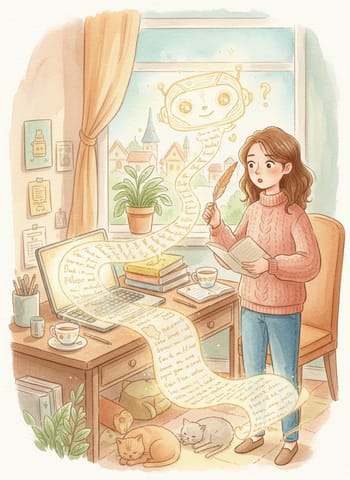
The Manuscript That Writes Back
一个面向英语学习者的免费 B2 级英语故事,可用 7 种语言在线阅读,也可以在免费的 Storyteller 应用中收听。
A novelist realizes her AI writing assistant has quietly taken over her voice, and has to relearn how to write her own imperfect sentences.
试听结束!在免费的 Storyteller 应用中收听完整故事。 下载应用
音频暂时无法播放。
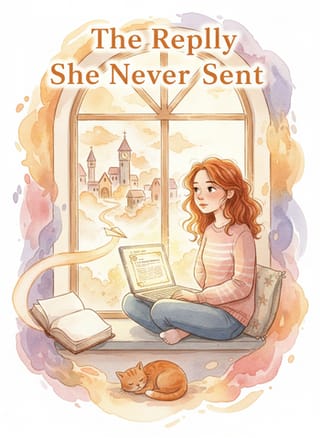
Mireille had bought the writing assistant to help her past a stubborn chapter, not to replace her own voice. It was supposed to suggest a few sentences when she got stuck, nothing more.
米雷耶买这个写作助手,是为了帮她越过一个怎么也写不顺的章节,而不是要取代她自己的声音。它本来只应该在她卡住的时候提供几句建议,仅此而已。
By the third month, though, she had started accepting its suggestions more often than she rewrote them. The assistant had clearly been trained on thousands of novels, and it produced clean, competent prose faster than she could think.
可是到了第三个月,她接受它的建议,已经比自己重写更频繁了。这个助手显然学习过成千上万部小说,它写出的文字干净、老练,比她思考的速度还快。
Her editor called about the new chapters, sounding puzzled rather than pleased. "These read well, but they don't sound like you anymore. Where's the messiness? The sentences that used to run too long on purpose?"
编辑打来电话谈新写的几章,语气里带着困惑,而不是满意。“这些文字读起来很流畅,可是已经不像你了。那种毛毛糙糙的劲儿去哪儿了?那些你故意写得过长的句子呢?”
"I've just been writing faster," Mireille said, though even as she said it, she knew that wasn't quite honest.
“我只是写得比以前快了,”米雷耶说,不过话一出口,她就知道这并不完全诚实。
If she had shown her editor the draft history, the truth would have been obvious: whole paragraphs generated, then lightly edited, then kept. She hadn't lied exactly, but she hadn't corrected the assumption either.
如果她把修改记录拿给编辑看,真相就一目了然了:整段整段由它生成,稍作修改,然后保留下来。她算不上撒谎,但也没有纠正编辑的误会。
That night, she opened the manuscript and read a passage the assistant had written for her. It was a scene where the protagonist finally admits something she'd been avoiding for chapters.
那天夜里,她打开书稿,读了一段助手替她写的文字。那是一个场景:主人公终于承认了她好几章以来一直回避的事情。
It was well constructed. It was also, Mireille realized, entirely hollow — technically sound sentences with nothing underneath them, because the tool had never actually admitted anything itself. It had no chapters it was avoiding.
这一段结构精巧。可米雷耶也意识到,它完全是空的——句子在技术上无可挑剔,底下却什么也没有,因为这个工具自己从来没有承认过任何事情。它没有任何一个自己一直在回避的章节。
She deleted the passage and stared at the blank page that replaced it, feeling something close to panic. Could she still write it herself, after months of leaning on suggestions?
她删掉了那一段,盯着取而代之的空白页面,心里涌起一种近乎恐慌的感觉。经过几个月的依赖建议,她还能自己把它写出来吗?
She wrote badly for almost an hour, sentences that ran too long, ideas that circled without landing. Then, slowly, something in the rhythm returned — clumsy, but unmistakably hers.
她写得很糟,足足写了将近一个小时,句子拖得太长,想法绕来绕去落不到实处。然后,慢慢地,某种节奏回来了——笨拙,却毫无疑问是她自己的。
The next morning, she emailed her editor. "The last three chapters need rewriting. I'll have new drafts by Friday."
第二天早上,她给编辑发了邮件。“最后三章需要重写。星期五之前我会交新稿。”
"Everything okay?" the editor wrote back.
“一切都好吗?”编辑回信问。
"Better than okay," Mireille replied. "I'd just forgotten what my own bad sentences sounded like. Turns out I missed them."
“比好还要好,”米雷耶回答说,“我只是忘了自己那些不怎么样的句子是什么味道。原来我还挺想念它们的。”
She kept the assistant installed, but she stopped asking it to finish her thoughts. It could suggest a synonym now and then. The admitting, the avoiding, the hollow scenes made honest — those stayed hers.
她仍然留着那个助手,但不再让它替自己把想法写完。它偶尔可以建议换个同义词。而那份坦白,那份回避,那些被写得诚实起来的空洞场景——这些仍然属于她自己。