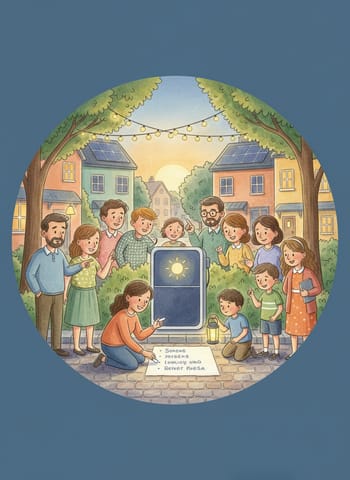
The community battery on Orchard Row was the size of a garden shed. For six years it had been charged by the solar panels on the old bike shop's roof. On ordinary days nobody thought about it. A screen above its door showed a percentage, and the street saved a little money every winter.
果园街上的社区蓄电池有一间花园棚屋那么大。六年来,它一直由旧自行车店屋顶上的太阳能板充电。平常的日子里,没人会想起它。门上方的屏幕显示着一个百分比,而这条街每年冬天都能省下一点钱。
On the first night of the storm, that changed. A fallen tree took down the main line, and the streetlights died. The battery, which had been designed for sharing, became the only electricity for forty households.
暴风雨的第一个夜晚,一切都变了。一棵倒下的树扯断了主线路,路灯全灭了。这块本来为共享而设计的蓄电池,成了四十户人家唯一的电力来源。
By the second morning, thirty-odd people were standing outside the shed, each holding something to plug in. A man carried a cooler full of fish. A teenager held a phone with two percent left. Someone had even brought a drill, although there was no job to use it on.
到了第二天早上,三十多个人站在棚屋外面,每个人手里都拿着要插电的东西。一个男人提着一个装满鱼的保温箱。一个少年举着一部只剩百分之二电量的手机。还有人带来了一把电钻,尽管根本没有什么活儿要用它干。
"I was here first," a woman said. "This is exactly how it will end," said another. "Whoever shouts loudest gets the power." Jovana, whose mother needed a small breathing machine at night, stood very still at the back. She had not raised her voice once, and Cornelia noticed that.
“我先来的,”一位女士说。“结局准会是这样,”另一个人说,“谁嗓门最大,谁就有电。”约瓦娜的母亲夜里需要一台小型呼吸机,她一动不动地站在最后面。她一次都没有提高过嗓门,科妮莉亚注意到了这一点。
Cornelia, who chaired the street's volunteer committee, had been up since five, checking the screen. What she had seen was alarming: sixty-one percent, falling much faster than the clouds would let the sun refill it.
科妮莉亚是这条街志愿者委员会的主席,从五点起就一直在查看屏幕。她看到的情况令人担忧:百分之六十一,而且下降的速度远比阳光重新充电的速度快。
"If we carry on like this, it will be empty by tonight," she said, loudly enough for the front row. "If we were sensible, we would decide in advance who needs it most."
“要是我们就这样下去,到今晚它就空了,”她说,声音大得足够让前排的人听见,“要是我们明智的话,就应该事先决定谁最需要它。”
An argument followed. The man with the fish said that his freezer was a week of food. The teenager said that phones were how help was called. Somebody muttered that it was typical of the committee to want to be in charge.
随之而来的是一场争论。拿鱼的男人说,他的冰柜里放着一个星期的食物。少年说,手机是求救用的。有人嘟囔,委员会就爱一副当家做主的样子,真是典型。
Cornelia took a piece of chalk from her pocket and wrote on the door of the shed, where everyone could read it. First: medical devices, day and night. Second: fridges that hold medicine. Third: phones, ten minutes each, in the order people had arrived. The freezers, she added, would have to wait for the sun, and she was sorry about that.
科妮莉亚从口袋里掏出一支粉笔,写在棚屋的门上,让每个人都看得见。第一:医疗设备,日夜供电。第二:存放药品的冰箱。第三:手机,每人十分钟,按到场的先后顺序。她补充说,冰柜只能等太阳了,她对此很抱歉。
"Who decided this?" someone asked.
“这是谁决定的?”有人问。
"Nobody decided it," Cornelia said. "I'm proposing it. If you can think of a fairer list, I will rub mine out right now."
“没有谁决定,”科妮莉亚说,“这只是我的提议。如果你们能想出更公平的名单,我现在就把我的擦掉。”
Nobody could. There was a silence, and then the man with the fish laughed, tiredly, and carried his cooler to the back of the line.
没人想得出来。一阵沉默之后,拿鱼的男人疲惫地笑了笑,把他的保温箱提到了队伍的最后面。
For three days the list stayed on the door. Jovana's mother's machine ran every night. The medicine fridges were topped up at noon. Phones were charged in ten-minute shifts, and the man with the fish, to everyone's surprise, volunteered to keep time with his watch.
整整三天,名单一直留在门上。约瓦娜母亲的呼吸机每天夜里都在运转。药品冰箱在中午补足了电。手机分成十分钟一班轮流充电,而那个拿鱼的男人,出乎所有人的意料,自愿用他的手表来计时。
On the fourth morning, the main line hummed back to life, and the streetlights blinked on one by one, as if embarrassed. People stood around the shed for a while anyway, unsure what to do with their hands.
第四天早上,主线路嗡的一声恢复了,路灯一盏接一盏地亮起来,仿佛有些不好意思。人们还是在棚屋周围站了一会儿,不知道手该往哪儿放。
Cornelia reached for the chalk to wipe the door, then stopped. Instead, she copied the list onto paper and taped it up between the maintenance notice and a faded flyer for the street party.
科妮莉亚伸手去拿粉笔擦门,却停住了。她把名单抄到了纸上,贴在维修通知和一张褪色的街区聚会传单之间。
When she came back in the afternoon, someone had added a line in pencil at the bottom: Phones, but ask the person behind you first.
下午她回来时,有人在底部用铅笔添了一行:手机,但要先问问你后面的人。