The Manuscript That Writes Back
Una historia gratuita en inglés de nivel B2 para estudiantes, para leer en línea en 3 idiomas, con opción de escucharla en la app gratuita Storyteller.
A novelist realizes her AI writing assistant has quietly taken over her voice, and has to relearn how to write her own imperfect sentences.
¡Ese fue el avance! Escucha la historia completa en la app gratuita Storyteller. Descargar la app
El audio no está disponible en este momento.
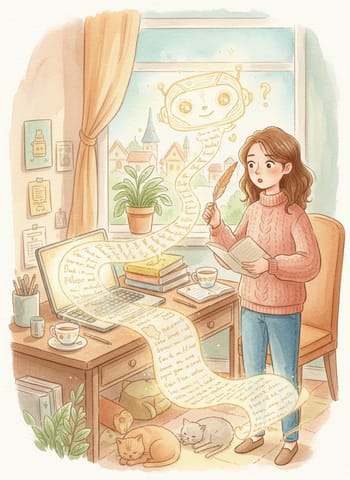
Mireille had bought the writing assistant to help her past a stubborn chapter, not to replace her own voice. It was supposed to suggest a few sentences when she got stuck, nothing more.
Mireille había comprado el asistente de escritura para ayudarla a superar un capítulo difícil, no para reemplazar su propia voz. Se supone que debía sugerir algunas frases cuando se quedaba atascada, nada más.
By the third month, though, she had started accepting its suggestions more often than she rewrote them. The assistant had clearly been trained on thousands of novels, and it produced clean, competent prose faster than she could think.
Sin embargo, para el tercer mes, había empezado a aceptar sus sugerencias con más frecuencia de la que las reescribía. El asistente evidentemente había sido entrenado con miles de novelas, y producía una prosa limpia y competente más rápido de lo que ella podía pensar.
Her editor called about the new chapters, sounding puzzled rather than pleased. "These read well, but they don't sound like you anymore. Where's the messiness? The sentences that used to run too long on purpose?"
Su editora llamó por los nuevos capítulos, con un tono más confundido que satisfecho. «Se leen bien, pero ya no suenan como tú. ¿Dónde está el desorden? ¿Las frases que antes se alargaban a propósito?».
"I've just been writing faster," Mireille said, though even as she said it, she knew that wasn't quite honest.
«Solo he estado escribiendo más rápido», dijo Mireille, aunque incluso al decirlo sabía que eso no era del todo honesto.
If she had shown her editor the draft history, the truth would have been obvious: whole paragraphs generated, then lightly edited, then kept. She hadn't lied exactly, but she hadn't corrected the assumption either.
Si le hubiera mostrado a su editora el historial de borradores, la verdad habría sido evidente: párrafos enteros generados, luego editados ligeramente, y conservados. No había mentido exactamente, pero tampoco había corregido la suposición.
That night, she opened the manuscript and read a passage the assistant had written for her. It was a scene where the protagonist finally admits something she'd been avoiding for chapters.
Esa noche, abrió el manuscrito y leyó un pasaje que el asistente había escrito para ella. Era una escena en la que la protagonista finalmente admitía algo que había estado evitando durante capítulos.
It was well constructed. It was also, Mireille realized, entirely hollow — technically sound sentences with nothing underneath them, because the tool had never actually admitted anything itself. It had no chapters it was avoiding.
Estaba bien construida. También era, se dio cuenta Mireille, completamente hueca: frases técnicamente correctas sin nada debajo, porque la herramienta nunca había admitido nada por sí misma. No tenía capítulos que estuviera evitando.
She deleted the passage and stared at the blank page that replaced it, feeling something close to panic. Could she still write it herself, after months of leaning on suggestions?
Borró el pasaje y se quedó mirando la página en blanco que lo reemplazó, sintiendo algo parecido al pánico. ¿Todavía podía escribirlo ella misma, después de meses de apoyarse en sugerencias?
She wrote badly for almost an hour, sentences that ran too long, ideas that circled without landing. Then, slowly, something in the rhythm returned — clumsy, but unmistakably hers.
Escribió mal durante casi una hora, frases que se alargaban demasiado, ideas que daban vueltas sin llegar a ningún lado. Luego, poco a poco, algo en el ritmo regresó: torpe, pero inconfundiblemente suyo.
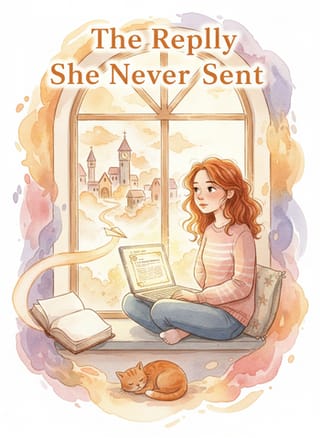
The next morning, she emailed her editor. "The last three chapters need rewriting. I'll have new drafts by Friday."
A la mañana siguiente, le escribió un correo a su editora. «Los últimos tres capítulos necesitan reescribirse. Tendré nuevos borradores para el viernes».
"Everything okay?" the editor wrote back.
«¿Todo bien?», respondió la editora.
"Better than okay," Mireille replied. "I'd just forgotten what my own bad sentences sounded like. Turns out I missed them."
«Mejor que bien», respondió Mireille. «Solo había olvidado cómo sonaban mis propias frases malas. Resulta que las extrañaba».
She kept the assistant installed, but she stopped asking it to finish her thoughts. It could suggest a synonym now and then. The admitting, the avoiding, the hollow scenes made honest — those stayed hers.
Mantuvo el asistente instalado, pero dejó de pedirle que terminara sus pensamientos. Podía sugerir un sinónimo de vez en cuando. Lo de admitir, lo de evitar, las escenas huecas convertidas en honestas: eso seguía siendo suyo.