The Manuscript That Writes Back
Uma história gratuita em inglês de nível B2 para estudantes, para ler online em 4 idiomas, com opção de ouvir no app gratuito Storyteller.
A novelist realizes her AI writing assistant has quietly taken over her voice, and has to relearn how to write her own imperfect sentences.
Essa foi a prévia! Ouça a história completa no app gratuito Storyteller. Baixar o app
O áudio não está disponível no momento.
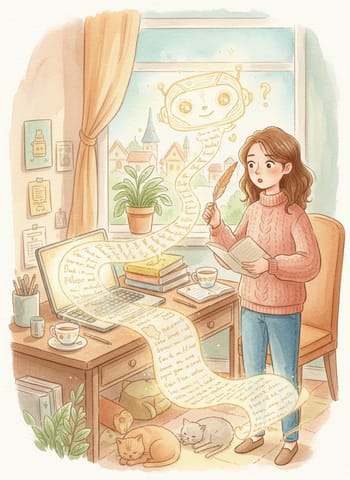
Mireille had bought the writing assistant to help her past a stubborn chapter, not to replace her own voice. It was supposed to suggest a few sentences when she got stuck, nothing more.
Mireille tinha comprado o assistente de escrita para ajudá-la a superar um capítulo difícil, não para substituir sua própria voz. Ele deveria sugerir algumas frases quando ela travasse, nada além disso.
By the third month, though, she had started accepting its suggestions more often than she rewrote them. The assistant had clearly been trained on thousands of novels, and it produced clean, competent prose faster than she could think.
No terceiro mês, porém, ela já tinha começado a aceitar as sugestões dele com mais frequência do que as reescrevia. O assistente claramente tinha sido treinado com milhares de romances, e produzia uma prosa limpa e competente mais rápido do que ela conseguia pensar.
Her editor called about the new chapters, sounding puzzled rather than pleased. "These read well, but they don't sound like you anymore. Where's the messiness? The sentences that used to run too long on purpose?"
Sua editora ligou sobre os novos capítulos, com um tom mais intrigado do que satisfeito. "Estão bem escritos, mas não soam mais como você. Cadê a bagunça? As frases que costumavam se alongar de propósito?"
"I've just been writing faster," Mireille said, though even as she said it, she knew that wasn't quite honest.
"Eu só tenho escrito mais rápido", disse Mireille, embora, ao dizer isso, ela soubesse que aquilo não era bem verdade.
If she had shown her editor the draft history, the truth would have been obvious: whole paragraphs generated, then lightly edited, then kept. She hadn't lied exactly, but she hadn't corrected the assumption either.
Se ela tivesse mostrado à editora o histórico de rascunhos, a verdade seria óbvia: parágrafos inteiros gerados, depois levemente editados, depois mantidos. Ela não tinha mentido exatamente, mas também não tinha corrigido a suposição.
That night, she opened the manuscript and read a passage the assistant had written for her. It was a scene where the protagonist finally admits something she'd been avoiding for chapters.
Naquela noite, ela abriu o manuscrito e leu uma passagem que o assistente tinha escrito para ela. Era uma cena em que a protagonista finalmente admite algo que vinha evitando havia capítulos.
It was well constructed. It was also, Mireille realized, entirely hollow — technically sound sentences with nothing underneath them, because the tool had never actually admitted anything itself. It had no chapters it was avoiding.
Estava bem construída. Também estava, Mireille percebeu, completamente vazia — frases tecnicamente sólidas sem nada por baixo delas, porque a ferramenta nunca tinha admitido nada de verdade. Ela não tinha capítulos que estivesse evitando.
She deleted the passage and stared at the blank page that replaced it, feeling something close to panic. Could she still write it herself, after months of leaning on suggestions?
Ela apagou a passagem e ficou encarando a página em branco que a substituiu, sentindo algo próximo do pânico. Ela ainda conseguiria escrever sozinha, depois de meses se apoiando em sugestões?
She wrote badly for almost an hour, sentences that ran too long, ideas that circled without landing. Then, slowly, something in the rhythm returned — clumsy, but unmistakably hers.
Ela escreveu mal por quase uma hora, frases que se alongavam demais, ideias que giravam sem chegar a lugar nenhum. Então, devagar, algo no ritmo voltou — desajeitado, mas inconfundivelmente dela.
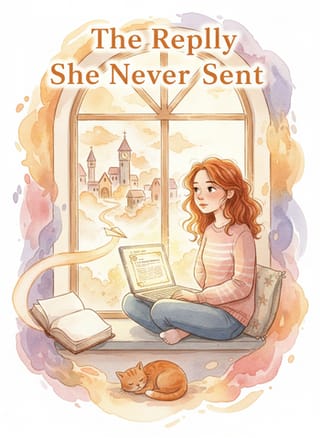
The next morning, she emailed her editor. "The last three chapters need rewriting. I'll have new drafts by Friday."
Na manhã seguinte, ela mandou um e-mail para a editora. "Os últimos três capítulos precisam ser reescritos. Vou ter novos rascunhos até sexta-feira."
"Everything okay?" the editor wrote back.
"Está tudo bem?", a editora respondeu.
"Better than okay," Mireille replied. "I'd just forgotten what my own bad sentences sounded like. Turns out I missed them."
"Melhor que bem", respondeu Mireille. "Eu só tinha esquecido como soavam minhas próprias frases ruins. Descobri que sentia falta delas."
She kept the assistant installed, but she stopped asking it to finish her thoughts. It could suggest a synonym now and then. The admitting, the avoiding, the hollow scenes made honest — those stayed hers.
Ela manteve o assistente instalado, mas parou de pedir que ele terminasse seus pensamentos. Ele podia sugerir um sinônimo de vez em quando. O admitir, o evitar, as cenas vazias tornadas honestas — isso continuava sendo dela.