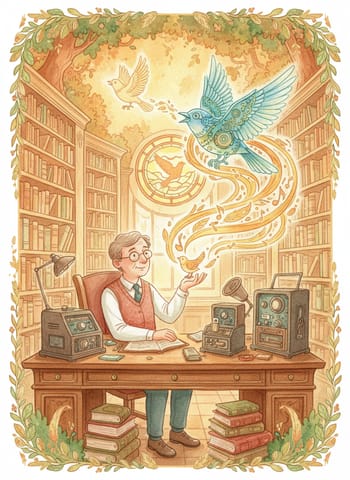
Meike has eleven recordings of the glass-throated reedfinch and no way to make them into one. The longest runs four seconds. The shortest is a single note, caught by accident on a tape meant for frogs. The bird has been extinct for forty years. Meike's job at the sound archive is to give each fragment a number, a date and a microphone, and then to file it in a database that stands in for a shelf.
迈克手里有十一段玻喉苇雀的录音,却没办法把它们变成一首完整的歌。最长的一段只有四秒,最短的只是一个单音,是在一盘本来要录青蛙的磁带上偶然录到的。这种鸟已经灭绝四十年了。迈克在声音档案馆的工作,就是给每一个片段编上号码、标明日期和麦克风,然后把它归入一个数据库——那个数据库就代替了书架。
On Monday the lab upstairs sends her a file. Zuzana, the engineer who leads the project, has trained a model on the eleven fragments and on the songs of the bird's closest living relatives. The result, according to the cover note, is "a plausible full song." It lasts forty-one seconds. Meike listens through headphones with her eyes closed, and by the third phrase she has stopped breathing. It is exactly what she has imagined for twenty years: a rising run of notes, a pause like a held door, a falling answer.
周一,楼上的实验室给她发来一个文件。项目负责人、工程师祖扎娜用这十一个片段,再加上这种鸟现存的近亲的鸣唱,训练了一个模型。据附带的说明写,结果是“一首合理的完整歌曲”,长四十一秒。迈克戴着耳机闭上眼睛听,听到第三个乐句时,她已经屏住了呼吸。这正是她二十年来一直想象的样子:一串上升的音符,一个像被撑住的门一样的停顿,然后是一句下落的应答。
What unsettles her is how little it unsettles her. Nothing in it sounds invented.
让她不安的是,她竟然几乎不觉得不安。这里面没有任何一处听起来是编造的。
"Would it fool you?" Zuzana asks over the phone, hopeful and a little out of breath. "Be honest."
“它能骗过你吗?”祖扎娜在电话里问,满怀希望,还有点喘。“说实话。”
"It would fool anyone. That's not the same as being right."
“它能骗过所有人。但这不等于它是对的。”
"Every fragment we have is in there. The model only fills the gaps."
“我们手上所有的片段都在里面。模型只是把空缺补上。”
"Between what and what?" Meike says. "Four seconds is a fact. Forty-one seconds is a very elaborate opinion."
“在什么和什么之间?”迈克说,“四秒是事实。四十一秒是一个非常精致的观点。”
There is a short silence on the line. Then Zuzana, more gently than Meike expected, explains what the museum wants: a species page with a sound on it, something a schoolchild can press and hear. Nobody, she says, wants to press a button and get four seconds of hiss and a squeak. She does not say that the funding review is in March. She does not need to.
电话那头沉默了一会儿。然后祖扎娜比迈克预想的更温和地解释了博物馆想要什么:一个带声音的物种页面,让小学生按一下就能听到。她说,没有人想按下按钮后只听到四秒嘶嘶声和一声吱叫。她没有说资金评审在三月。她也不必说。
Meike takes off the headphones and sits for a while with the file open on the screen. Rarely has she cared this much about a single word on a form. The archive's record has a field called Type, and the menu beside it offers two choices, and the distance between them is the whole of her profession. Had anyone been listening properly in that marsh, with a good microphone and a little luck, the bird might have given them the entire song. Then she would not be having this conversation. But nobody was, and the song that exists now exists because someone upstairs was patient and clever and kind.
迈克摘下耳机,对着屏幕上打开的文件坐了好一会儿。她很少这样在意表格上的一个词。档案记录里有一个字段叫“类型”,旁边的菜单有两个选项,而这两个选项之间的距离,就是她整个职业的意义。如果当年在那片沼泽里有人认真听,带着好麦克风,再加一点运气,这只鸟也许会把整首歌都唱给他们。那样她现在就不必进行这场对话了。可当时没有人在听,如今存在的这首歌,是因为楼上有人耐心、聪明又善良才存在的。
It would be easy to hate the file. She finds she cannot. It is an act of love, she thinks, performed by something that has never loved anything, and both halves of that sentence are true.
恨这个文件会很容易。她发现自己做不到。她想,这是一种爱的行为,却出自一个从没爱过任何东西的家伙之手,而这句话的两半都是真的。
She selects Reconstruction. In the notes field she types the number of source fragments, their total length in seconds, the date of the training run, and the name of the model, which takes longer than the rest. Then she types, in a smaller line underneath, a sentence about what the file cannot tell us. She saves the record and sits back.
她选了“重建”。在备注栏里,她填上了原始片段的数量、它们的总时长(以秒计)、训练运行的日期,以及模型的名字——这最后一项比其余的加起来还费时间。然后,她在下面另起一行,用较小的字写了一句话,说明这个文件无法告诉我们什么。她保存了记录,往后靠在椅背上。
The evening cleaner has reached her door with his cart. He stops, one hand on the bin, head tilted toward the speakers she has forgotten to turn off.
晚班清洁工推着小车来到她的门口。他停下来,一只手扶着垃圾桶,头偏向她忘了关的音箱。
"Is that the real one?" he asks.
“那是真的吗?”他问。
"Part of it," Meike says, and turns the volume up for him.
“有一部分是。”迈克说着,为他把音量调大了。