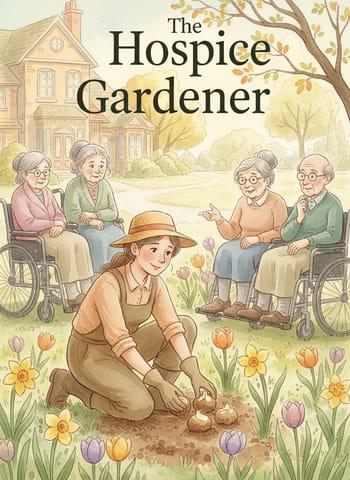
In October the ground at the hospice is cold on the surface and warm underneath. Timea, kneeling in the long bed beneath the east windows, has learned to tell by the smell of it whether the bulbs will take. This morning she has four hundred of them in a crate: daffodils, tulips, and the small blue squills that nobody notices until they have already won. She sets them in rows, pointed end up, a hand's width apart, and does not think about March.
十月里,临终关怀院的土地,表面是凉的,底下是暖的。蒂梅娅跪在东边窗下那条长花坛里,已经学会了凭土的气味判断球根能不能活。今天早上,她有四百个球根装在一只板条箱里:水仙,郁金香,还有那种小小的蓝色绵枣儿,没人注意到它们,等人注意到,它们早已赢了。她把球根一行行摆好,尖头朝上,每个相隔一掌宽,不去想三月。
That is not quite true. She thinks about March a great deal. She has worked here for six years, long enough to know the arithmetic. Most of the people who can see this bed from their pillows today will not be here when it flowers. She plants it regardless, every autumn, with the same slow care, like someone mending a coat for a journey she is not taking. What she has never managed to explain, even to herself, is why the care feels necessary rather than merely kind.
这话不完全对。她其实经常想起三月。她在这里工作了六年,足够明白其中的算术。今天从枕头上看得到这座花坛的人,大多数等不到它开花的时候。可她每年秋天还是照样种,同样缓慢,同样细心,像一个人在缝补一件外套,为一场自己不会踏上的旅程。她一直说不清,哪怕对自己也说不清,为什么这份细心让人觉得是必需的,而不仅仅是一种好意。
The layout of the beds is her one eccentricity. When she was hired, she asked the matron for the keys to the empty rooms. She spent an afternoon lying on each bed in turn, head on every pillow, working out what a person who could not get up would see through each window. The answer was almost nothing: a section of hedge, a drainpipe, the sky. So she redrew the garden from the bottom up. Had she trusted the plans instead, the long bed would have gone beside the car park, where visitors would have admired it. It sits under the east windows because of that afternoon. So is the birch, which she moved herself one terrible weekend, with a borrowed trolley and a great deal of swearing.
花坛的布局,是她唯一的怪癖。刚被雇用时,她向护士长要了那些空房间的钥匙。她花了一个下午,依次躺在每一张床上,把头枕在每一只枕头上,琢磨一个起不了身的人,从每一扇窗里会看到什么。答案几乎是什么也没有:一段树篱,一根落水管,一片天空。于是,她从头重新画了这座花园。如果她相信那些图纸,长花坛本该设在停车场旁边,访客们会在那里欣赏它。它之所以在东边的窗下,全因为那个下午。那棵桦树也是,在一个糟糕的周末,她自己用借来的推车,骂了一大堆脏话,把它挪了过来。
"You've been at that a while," says a voice behind her. It belongs to the woman from the corner room, a retired geography teacher who arrived in August and has the precise, dry diction of someone used to being obeyed by children. She sits in the open French window in her wheelchair, a knitted blanket over her knees, watching Timea's hands.
“你在那儿弄了好一阵子了。”身后有个声音说。那是从拐角房间来的女人,一位退休的地理老师,八月住进来的,说话字正腔圆、干脆利落,是习惯了让孩子们听话的人。她坐在敞开的落地窗边,坐着轮椅,膝上盖着一条针织毯,看着蒂梅娅的手。
For some time she says nothing more. Then: "May I ask you something? You can tell me to mind my own business." Timea sits back on her heels. "Why do you bother? You must know most of us won't see them." The words are not unkind. If anything, they are curious in the way of someone who has been asking the same question of herself for weeks and has finally found somebody else to put it to.
接着她有一会儿没再说话。然后:“我能问你一件事吗?你可以叫我少管闲事。”蒂梅娅坐直身子,蹲坐在脚跟上。“你何苦费这个劲呢?你一定知道,我们大多数人是看不到的。”这话并没有恶意。若说有什么,那就是好奇,像是一个人这些星期一直在问自己同样的问题,终于找到了别人,可以把它抛出去。
Rarely has she been asked so plainly. Timea considers lying. She has a few good answers ready, the kind that appear in leaflets, about legacy and the cycle of things. She can feel how they would sound in this air, which is to say like decorations. "Because it's October," she says instead. "It's what the ground is for in October." She turns a bulb over in her glove. "And because I don't know who will be at the window in March. Nobody does. I'd rather there was something to look at."
很少有人这样直截了当地问过她。蒂梅娅想过撒个谎。她有几个现成的好答案,宣传册上常见的那种,关于传承,关于万物的循环。她能感觉到,这些话在这样的空气里听起来会是什么样子,也就是像装饰品。“因为现在是十月,”她却这样说,“十月里,土地就是用来做这个的。”她在手套里把一个球根翻了个面。“还因为,我不知道三月里谁会坐在窗前。没人知道。我宁愿有点什么可看。”
The woman receives this without comment. Her mouth moves slightly, which may be a smile or the beginning of a cough.
女人听了,没有评论。她的嘴角微微动了一下,可能是一个微笑,也可能是咳嗽的开头。
"Which are those?" she asks, nodding at the crate. Timea tells her: the early daffodils, the mid-season tulips, and a late variety that flowers in the last week of April, if the spring is mean. "Mean springs suit the late ones best," she adds, and wishes at once that she had not.
“那些是什么?”她朝箱子点点头,问。蒂梅娅告诉她:早开的水仙,中期的郁金香,还有一个晚花品种,要是春天刻薄,会在四月的最后一周开花。“刻薄的春天最适合晚花的。”她补了一句,说完立刻后悔了。
"Late, then," says the woman. "Put the late ones under my window." She tucks the blanket tighter. "I've never been on time for anything. It seems only fair to back the one that isn't either."
“那就晚的,”女人说,“把晚的种在我的窗下。”她把毯子掖得更紧了些。“我这辈子没有一件事是准时的。支持一个同样不准时的,似乎才公平。”
Timea does not say that it is a bet she might lose. She takes up the trowel and starts to dig beneath the corner window, a row of small holes, a hand's width apart.
蒂梅娅没有说,这可能是一场会输的赌注。她拿起小铲子,开始在拐角那扇窗下挖土,一排小小的坑,每个相隔一掌宽。