The Hospice Gardener
Uma história gratuita em inglês de nível C1 para estudantes, para ler online em 5 idiomas, com opção de ouvir no app gratuito Storyteller.
A hospice gardener plants spring bulbs she knows many residents will not live to see, until one of them asks her why she bothers.
Essa foi a prévia! Ouça a história completa no app gratuito Storyteller. Baixar o app
O áudio não está disponível no momento.
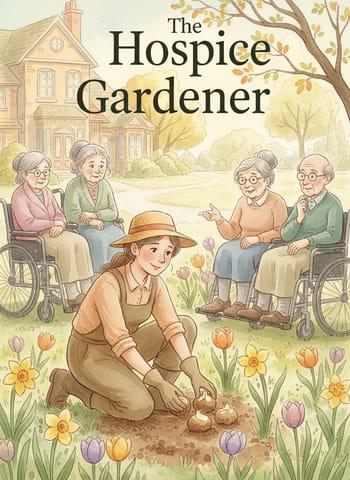
In October the ground at the hospice is cold on the surface and warm underneath. Timea, kneeling in the long bed beneath the east windows, has learned to tell by the smell of it whether the bulbs will take. This morning she has four hundred of them in a crate: daffodils, tulips, and the small blue squills that nobody notices until they have already won. She sets them in rows, pointed end up, a hand's width apart, and does not think about March.
Em outubro, o solo do hospício é frio na superfície e quente por baixo. Timea, ajoelhada no canteiro comprido sob as janelas do leste, aprendeu a saber pelo cheiro se os bulbos vão pegar. Esta manhã ela tem quatrocentos deles numa caixa: narcisos, tulipas e as pequenas cilas azuis que ninguém nota até já terem vencido. Ela os planta em fileiras, com a ponta para cima, a um palmo de distância uns dos outros, e não pensa em março.
That is not quite true. She thinks about March a great deal. She has worked here for six years, long enough to know the arithmetic. Most of the people who can see this bed from their pillows today will not be here when it flowers. She plants it regardless, every autumn, with the same slow care, like someone mending a coat for a journey she is not taking. What she has never managed to explain, even to herself, is why the care feels necessary rather than merely kind.
Isso não é bem verdade. Ela pensa muito em março. Trabalha ali há seis anos, o suficiente para conhecer a aritmética. A maioria das pessoas que hoje enxergam este canteiro do travesseiro não estará aqui quando ele florescer. Mesmo assim ela o planta, todo outono, com o mesmo cuidado lento, como alguém remendando um casaco para uma viagem que não fará. O que nunca conseguiu explicar, nem a si mesma, é por que o cuidado parece necessário, e não apenas gentil.
The layout of the beds is her one eccentricity. When she was hired, she asked the matron for the keys to the empty rooms. She spent an afternoon lying on each bed in turn, head on every pillow, working out what a person who could not get up would see through each window. The answer was almost nothing: a section of hedge, a drainpipe, the sky. So she redrew the garden from the bottom up. Had she trusted the plans instead, the long bed would have gone beside the car park, where visitors would have admired it. It sits under the east windows because of that afternoon. So is the birch, which she moved herself one terrible weekend, with a borrowed trolley and a great deal of swearing.
A disposição dos canteiros é a única excentricidade dela. Quando foi contratada, pediu à enfermeira-chefe as chaves dos quartos vazios. Passou uma tarde deitada em cada cama, uma por vez, com a cabeça em cada travesseiro, descobrindo o que uma pessoa que não conseguia se levantar veria por cada janela. A resposta era quase nada: um trecho de sebe, um cano de descida, o céu. Então redesenhou o jardim do zero. Se tivesse confiado nas plantas, o canteiro comprido teria ido para junto do estacionamento, onde os visitantes o admirariam. Fica sob as janelas do leste por causa daquela tarde. O mesmo vale para a bétula, que ela mesma mudou de lugar num fim de semana terrível, com um carrinho emprestado e muito palavrão.
"You've been at that a while," says a voice behind her. It belongs to the woman from the corner room, a retired geography teacher who arrived in August and has the precise, dry diction of someone used to being obeyed by children. She sits in the open French window in her wheelchair, a knitted blanket over her knees, watching Timea's hands.
"A senhorita está nisso há um bom tempo", diz uma voz atrás dela. Pertence à mulher do quarto da esquina, uma professora de geografia aposentada que chegou em agosto e tem a dicção precisa e seca de quem está acostumada a ser obedecida por crianças. Ela está sentada na porta francesa aberta, em sua cadeira de rodas, com uma manta de tricô sobre os joelhos, observando as mãos de Timea.
For some time she says nothing more. Then: "May I ask you something? You can tell me to mind my own business." Timea sits back on her heels. "Why do you bother? You must know most of us won't see them." The words are not unkind. If anything, they are curious in the way of someone who has been asking the same question of herself for weeks and has finally found somebody else to put it to.
Por algum tempo não diz mais nada. Depois: "Posso lhe perguntar uma coisa? Pode me mandar cuidar da minha vida." Timea se senta sobre os calcanhares. "Por que a senhorita se dá a esse trabalho? Deve saber que a maioria de nós não vai vê-las." As palavras não são cruéis. Se algo, são curiosas, como as de quem vem se fazendo a mesma pergunta há semanas e finalmente achou outra pessoa a quem fazê-la.
Rarely has she been asked so plainly. Timea considers lying. She has a few good answers ready, the kind that appear in leaflets, about legacy and the cycle of things. She can feel how they would sound in this air, which is to say like decorations. "Because it's October," she says instead. "It's what the ground is for in October." She turns a bulb over in her glove. "And because I don't know who will be at the window in March. Nobody does. I'd rather there was something to look at."
Raramente lhe perguntaram algo tão às claras. Timea pensa em mentir. Tem algumas boas respostas prontas, do tipo que aparece em folhetos, sobre legado e o ciclo das coisas. Sente como soariam neste ar, ou seja, como enfeites. "Porque é outubro", diz em vez disso. "É para isso que serve o chão em outubro." Vira um bulbo na luva. "E porque não sei quem estará à janela em março. Ninguém sabe. Prefiro que haja algo para olhar."
The woman receives this without comment. Her mouth moves slightly, which may be a smile or the beginning of a cough.
A mulher recebe isso sem comentário. A boca dela se mexe de leve, o que pode ser um sorriso ou o começo de uma tosse.
"Which are those?" she asks, nodding at the crate. Timea tells her: the early daffodils, the mid-season tulips, and a late variety that flowers in the last week of April, if the spring is mean. "Mean springs suit the late ones best," she adds, and wishes at once that she had not.
"Quais são aqueles?", pergunta, acenando para a caixa. Timea lhe diz: os narcisos precoces, as tulipas de meia estação e uma variedade tardia que floresce na última semana de abril, se a primavera for ruim. "Primaveras ruins combinam melhor com as tardias", acrescenta, e logo deseja não ter dito.
"Late, then," says the woman. "Put the late ones under my window." She tucks the blanket tighter. "I've never been on time for anything. It seems only fair to back the one that isn't either."
"As tardias, então", diz a mulher. "Ponha as tardias debaixo da minha janela." Ela ajeita a manta. "Nunca cheguei na hora a nada. Parece justo apostar naquela que também não chega."
Timea does not say that it is a bet she might lose. She takes up the trowel and starts to dig beneath the corner window, a row of small holes, a hand's width apart.
Timea não diz que é uma aposta que poderia perder. Pega a pá e começa a cavar sob a janela da esquina, uma fileira de pequenos buracos, a um palmo de distância uns dos outros.