The Vineyard Vote
Một truyện tiếng Anh miễn phí trình độ C1 cho người học, đọc trực tuyến bằng 5 ngôn ngữ, có thể nghe qua ứng dụng Storyteller miễn phí.
Three siblings vote on whether to sell their late parents' vineyard, and the brother who stayed holds the deciding vote.
Hết phần nghe thử! Nghe trọn truyện trong ứng dụng Storyteller miễn phí. Tải app
Hiện chưa thể phát audio.
The vote took place in the kitchen, because that was where every important thing in the family had ever been decided, and because nobody had the heart to hold it anywhere else. The buyer's offer lay in the middle of the table, in a thin white envelope, between the salt and a dish of walnuts that no one touched.
Cuộc bỏ phiếu diễn ra trong bếp, vì đó là nơi mọi chuyện quan trọng của gia đình từng được quyết định, và vì chẳng ai nỡ tổ chức ở chỗ nào khác. Lời đề nghị của người mua nằm giữa bàn, trong một phong bì trắng mỏng, giữa lọ muối và một đĩa quả óc chó không ai đụng tới.
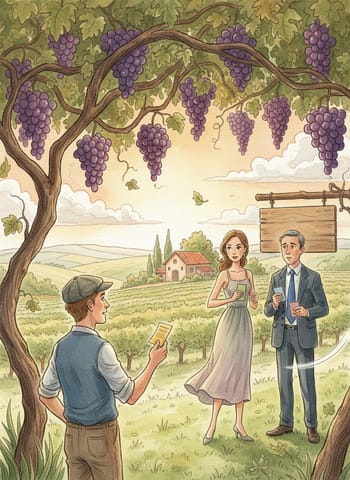
There were three siblings, three votes, and a rule their father had once written on the back of a seed packet: no sale without a majority. Colette had driven six hours to be there and had not taken off her coat. Bruno, the youngest, sat with his chair tipped back and his arms folded, as he had at every family argument since the age of twelve. Morten sat at the end nearest the stove, in the place that had been his mother's, with soil still under his fingernails.
Có ba anh chị em, ba lá phiếu, và một quy tắc cha họ từng viết ở mặt sau một gói hạt giống: không bán nếu không có đa số. Colette đã lái xe sáu tiếng đến đây và chưa cởi áo khoác. Bruno, út nhất, ngồi ngả ghế ra sau, hai tay khoanh, như nó vẫn làm trong mọi cuộc tranh cãi gia đình từ năm mười hai tuổi. Morten ngồi ở đầu bàn gần bếp lò, ở chỗ của mẹ anh ngày trước, đất vẫn còn dưới móng tay.
Morten was the one who had stayed. While the others built lives in the cities, he had pruned the rows each winter, mended the press, and driven the grapes to the cooperative in a truck whose gearbox had to be argued with. Nobody had ever asked whether he wanted to. It had simply been assumed, the way weather is assumed, and he had never found a convenient moment to say otherwise.
Morten là người đã ở lại. Trong khi những người khác dựng cuộc đời ở thành phố, anh tỉa các hàng nho mỗi mùa đông, sửa máy ép, và chở nho đến hợp tác xã trên chiếc xe tải có hộp số phải cãi lý mới chịu chạy. Chưa ai từng hỏi anh có muốn không. Chuyện ấy cứ thế được mặc nhiên coi là đương nhiên, như thời tiết, và anh chưa bao giờ tìm được lúc thuận tiện để nói khác đi.
Their father had believed that people shout what they feel and write what they think, so they voted on scraps torn from the notepad by the phone. Colette's said SELL. Bruno's said KEEP. Both of them turned toward Morten, and the old refrigerator hummed into the silence.
Cha họ từng tin rằng người ta hét lên điều mình cảm và viết ra điều mình nghĩ, nên họ bỏ phiếu trên những mẩu giấy xé từ tập giấy cạnh điện thoại. Mẩu của Colette ghi BÁN. Mẩu của Bruno ghi GIỮ. Cả hai cùng quay về phía Morten, và chiếc tủ lạnh cũ ro ro vào khoảng lặng.
"You'll vote keep," Bruno said. "You always do what Dad would have done."
"Anh sẽ bỏ giữ," Bruno nói. "Anh lúc nào cũng làm điều bố sẽ làm."
"I stayed because no one else was going to," Morten said. "That's not the same thing."
"Anh ở lại vì không ai khác sẽ ở lại," Morten nói. "Đó không phải một chuyện."
"Nobody made you."
"Có ai bắt anh đâu."
"Nobody asked me either. Not once, in sixteen years."
"Cũng chẳng ai hỏi anh. Chưa một lần, trong mười sáu năm."
Colette put both palms flat on the table. "And who do you think did the accounts every January, Bruno? On the phone, from a hotel room, for sixteen years, while you were finding yourself?"
Colette đặt cả hai lòng bàn tay phẳng lên bàn. "Thế em nghĩ ai làm sổ sách mỗi tháng Giêng, Bruno? Qua điện thoại, từ phòng khách sạn, suốt mười sáu năm, trong lúc em đi tìm chính mình?"
"That's not fair."
"Thế là không công bằng."
"It isn't," she said. "None of it is." She looked at Morten, and her voice dropped. "I voted sell because your knees are finished and you'll never say so. Somebody had to say it for you."
"Không," chị nói. "Chẳng điều nào trong chuyện này công bằng cả." Chị nhìn Morten, và giọng chị hạ xuống. "Chị bỏ bán vì đầu gối em hỏng hết rồi mà em sẽ chẳng bao giờ nói. Phải có người nói thay em."
Never once had either of them asked about his knees. Morten had assumed that nobody had noticed the way he took the cellar steps, one at a time, with a hand on the wall. If either of them had asked him at forty, he thought, he might have answered honestly, and the whole conversation might have happened a decade earlier and in a kinder voice.
Chưa một lần nào cả hai hỏi về đầu gối anh. Morten đã tưởng rằng chẳng ai để ý cách anh bước xuống bậc hầm rượu, từng bước một, một tay vịn tường. Nếu có ai hỏi anh năm bốn mươi tuổi, anh nghĩ, có lẽ anh đã trả lời thật lòng, và cả cuộc trò chuyện này có thể đã diễn ra từ một thập kỷ trước và bằng một giọng tử tế hơn.
"And I voted keep," Bruno said, to the walnuts, "because I can't stand being the one who left and then let it go."
"Còn em bỏ giữ," Bruno nói, với đĩa óc chó, "vì em không chịu nổi việc là người đã bỏ đi rồi lại để nó mất."
Turning his own scrap of paper over in his hands, Morten understood that it was not the vineyard he had been defending all those years but the right to have been asked. Now, at last, he was being asked, and the question was heavier than he had imagined. The pencil lay beside the dish. Outside, the last leaves on the old vines had gone the colour of rust, and the rows ran down the slope in the failing light as they had every autumn of his life.
Xoay mẩu giấy của mình trong tay, Morten hiểu rằng suốt những năm ấy anh bảo vệ không phải vườn nho mà là quyền được hỏi. Giờ đây, cuối cùng, anh đang được hỏi, và câu hỏi nặng hơn anh tưởng. Cây bút chì nằm cạnh đĩa. Bên ngoài, những chiếc lá cuối cùng trên các gốc nho già đã chuyển màu gỉ sắt, và các hàng nho chạy xuống sườn dốc trong ánh sáng tàn, như mỗi mùa thu của đời anh.
He wrote something short and folded the paper twice. Then he stood, took the cellar key from the nail beside the door, and held it up.
Anh viết một điều ngắn và gấp tờ giấy hai lần. Rồi anh đứng dậy, lấy chìa khóa hầm rượu từ cái đinh cạnh cửa và giơ lên.
"Before I read this," he said, "come and see what's in the barrels. Both of you."
"Trước khi anh đọc cái này," anh nói, "ra xem trong các thùng có gì đã. Cả hai đứa."
"That isn't how a vote works," Colette said.
"Bỏ phiếu đâu có làm thế," Colette nói.
"It's how this one does."
"Cuộc này thì làm thế."
He opened the door, and the cold breath of the cellar rose to meet him, smelling of stone and sweet fermenting must. Halfway down the steps, with one hand on the wall, he heard two chairs scrape back behind him.
Anh mở cửa, và hơi thở lạnh của hầm rượu dâng lên đón anh, mang mùi đá và nước nho đang lên men ngọt ngào. Xuống nửa chừng bậc thang, một tay vịn tường, anh nghe hai chiếc ghế được kéo lùi phía sau.