The vote took place in the kitchen, because that was where every important thing in the family had ever been decided, and because nobody had the heart to hold it anywhere else. The buyer's offer lay in the middle of the table, in a thin white envelope, between the salt and a dish of walnuts that no one touched.
投票在厨房里进行,因为家里每一件重要的事向来都是在这里定的,也因为谁都不忍心换个别的地方。买家的报价放在桌子中央,装在一只薄薄的白信封里,旁边是盐罐和一碟没人碰的核桃。
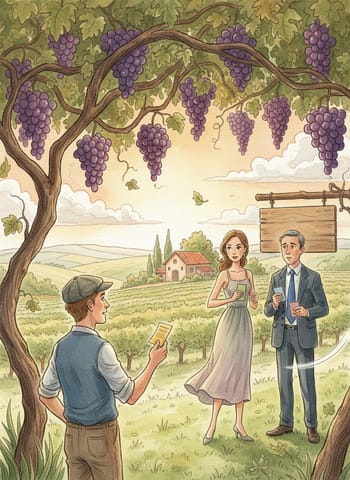
There were three siblings, three votes, and a rule their father had once written on the back of a seed packet: no sale without a majority. Colette had driven six hours to be there and had not taken off her coat. Bruno, the youngest, sat with his chair tipped back and his arms folded, as he had at every family argument since the age of twelve. Morten sat at the end nearest the stove, in the place that had been his mother's, with soil still under his fingernails.
兄妹三人,三票,还有一条父亲曾经写在种子袋背面的规矩:没有多数同意,不得出售。科莱特开了六个小时的车赶回来,连外套都没脱。最小的布鲁诺把椅子向后仰着,双臂交叉,十二岁以后每次家里争吵,他都是这副样子。莫滕坐在离炉子最近的那一头,那是他母亲从前的位置,指甲缝里还嵌着泥土。
Morten was the one who had stayed. While the others built lives in the cities, he had pruned the rows each winter, mended the press, and driven the grapes to the cooperative in a truck whose gearbox had to be argued with. Nobody had ever asked whether he wanted to. It had simply been assumed, the way weather is assumed, and he had never found a convenient moment to say otherwise.
莫滕是留下来的那一个。别人在城市里经营各自的生活时,他每个冬天修剪葡萄行,修理压榨机,开着一辆变速箱得跟它讲道理的卡车,把葡萄送到合作社。从来没有人问过他愿不愿意。这一切仿佛只是被默认了,就像天气被默认一样,而他也始终没有找到一个合适的时机说不是这样。
Their father had believed that people shout what they feel and write what they think, so they voted on scraps torn from the notepad by the phone. Colette's said SELL. Bruno's said KEEP. Both of them turned toward Morten, and the old refrigerator hummed into the silence.
父亲相信,人们喊出来的是感受,写下来的才是想法,所以他们把票投在从电话旁的便笺本上撕下的纸条上。科莱特的写着:卖。布鲁诺的写着:留。两个人同时转向莫滕,老冰箱的嗡嗡声在沉默中响了起来。
"You'll vote keep," Bruno said. "You always do what Dad would have done."
“你会投留。”布鲁诺说,“你总是做爸爸会做的事。”
"I stayed because no one else was going to," Morten said. "That's not the same thing."
“我留下来,是因为没有别人愿意留下。”莫滕说,“这不是一回事。”
"Nobody made you."
“又没人逼你。”
"Nobody asked me either. Not once, in sixteen years."
“也没人问过我。一次也没有,十六年里。”
Colette put both palms flat on the table. "And who do you think did the accounts every January, Bruno? On the phone, from a hotel room, for sixteen years, while you were finding yourself?"
科莱特把两只手掌平按在桌上。“那你以为每年一月是谁在做账,布鲁诺?在电话里,在酒店房间里,一做就是十六年,那时候你还在‘寻找自我’。”
"That's not fair."
“这不公平。”
"It isn't," she said. "None of it is." She looked at Morten, and her voice dropped. "I voted sell because your knees are finished and you'll never say so. Somebody had to say it for you."
“是不公平,”她说,“什么都不公平。”她看着莫滕,声音低了下来。“我投卖,是因为你的膝盖已经不行了,你却永远不会说。总得有人替你说出来。”
Never once had either of them asked about his knees. Morten had assumed that nobody had noticed the way he took the cellar steps, one at a time, with a hand on the wall. If either of them had asked him at forty, he thought, he might have answered honestly, and the whole conversation might have happened a decade earlier and in a kinder voice.
他们两个谁都从来没问过他的膝盖。莫滕一直以为没有人注意到自己下地窖台阶的样子,一次一级,一只手扶着墙。他想,如果他们当中有谁在他四十岁时问过他,他也许会老实回答,这场谈话或许早在十年前就发生了,语气也会温和得多。
"And I voted keep," Bruno said, to the walnuts, "because I can't stand being the one who left and then let it go."
“我投留,”布鲁诺对着核桃说,“是因为我受不了自己既是离开的那个人,又是让它散掉的那个人。”
Turning his own scrap of paper over in his hands, Morten understood that it was not the vineyard he had been defending all those years but the right to have been asked. Now, at last, he was being asked, and the question was heavier than he had imagined. The pencil lay beside the dish. Outside, the last leaves on the old vines had gone the colour of rust, and the rows ran down the slope in the failing light as they had every autumn of his life.
莫滕把自己的那张纸条在手里翻来覆去,这才明白,这么多年来,他守护的并不是葡萄园,而是被人问一问的权利。现在,终于有人问他了,而这个问题比他想象的沉重得多。铅笔就放在碟子旁边。窗外,老葡萄藤上最后的叶子已经变成了锈红色,一行行葡萄架顺着山坡向下延伸,在渐暗的天光里,一如他生命中的每一个秋天。
He wrote something short and folded the paper twice. Then he stood, took the cellar key from the nail beside the door, and held it up.
他写了一个简短的字,把纸条对折了两次。然后他站起身,从门边的钉子上取下地窖钥匙,举了起来。
"Before I read this," he said, "come and see what's in the barrels. Both of you."
“在我念这张纸条之前,”他说,“先去看看桶里是什么。你们两个都来。”
"That isn't how a vote works," Colette said.
“投票不是这样的。”科莱特说。
"It's how this one does."
“这一次就是这样的。”
He opened the door, and the cold breath of the cellar rose to meet him, smelling of stone and sweet fermenting must. Halfway down the steps, with one hand on the wall, he heard two chairs scrape back behind him.
他打开门,地窖的寒气迎面升起,带着石头的气味和发酵葡萄汁的甜香。走到台阶一半,一只手扶着墙,他听见身后传来两把椅子向后挪开的声音。