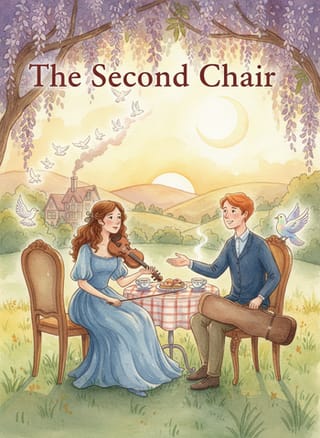
The Memoir Class
Uma história gratuita em inglês de nível C1 para estudantes, para ler online em 5 idiomas, com opção de ouvir no app gratuito Storyteller.
Two retired students in an evening memoir class begin to answer each other's stories, without ever saying so.
Essa foi a prévia! Ouça a história completa no app gratuito Storyteller. Baixar o app
O áudio não está disponível no momento.
The evening memoir class meets on Wednesdays in a room above the library that smells of radiator dust and instant coffee. There are nine students, most of them retired, and a tutor who believes that everyone has at least one story that is truly theirs. Roisin joined in March because her daughter suggested it, and because the house had begun to feel like a very quiet waiting room. She writes about her father's shed, her first job in a factory, a dog she once lost on a beach. Each week at eight o'clock the tutor asks for a volunteer to read aloud, and each week, with a small sigh like a door settling, Roisin raises her hand.
A turma noturna de memórias se reúne às quartas-feiras numa sala acima da biblioteca, que cheira a poeira de aquecedor e café instantâneo. São nove alunos, quase todos aposentados, e um professor que acredita que todo mundo tem pelo menos uma história que seja verdadeiramente sua. Roisin entrou em março porque a filha sugeriu, e porque a casa começara a parecer uma sala de espera muito silenciosa. Ela escreve sobre o galpão do pai, o primeiro emprego numa fábrica, um cachorro que um dia perdeu numa praia. Toda semana, às oito horas, o professor pede um voluntário para ler em voz alta, e toda semana, com um pequeno suspiro como o de uma porta se acomodando, Roisin levanta a mão.
Imre sits two chairs along from her, a detail she would never have remarked on if he did not read so slowly. He is a tall man with a careful voice, and he moves through his pages as if crossing a floor he does not trust. His subjects are modest too: a bus conductor's whistle, a cousin's wedding, one winter spent working in a bakery by a river. Nobody in the class thinks of him as a writer. Neither, it seems, does he.
Imre senta duas cadeiras adiante, um detalhe que ela nunca teria notado se ele não lesse tão devagar. É um homem alto, de voz cuidadosa, e atravessa as páginas como quem cruza um piso em que não confia. Os assuntos dele também são modestos: o apito de um cobrador de ônibus, o casamento de um primo, um inverno trabalhando numa padaria à beira de um rio. Ninguém na turma o considera um escritor. Ele, ao que parece, também não.
It begins, as far as she can tell, in the fifth week. Roisin reads a page about a dance hall with a green floor, where the power failed one January night and a hundred people stood in the dark, laughing, until someone found candles. When it is his turn, Imre reads about the bakery. Only in the last paragraph does he mention that on his night off he went to a dance, and that the lights went out in the middle of a song. He does not say what he did in the dark. He says that he lost a glove.
Começa, até onde ela consegue dizer, na quinta semana. Roisin lê uma página sobre um salão de baile de piso verde, onde a luz acabou numa noite de janeiro e cem pessoas ficaram no escuro, rindo, até alguém achar velas. Quando chega a vez dele, Imre lê sobre a padaria. Só no último parágrafo menciona que, na noite de folga, foi a um baile, e que as luzes se apagaram no meio de uma música. Não diz o que fez no escuro. Diz que perdeu uma luva.
She does not remark on it. Nobody does. The following week she writes about a boy who trod on her feet in the dark and apologised, very politely, to her shoes. Imre studies his own shoes throughout the reading. Seven days later he reads about a girl in a green scarf who laughed at him and told him, kindly, that he was leading with the wrong foot. The class enjoys that one. The tutor says there is a lovely sense of period.
Ela não comenta. Ninguém comenta. Na semana seguinte, escreve sobre um garoto que pisou nos pés dela no escuro e pediu desculpas, muito educadamente, aos sapatos dela. Imre estuda os próprios sapatos durante toda a leitura. Sete dias depois, ele lê sobre uma moça de lenço verde que riu dele e lhe disse, com gentileza, que ele estava conduzindo com o pé errado. A turma gosta dessa. O professor diz que há um belo sentido de época.
Roisin, who has kept a single glove in a drawer for longer than she would care to calculate, writes the next piece about nothing at all, a walk to the post office. It is the dullest thing she has produced in months, and she reads it in a steady voice, looking at no one.
Roisin, que guarda uma única luva numa gaveta há mais tempo do que gostaria de calcular, escreve o texto seguinte sobre nada, uma caminhada até o correio. É a coisa mais sem graça que produz em meses, e ela a lê com voz firme, sem olhar para ninguém.
Having noticed the pattern, neither of them acknowledges it. It would be easy to ask, and it would also, she suspects, be the end of something. If she were twenty, she would have asked on the first night; at seventy-one, she knows that a question like that can ruin a perfectly good story. What interests her now is how the next page will answer this one, and whether he is thinking the same.
Tendo percebido o padrão, nenhum dos dois o reconhece. Seria fácil perguntar, e também seria, ela suspeita, o fim de alguma coisa. Se tivesse vinte anos, teria perguntado na primeira noite; aos setenta e um, sabe que uma pergunta dessas pode estragar uma história perfeitamente boa. O que a interessa agora é como a próxima página vai responder a esta, e se ele está pensando o mesmo.
Tonight, as the class stacks the chairs, Imre stops beside her with his coat over his arm.
Esta noite, enquanto a turma empilha as cadeiras, Imre para ao lado dela com o casaco no braço.
"You gave the dance hall a green floor," he says.
"Você deu um piso verde ao salão de baile", diz ele.
"It was green."
"Era verde."
"Was it? I remember it brown."
"Era? Eu me lembro dele marrom."
"Then one of us has remembered it wrong."
"Então um de nós lembrou errado."
"Or we were at different dances," Imre says.
"Ou estivemos em bailes diferentes", diz Imre.
Neither of them moves. The caretaker turns off the lights bank by bank, until only the sign above the exit is left.
Nenhum dos dois se mexe. O zelador vai apagando as luzes, fileira por fileira, até restar só a placa acima da saída.