The Architect's Return
Cerita bahasa Inggris gratis level C1 untuk pelajar, bisa dibaca online dalam 5 bahasa, dengan pilihan untuk mendengarkannya di aplikasi Storyteller gratis.
An architect visits his prize-winning housing block unannounced and learns from its residents what went wrong and what went right.
Itu cuplikannya! Dengarkan cerita lengkapnya di aplikasi Storyteller gratis. Unduh aplikasi
Audio belum tersedia saat ini.
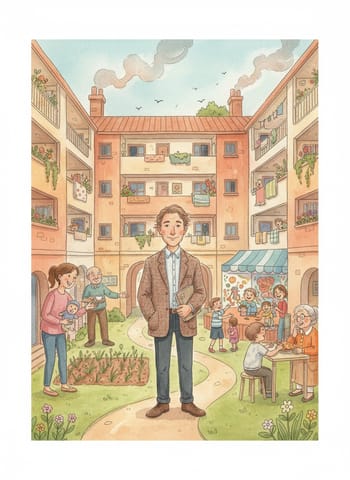
Ottavio has told nobody he is coming. He steps off the bus at the foot of the hill and stands for a while, looking up at the housing block he designed twenty years ago. Five slabs of pale concrete step down the slope like a staircase built for giants. In the photographs that won the prize, nobody was in it. Now there are bicycles chained to every railing, a mattress airing over a balcony, and a washing line strung between two of his carefully proportioned columns.
Ottavio tidak memberi tahu siapa pun bahwa ia datang. Ia turun dari bus di kaki bukit dan berdiri sejenak, menatap ke atas ke blok hunian yang ia rancang dua puluh tahun lalu. Lima lempeng beton pucat menuruni lereng seperti tangga yang dibangun untuk raksasa. Dalam foto-foto yang memenangkan penghargaan, tak ada seorang pun di dalamnya. Kini ada sepeda-sepeda yang dirantai di setiap pagar, sebuah kasur dijemur di balkon, dan tali jemuran terentang di antara dua kolomnya yang diproporsikan dengan cermat.
He climbs the long outdoor stair, the one part he is sure about, and on the third landing a woman in a quilted dressing gown stops him. She takes him for a surveyor, presumably because of the notebook, and she has clearly been waiting years for one. Her name is Farida, she says, and she has lived on this landing since the first week. "The wind," she says. "Come and feel it."
Ia menaiki tangga luar yang panjang, satu-satunya bagian yang ia yakini, dan di pelataran ketiga seorang perempuan berdaster berlapis menghentikannya. Perempuan itu mengiranya petugas survei, mungkin karena buku catatannya, dan ia jelas sudah bertahun-tahun menunggu seorang petugas survei. Namanya Farida, katanya, dan ia tinggal di pelataran ini sejak minggu pertama. "Angin," katanya. "Ayo rasakan."
She leads him to the corner where the walkway turns, and there the air hits his face like a slammed door. Nobody tested for this, she tells him. Every autumn the bins roll across the courtyard unless somebody chocks them with a brick.
Ia membawa Ottavio ke sudut tempat koridor berbelok, dan di sana udara menampar wajahnya seperti pintu yang dibanting. Tak ada yang menguji ini, katanya. Setiap musim gugur tempat sampah bergulir melintasi halaman kecuali seseorang mengganjalnya dengan batu bata.
The complaints come in a steady, well-rehearsed list, like something she has said to a wall many times. The lift is too small for a stretcher. The flat roofs leak at the joints, which he had worried about at the time and been overruled on. The balconies, so narrow in his drawings that he had privately called them gestures, have all been glassed in by their tenants, each in a different shade of plastic. Taking notes in the margin of his sketchbook, Ottavio finds that he is not defending any of it, and this surprises him more than the wind did.
Keluhan-keluhan itu datang dalam daftar yang mantap dan terlatih, seperti sesuatu yang sudah sering ia ucapkan kepada tembok. Lift terlalu kecil untuk tandu. Atap datar bocor di sambungannya, hal yang dulu ia khawatirkan dan pendapatnya ditolak. Balkon-balkonnya, yang dalam gambarnya begitu sempit sampai diam-diam ia sebut gestur belaka, semuanya telah dikaca oleh para penghuni, masing-masing dengan warna plastik berbeda. Sambil mencatat di pinggir buku sketsanya, Ottavio mendapati dirinya tidak membela satu pun, dan itu mengejutkannya lebih daripada angin tadi.
What he had not expected was the landing itself. He drew it wide, wider than the fire regulations required, over the objections of a cost consultant who called the extra width vanity. Now it holds a row of mismatched chairs, three tomato plants in buckets, a card table with a half-finished jigsaw, and two children racing toy cars along the gutter. Rarely has he seen a corridor so firmly refuse to be one.
Yang tak ia duga adalah pelataran itu sendiri. Ia menggambarnya lebar, lebih lebar daripada yang disyaratkan peraturan kebakaran, melawan keberatan seorang konsultan biaya yang menyebut lebar tambahan itu kesombongan. Kini pelataran itu memuat deretan kursi tak serasi, tiga tanaman tomat di ember, meja kartu dengan puzzle yang separuh selesai, dan dua anak yang mengadu mobil mainan menyusuri selokan. Jarang sekali ia melihat sebuah koridor begitu kukuh menolak menjadi koridor.
"That's where we sit," Farida says, as if answering a question he has not asked. "In summer, half the floor is out here."
"Di sinilah kami duduk," kata Farida, seolah menjawab pertanyaan yang tak ia ajukan. "Di musim panas, separuh penghuni lantai ini ada di sini."
She looks at him sideways. "The man who drew this never imagined it, I'd say. If he had, he would have put in a bench."
Ia melirik Ottavio dari samping. "Orang yang menggambar ini tak pernah membayangkannya, kurasa. Kalau dia membayangkannya, dia pasti memasang bangku."
The sentence "I drew this" is ready in Ottavio's mouth, and he finds that it will not stand up next to the leaking roofs and the wind. It was the width, not the prize, that he had come to check, though he would not have admitted that on the bus. He closes the notebook instead.
Kalimat "Saya yang menggambar ini" sudah siap di mulut Ottavio, dan ia mendapati kalimat itu tak bisa berdiri di samping atap yang bocor dan angin tadi. Yang ingin ia periksa adalah lebarnya, bukan penghargaannya, meski ia tak akan mengakuinya di bus. Ia menutup buku catatannya.
"You look tired," Farida says. She drags out a green chair with a cracked seat and sets it beside the card table. "Sit. Everyone does, up here."
"Kamu tampak lelah," kata Farida. Ia menyeret sebuah kursi hijau dengan dudukan retak dan menaruhnya di samping meja kartu. "Duduklah. Semua orang begitu, di atas sini."
"Just for a minute," Ottavio says. He lowers himself into the chair, and, noticing a corner piece lying alone on the concrete beside the jigsaw, he picks it up and finds, on the second try, where it goes.
"Hanya sebentar," kata Ottavio. Ia menurunkan diri ke kursi itu, dan, melihat sepotong puzzle sudut tergeletak sendirian di beton di samping puzzle itu, ia memungutnya dan menemukan, pada percobaan kedua, tempatnya.