What Was Still Good
Una historia gratuita en inglés de nivel C1 para estudiantes, para leer en línea en 3 idiomas, con opción de escucharla en la app gratuita Storyteller.
A donation-shelter worker who reads strangers' lives through the objects they give away finds a carefully folded coat with a stitched name and no explanation attached to it.
¡Ese fue el avance! Escucha la historia completa en la app gratuita Storyteller. Descargar la app
El audio no está disponible en este momento.
Wendell sorted donations on Tuesdays and Thursdays, and after six years at the shelter's intake counter, he had stopped being surprised by what people decided they no longer needed. What still caught him, occasionally, was the order in which things arrived. It was never one item alone, but whole clusters that told you, if you paid attention, exactly what had happened in someone's life that month.
Wendell clasificaba las donaciones los martes y jueves, y después de seis años en el mostrador de recepción del refugio, ya no se sorprendía por lo que la gente decidía que ya no necesitaba. Lo que todavía le llamaba la atención, de vez en cuando, era el orden en que llegaban las cosas. Nunca era un solo objeto, sino conjuntos enteros que te contaban, si prestabas atención, exactamente lo que le había pasado a alguien ese mes.
A wedding dress, a blender, and four picture frames meant a divorce, usually, though the timing varied. A crib, unused bottles, and a stack of parenting books, still in their shrink wrap, meant something he preferred not to guess at and rarely asked about. Work boots, a hard hat, and a thermos arriving together on the same Thursday meant a job gone bad. It had ended badly enough that a person wanted the whole uniform gone, not sold, not saved for spare parts, simply out of the house.
Un vestido de novia, una licuadora y cuatro marcos de fotos significaban, por lo general, un divorcio, aunque el momento variaba. Una cuna, biberones sin usar y una pila de libros de crianza, todavía envueltos en plástico, significaban algo que él prefería no adivinar y casi nunca preguntaba. Unas botas de trabajo, un casco y un termo que llegaban juntos el mismo jueves significaban que un trabajo había terminado mal. Había terminado tan mal que la persona quería que todo el uniforme desapareciera, no venderlo, no guardarlo por si servía de algo, simplemente sacarlo de la casa.
He had a system for sorting, official and unofficial. Officially, items went into three bins: sellable, recyclable, unsellable. Unofficially, Wendell also sorted by what he privately called the object's temperature. Had it clearly been given away in anger, in grief, or in simple tidiness? Most often it was the plainer, more common case: a person finally getting around to a closet they'd meant to clear for years.
Tenía un sistema para clasificar, uno oficial y otro no oficial. Oficialmente, los objetos iban a tres contenedores: vendible, reciclable, no vendible. De manera extraoficial, Wendell también clasificaba según lo que en privado llamaba la temperatura del objeto. ¿Lo habían regalado claramente con enojo, con pena, o solo por poner orden? La mayoría de las veces era el caso más simple y común: alguien que por fin se animaba a vaciar un clóset que llevaba años queriendo vaciar.
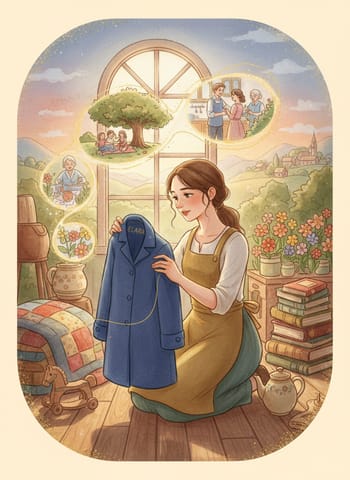
The coat came in on a Tuesday in November, good wool, barely worn, with a name tag stitched inside the collar in careful cursive: R. Okonjo. Had it been dropped in the general bin with everything else, Wendell might never have noticed it at all. Instead it had been folded with unusual care and placed on top, the way a person sets down something they still respect even as they let it go.
El abrigo llegó un martes de noviembre, de buena lana, casi sin usar, con una etiqueta con un nombre cosida dentro del cuello en una cursiva cuidadosa: R. Okonjo. Si lo hubieran dejado caer en el contenedor general con todo lo demás, Wendell tal vez nunca lo habría notado. En cambio, estaba doblado con un cuidado poco común y colocado encima, como alguien deja algo que todavía respeta aunque lo esté dejando ir.
He held it a moment longer than the job required. There was no note, no explanation attached to the stitching, only the coat itself and whatever question it was quietly declining to answer. Wendell had learned, over six years, not to invent stories for donations that hadn't offered him one — the temptation was constant, and almost always wrong.
Lo sostuvo un momento más de lo que el trabajo requería. No había ninguna nota, ninguna explicación junto a la costura, solo el abrigo mismo y la pregunta que se negaba en silencio a responder. A lo largo de seis años, Wendell había aprendido a no inventar historias para las donaciones que no le ofrecían ninguna; la tentación era constante, y casi siempre equivocada.
What he could say, with more confidence, was narrower and truer. Someone had once cared enough about this coat to sew their name into it, and had since decided, for reasons the coat itself would never reveal, that it belonged to someone else's winter now. That was the whole of what the object could honestly tell him, and Wendell had come to think that was not a small thing to know about a stranger.
Lo que sí podía decir, con más seguridad, era algo más limitado y más cierto. Alguna vez, alguien había querido tanto este abrigo como para coserle su nombre, y después había decidido, por razones que el abrigo nunca revelaría, que ahora pertenecía al invierno de otra persona. Eso era todo lo que el objeto podía decirle honestamente, y Wendell había llegado a pensar que no era poca cosa saber eso de un desconocido.
He priced it fairly, hung it on the coat rack near the door, and moved on to a box of mismatched mugs waiting behind it. By Thursday, the coat was gone, sold to someone he never saw and would never think to ask about. Only the name tag stayed with him, R. Okonjo, turning over in his mind on the drive home like a question with no available answer, and no real need for one.
Le puso un precio justo, lo colgó en el perchero cerca de la puerta y siguió con una caja de tazas desparejadas que esperaba detrás. Para el jueves, el abrigo ya no estaba, vendido a alguien que nunca vio y a quien nunca se le ocurriría preguntarle nada. Solo la etiqueta con el nombre se quedó con él, R. Okonjo, dando vueltas en su mente durante el camino a casa como una pregunta sin respuesta disponible, y sin verdadera necesidad de una.