The Fair Split
Una historia gratuita en inglés de nivel C1 para estudiantes, para leer en línea en 3 idiomas, con opción de escucharla en la app gratuita Storyteller.
Two brothers dissolving their shared workshop let an AI mediator calculate a data-based split of ownership, then have to decide what to do about the years of unlogged care it could never account for.
¡Ese fue el avance! Escucha la historia completa en la app gratuita Storyteller. Descargar la app
El audio no está disponible en este momento.
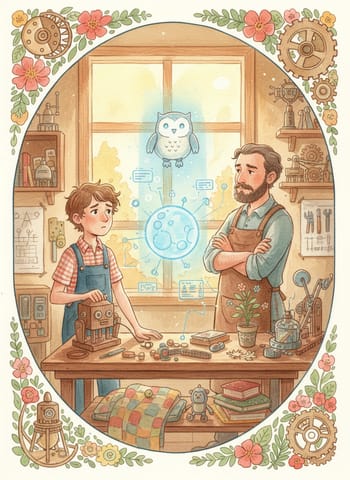
Neither Elias nor Gabriel had wanted a mediator, human or otherwise. It was only after four months of proposing numbers to each other over increasingly clipped phone calls that they agreed, mostly out of exhaustion, to let Ledger decide instead. The platform promised what neither brother could offer the other anymore: a split of the workshop based strictly on contribution. It was calculated from a decade of invoices, logged hours, and client records neither of them could argue with, because neither of them had entered the data by hand.
Ni Elías ni Gabriel habían querido un mediador, humano o de otro tipo. Solo después de cuatro meses de proponerse cifras el uno al otro en llamadas telefónicas cada vez más secas, aceptaron, sobre todo por agotamiento, dejar que Ledger decidiera en su lugar. La plataforma prometía lo que ninguno de los dos hermanos podía ya ofrecerle al otro: una división del taller basada estrictamente en la contribución de cada uno. Se calculaba a partir de una década de facturas, horas registradas y datos de clientes que ninguno de los dos podía discutir, porque ninguno de los dos había introducido esos datos a mano.
The proposal arrived on a Thursday. Sixty-one percent to Elias, thirty-nine to Gabriel — with a page of reasoning behind it. Square footage of workshop time was logged under each brother's name, revenue directly attributable to each, client retention tied to whoever had done the final handoff on a job. It was thorough. It was defensible. Gabriel read it twice and said nothing for long enough that Elias began to wonder. Maybe the number, however fairly derived, had simply confirmed something Gabriel had always suspected about how the two of them were regarded.
La propuesta llegó un jueves. Sesenta y uno por ciento para Elías, treinta y nueve para Gabriel, con una página de razonamiento detrás. Los metros cuadrados de tiempo de taller quedaban registrados bajo el nombre de cada hermano, los ingresos directamente atribuibles a cada uno, la retención de clientes vinculada a quien hubiera hecho la entrega final de un trabajo. Era minucioso. Era defendible. Gabriel la leyó dos veces y no dijo nada durante tanto tiempo que Elías empezó a preguntarse. Tal vez el número, aunque derivado con justicia, simplemente había confirmado algo que Gabriel siempre había sospechado sobre cómo se les consideraba a los dos.
"It's not wrong," Gabriel said finally, "about the hours."
«No está mal», dijo Gabriel finalmente, «en cuanto a las horas».
"But," Elias said, because there was obviously a but coming.
«Pero», dijo Elías, porque era obvio que venía un pero.
"But it has no line for the two years I drove out to Dad's place every Tuesday so you could cover the shop alone on invoicing day. That's not in anyone's ledger. I never logged it because I wasn't doing it for the business."
«Pero no tiene ninguna línea para los dos años en que manejé hasta la casa de papá todos los martes para que tú pudieras hacerte cargo del taller solo el día de facturación. Eso no está en ningún libro de contabilidad. Nunca lo registré porque no lo hacía por el negocio».
Elias hadn't considered, in four months of arguing about percentages, that the unlogged parts of the decade might weigh as much as the logged ones. A decade run by two brothers, it turned out, produces two ledgers — only one of which any software could ever see. Had Gabriel's Tuesdays been billable, they would have shown up in the sixty-one/thirty-nine split as clearly as anything else. They weren't billable. They were, simply, brotherhood, performed quietly enough that even the person performing it hadn't thought to mention it until now.
En cuatro meses de discutir sobre porcentajes, Elías no había considerado que las partes no registradas de la década pudieran pesar tanto como las registradas. Una década dirigida por dos hermanos, resultó, produce dos libros de contabilidad, y cualquier software solo podía ver uno de ellos. Si los martes de Gabriel hubieran sido facturables, habrían aparecido en la división sesenta y uno/treinta y nueve con la misma claridad que cualquier otra cosa. No eran facturables. Eran, simplemente, hermandad, hecha con tanta discreción que ni siquiera la persona que la hacía había pensado en mencionarla hasta ahora.
What the two of them did next, Ledger had no category for at all. Rather than accepting or disputing the number, they sat down together with the report and amended it by hand, in pen. They adjusted the split not by some formula either could defend to a stranger, but by a rough, mutually agreed sense of what four unlogged years were worth against a decade of logged ones. Fifty-five to forty-five, they wrote, and initialed the change themselves. It was the unlogged Tuesdays, not a single line in the invoices, that had actually moved the number.
Para lo que hicieron después, Ledger no tenía ninguna categoría. En lugar de aceptar o disputar el número, se sentaron juntos con el informe y lo enmendaron a mano, con lapicero. Ajustaron la división no según alguna fórmula que ninguno de los dos pudiera defender ante un extraño, sino según un sentido aproximado y mutuamente acordado de cuánto valían cuatro años no registrados frente a una década de años registrados. Cincuenta y cinco a cuarenta y cinco, escribieron, y firmaron el cambio ellos mismos con sus iniciales. Fueron los martes no registrados, y no una sola línea de las facturas, lo que en realidad movió el número.
It was not, by any rigorous standard, a fairer number than the algorithm's. It was, however, the first number either of them had actually agreed to rather than merely accepted. Walking out of the workshop together for what would be the last time as co-owners, both brothers found that distinction mattered more than either had expected it to.
No era, según ningún criterio riguroso, un número más justo que el del algoritmo. Sin embargo, era el primer número con el que cualquiera de los dos realmente estaba de acuerdo, en lugar de simplemente aceptarlo. Al salir juntos del taller por lo que sería la última vez como copropietarios, ambos hermanos descubrieron que esa distinción importaba más de lo que ninguno de los dos había esperado.