The Glass Wristband
一个面向英语学习者的免费 C1 级英语故事,可用 7 种语言在线阅读,也可以在免费的 Storyteller 应用中收听。
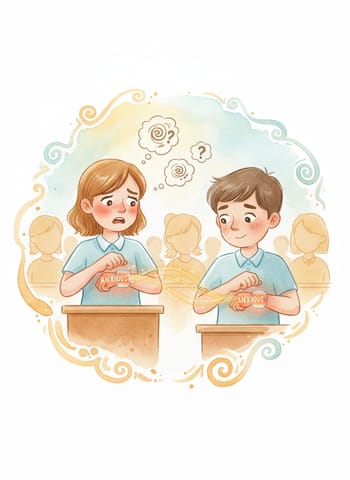
A student mortified when her school's mood-reading wristband publicly flashes "anxious" during a presentation discovers the classmate she was hiding from was reading the exact same word.
试听结束!在免费的 Storyteller 应用中收听完整故事。 下载应用
音频暂时无法播放。
The wristbands had been the assistant principal's idea, pitched at an assembly as a way of building "visible empathy" across the school. Each one displayed a single word on its translucent face — calm, focused, anxious, low — generated from heart rate and skin conductivity, updated every few minutes for anyone nearby to read. Nobody had asked the students whether they wanted their nervous system published to the hallway. Leyla had worn hers for six days before it betrayed her properly.
手环是副校长的主意,他在一次全校集会上提出,说这样能在学校里建立起“看得见的共情”。每只手环的半透明表面上显示一个词——平静、专注、焦虑、低落——由心率和皮肤电导率生成,每隔几分钟更新一次,让附近的任何人都能看到。没有人问过学生们,愿不愿意把自己的神经系统公布给走廊里的所有人。蕾拉戴了六天,它才真正背叛了她。
It happened during her history presentation, in front of thirty people and, more specifically, in front of Finn. He sat two seats from the front, and she had spent most of the semester trying not to visibly care about him. Halfway through her second slide, her band's display flickered from focused to anxious in block letters bright enough to read from the back row. She kept talking. She did not, could not, stop the word from sitting there on her wrist the whole time, announcing exactly what her voice was working so hard to hide.
事情发生在她做历史课展示的时候,台下有三十个人,更要命的是,还有芬恩。他坐在离前排两个座位的地方,而整个学期她大部分时间都在努力不让自己显出在乎他的样子。讲到第二张幻灯片的一半,她手环上的显示从“专注”闪成了“焦虑”,字大而亮,连最后一排都能看清。她继续讲着。她没有,也没办法,让那个词不一直停在她的手腕上,把她的嗓音拼命想要藏住的东西,原原本本地宣告了出来。
What she assumed, walking back to her seat afterward, was that everyone had seen it and drawn the obvious, mortifying conclusion. Either public speaking undid her, which was true — or worse, something about the room itself, about a particular seat in it, had something to do with the spike. She spent the rest of the class rehearsing ways to avoid Finn at lunch.
回座位的路上,她以为每个人都看见了,并且都得出了那个显而易见、让人无地自容的结论。要么是当众演讲会让她崩溃,这倒是真的,要么更糟,这个房间本身,或者房间里某个特定的座位,跟那次跳变有什么关系。那堂课剩下的时间里,她一直在盘算怎样在午饭时躲开芬恩。
She never got the chance to. He found her at her locker instead, holding up his own wrist without being asked. "Mine did the same thing during your slide about the railway strikes," he said. "Anxious, right when you started talking. I have genuinely no idea why my body thought that moment needed adrenaline."
可她根本没有机会躲。他在她的储物柜前找到了她,不等她问,就举起了自己的手腕。“讲到铁路罢工那张幻灯片的时候,我的也这样了,”他说,“就在你开口的时候,变成了焦虑。我真的不知道,我的身体为什么觉得那一刻需要肾上腺素。”
Leyla stared at his wristband, still faintly lit, and then at him, trying to work out whether this was an admission or just an awkward joke that happened to land somewhere true. Not until he added, a little too fast, "I don't actually think it was the railway strikes," did she understand it was the former.
蕾拉盯着他的手环,上面还微微亮着,又看看他,想弄明白这是一种坦白,还是一个碰巧说中了真相的尴尬玩笑。直到他又补了一句,说得有点太快:“我其实不觉得是因为铁路罢工”,她才明白,那是前一种。
Had the wristbands only ever displayed her own nervous system, she would probably have spent the rest of the year hating hers. Instead, standing at her locker while the two devices sat there quietly, honestly, disagreeing with neither of them about what they'd measured, she found the whole mortifying experiment a little easier to forgive.
要是手环只显示她一个人的神经系统,她大概会恨自己那只恨上一整年。可现在,她站在储物柜前,两只手环安安静静地、诚实地待在那里,对它们各自测到的东西,谁也没有反驳谁,她便觉得,这场让人无地自容的实验,似乎也没那么难以原谅了。
"So we're both broken," she said, "at the exact same moment."
“这么说,我们俩是在同一时刻出了毛病,”她说。
"Statistically interesting," Finn said, "is one way to put it."
“‘统计学上很有意思’,”芬恩说,“是一种说法。”
She left her band on for the rest of the day, for once not particularly minding what it might say next.
那天剩下的时间里,她一直戴着手环,第一次不太在意它接下来会显示什么。