The False Gems (Les Faux Bijoux)
A free B2-level English story for language learners, readable online in 7 languages, with an option to listen via the free Storyteller app.
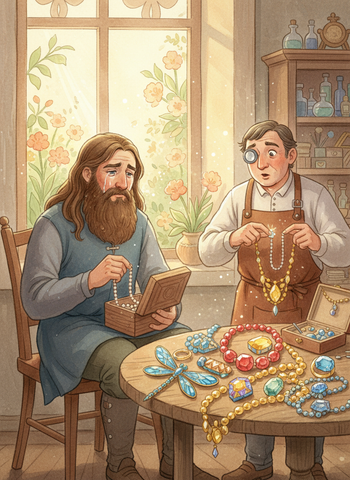
A devoted husband is left grief-stricken when his wife dies suddenly — until a jeweler makes a stunning claim about the "worthless" costume jewelry she loved so much.
Monsieur Lantin had met the young girl at a reception at the house of the second head of his department, and had fallen head over heels in love with her.
朗坦先生是在他所在部门二把手家中的一场招待会上认识这位年轻姑娘的,从此便一见倾心,坠入了情网。
She was the daughter of a provincial tax collector, who had been dead several years. She and her mother came to live in Paris, where the latter, who made the acquaintance of some of the families in her neighborhood, hoped to find a husband for her daughter.
她是一位省城税务官的女儿,父亲已去世多年。她和母亲搬到巴黎居住,母亲结识了周围一些人家,盼着能替女儿寻得一门好亲事。
They had very moderate means, and were honorable, gentle, and quiet.
她们家境算不上宽裕,却为人正派、性情温和、举止安静。
The young girl was a perfect type of the virtuous woman in whose hands every sensible young man dreams of one day intrusting his happiness. Her simple beauty had the charm of angelic modesty, and the imperceptible smile which constantly hovered about the lips seemed to be the reflection of a pure and lovely soul. Her praises resounded on every side. People never tired of repeating: “Happy the man who wins her love! He could not find a better wife.”
这位年轻姑娘正是那种贤淑女子的典范,每个明智的年轻人都梦想有朝一日能把自己的幸福托付到这样一双手上。她那朴素的美,透着一种天使般的谦逊之美,唇边那抹若隐若现的微笑,仿佛正映照着一颗纯洁可爱的心灵。人人都在称赞她。人们总也说不厌:“能赢得她芳心的人真是有福气!再找不出比她更好的妻子了。”
Monsieur Lantin, then chief clerk in the Department of the Interior, enjoyed a snug little salary of three thousand five hundred francs, and he proposed to this model young girl, and was accepted.
朗坦先生当时是内政部的一名科长,领着三千五百法郎的一份安稳薪水,他向这位堪称模范的年轻姑娘求婚,得到了应允。
He was unspeakably happy with her. She governed his household with such clever economy that they seemed to live in luxury. She lavished the most delicate attentions on her husband, coaxed and fondled him; and so great was her charm that six years after their marriage, Monsieur Lantin discovered that he loved his wife even more than during the first days of their honeymoon.
婚后他简直幸福得难以言表。她把家务操持得井井有条,靠着精打细算,日子过得竟像是十分阔绰一般。她把无微不至的关怀都倾注在丈夫身上,又是撒娇又是体贴;她的魅力如此之大,以至于结婚六年之后,朗坦先生发现自己爱妻子甚至比新婚蜜月那会儿还要深。
He found fault with only two of her tastes: Her love for the theatre, and her taste for imitation jewelry. Her friends (the wives of some petty officials) frequently procured for her a box at the theatre, often for the first representations of the new plays; and her husband was obliged to accompany her, whether he wished it or not, to these entertainments which bored him excessively after his day's work at the office.
他对她只有两点不满:她爱看戏,还爱戴仿制首饰。她的一些朋友(都是些小官员的太太)常常替她弄到戏院的包厢票,往往还是新戏首演的场次;丈夫不管愿不愿意,都得陪她去看这些让他在办公室忙碌一天之后感到无比乏味的演出。
After a time, Monsieur Lantin begged his wife to request some lady of her acquaintance to accompany her, and to bring her home after the theatre. She opposed this arrangement, at first; but, after much persuasion, finally consented, to the infinite delight of her husband.
过了一段时间,朗坦先生央求妻子请个熟识的太太陪她去看戏,看完戏再送她回家。她起初不肯答应这个安排;可经不住再三劝说,最后还是同意了,这让丈夫欣喜万分。
Now, with her love for the theatre, came also the desire for ornaments. Her costumes remained as before, simple, in good taste, and always modest; but she soon began to adorn her ears with huge rhinestones, which glittered and sparkled like real diamonds. Around her neck she wore strings of false pearls, on her arms bracelets of imitation gold, and combs set with glass jewels.
如今,随着她对看戏的喜爱,又添了一样爱好,那就是喜欢佩戴饰物。她的衣着依旧朴素,品味不俗,也总是端庄得体;可她渐渐开始在耳边戴上硕大的人造钻石,闪闪发亮,宛如真的钻石一般。脖子上戴着一串串假珍珠,手臂上套着仿金手镯,梳子上也镶嵌着玻璃宝石。
Her husband frequently remonstrated with her, saying:
丈夫常常劝她,说道:
“My dear, as you cannot afford to buy real jewelry, you ought to appear adorned with your beauty and modesty alone, which are the rarest ornaments of your sex.”
“亲爱的,既然你买不起真正的首饰,那就该只用你的美貌和端庄来装点自己,这才是你们女人最难得的饰物。”
But she would smile sweetly, and say:
她却总是甜甜一笑,说道:
“What can I do? I am so fond of jewelry. It is my only weakness. We cannot change our nature.”
“我有什么办法呢?我就是这么喜欢首饰。这是我唯一的毛病。人的天性是改不了的。”
Then she would wind the pearl necklace round her fingers, make the facets of the crystal gems sparkle, and say:
说着她就把那串珍珠项链绕在手指上,让那水晶假宝石的切面闪闪发光,说道:
“Look! are they not lovely? One would swear they were real.”
“你瞧!这难道不漂亮吗?谁看了都要发誓说这是真的呢。”
Monsieur Lantin would then answer, smilingly:
朗坦先生便笑着答道:
“You have bohemian tastes, my dear.”
“亲爱的,你这品味可真是波希米亚式的。”
Sometimes, of an evening, when they were enjoying a tete-a-tete by the fireside, she would place on the tea table the morocco leather box containing the “trash,” as Monsieur Lantin called it. She would examine the false gems with a passionate attention, as though they imparted some deep and secret joy; and she often persisted in passing a necklace around her husband's neck, and, laughing heartily, would exclaim: “How droll you look!” Then she would throw herself into his arms, and kiss him affectionately.
有时到了晚上,两人在炉火旁享受二人世界的时候,她会把那只装着朗坦先生口中所谓“破烂货”的摩洛哥皮盒子放到茶几上。她带着一种近乎痴迷的专注端详那些假宝石,仿佛这些东西能带给她某种深沉而隐秘的欢喜;她还常常执意把一条项链挂到丈夫脖子上,哈哈大笑着嚷道:“你看上去多滑稽呀!”接着便一头扑进他怀里,亲昵地吻他。
One evening, in winter, she had been to the opera, and returned home chilled through and through. The next morning she coughed, and eight days later she died of inflammation of the lungs.
一个冬天的夜晚,她去看了歌剧,回到家时浑身都冻透了。第二天早晨她便咳嗽起来,八天之后,她因肺部炎症去世了。
Monsieur Lantin's despair was so great that his hair became white in one month. He wept unceasingly; his heart was broken as he remembered her smile, her voice, every charm of his dead wife.
朗坦先生悲痛欲绝,以至于一个月之内头发就全白了。他终日以泪洗面,一想起亡妻的笑容、她的声音、她身上的每一分魅力,他的心便碎成了片片。
Time did not assuage his grief. Often, during office hours, while his colleagues were discussing the topics of the day, his eyes would suddenly fill with tears, and he would give vent to his grief in heartrending sobs. Everything in his wife's room remained as it was during her lifetime; all her furniture, even her clothing, being left as it was on the day of her death. Here he was wont to seclude himself daily and think of her who had been his treasure-the joy of his existence.
时间并没能抚平他的哀伤。常常在办公时间里,同事们正谈论着当天的时事,他的眼眶却会忽然盈满泪水,接着便忍不住抽泣起来,悲痛难抑。妻子房间里的一切都原封未动,一如她生前的模样;所有的家具,甚至她的衣物,都还留在她去世那天的样子。他每天都要躲进这个房间,独自思念这位曾是他珍宝、曾是他人生欢乐的女人。
But life soon became a struggle. His income, which, in the hands of his wife, covered all household expenses, was now no longer sufficient for his own immediate wants; and he wondered how she could have managed to buy such excellent wine and the rare delicacies which he could no longer procure with his modest resources.
可日子终究要过下去,渐渐变成了一场挣扎。他的收入原本在妻子手中能应付所有的家用开支,如今却连他自己的日常所需都不够了;他不禁纳闷,妻子当年究竟是怎么置办得起那些上好的美酒和珍馐美味的,如今凭他这点微薄的收入是根本买不起的。
He incurred some debts, and was soon reduced to absolute poverty. One morning, finding himself without a cent in his pocket, he resolved to sell something, and immediately the thought occurred to him of disposing of his wife's paste jewels, for he cherished in his heart a sort of rancor against these “deceptions,” which had always irritated him in the past. The very sight of them spoiled, somewhat, the memory of his lost darling.
他欠下了一些债务,很快便沦落到一贫如洗的地步。一天早晨,他发现自己身上一个子儿也没有了,便下定决心要卖点东西,脑海中立刻浮现出把妻子那些人造首饰处理掉的念头,因为他心底里一直对这些“骗人的玩意儿”怀着几分怨气,这些东西过去总让他心烦。一看见它们,多少也会玷污他对亡妻的美好回忆。
To the last days of her life she had continued to make purchases, bringing home new gems almost every evening, and he turned them over some time before finally deciding to sell the heavy necklace, which she seemed to prefer, and which, he thought, ought to be worth about six or seven francs; for it was of very fine workmanship, though only imitation.
直到临终前的日子,她还一直在添置这些首饰,几乎每天晚上都要带件新的东西回家,他把这些东西翻来覆去看了好一阵子,最后才决定卖掉她似乎最中意的那条沉甸甸的项链,他估摸着,这东西大概能值个六七法郎;毕竟做工十分精细,虽说不过是件仿制品。
He put it in his pocket, and started out in search of what seemed a reliable jeweler's shop. At length he found one, and went in, feeling a little ashamed to expose his misery, and also to offer such a worthless article for sale.
他把项链揣进口袋,动身去找一家看着靠谱的珠宝店。他终于找到一家,走了进去,心里有几分羞愧,一来是不愿露出自己的窘迫,二来是要卖这么件不值钱的东西也觉得难为情。
“Sir,” said he to the merchant, “I would like to know what this is worth.”
“先生,”他对店主说,“我想知道这东西值多少钱。”
The man took the necklace, examined it, called his clerk, and made some remarks in an undertone; he then put the ornament back on the counter, and looked at it from a distance to judge of the effect.
那人拿起项链,仔细端详了一番,又叫来伙计,压低声音说了几句;随后他把这件饰物放回柜台上,退后几步端详着它的效果。
Monsieur Lantin, annoyed at all these ceremonies, was on the point of saying: “Oh! I know well enough it is not worth anything,” when the jeweler said: “Sir, that necklace is worth from twelve to fifteen thousand francs; but I could not buy it, unless you can tell me exactly where it came from.”
朗坦先生被这一套繁文缛节弄得有些恼火,正想开口说:“唉!我心里清楚得很,这东西根本不值什么钱,”这时珠宝商却说道:“先生,这条项链值一万二到一万五千法郎;不过除非您能告诉我它究竟是从哪儿来的,否则我不能收购。”
The widower opened his eyes wide and remained gaping, not comprehending the merchant's meaning. Finally he stammered: “You say—are you sure?” The other replied, drily: “You can try elsewhere and see if any one will offer you more. I consider it worth fifteen thousand at the most. Come back; here, if you cannot do better.”
这位鳏夫瞪大了眼睛,张口结舌,一时没能明白店主话里的意思。末了他结结巴巴地说:“您是说——您确定吗?”对方冷冷地答道:“您不妨到别处去试试,看有没有人肯出更高的价钱。依我看,这东西顶多值一万五千法郎。要是没人出得更高,欢迎再回来找我。”
Monsieur Lantin, beside himself with astonishment, took up the necklace and left the store. He wished time for reflection.
朗坦先生惊讶得不知所措,拿起项链便离开了店铺。他需要点时间好好想一想。
Once outside, he felt inclined to laugh, and said to himself: “The fool! Oh, the fool! Had I only taken him at his word! That jeweler cannot distinguish real diamonds from the imitation article.”
一出门,他忽然觉得好笑,暗自说道:“真是个傻瓜!啊,真是个大傻瓜!我要是当场就顺水推舟接受他的出价该多好!这珠宝商连真钻石和仿制品都分不清楚。”
A few minutes after, he entered another store, in the Rue de la Paix. As soon as the proprietor glanced at the necklace, he cried out:
几分钟后,他走进了拉佩街上的另一家店铺。店主刚一瞥见那条项链,便叫了起来:
“Ah, parbleu! I know it well; it was bought here.”
“啊,天哪!这我认得,这是在我们店里买的。”
Monsieur Lantin, greatly disturbed, asked:
朗坦先生心中大为不安,问道:
“How much is it worth?”
“这值多少钱?”
“Well, I sold it for twenty thousand francs. I am willing to take it back for eighteen thousand, when you inform me, according to our legal formality, how it came to be in your possession.”
“嗯,我当初卖出去的时候是两万法郎。要是您能按我们的法定手续,说清楚这东西是怎么落到您手上的,我愿意出一万八千法郎收回来。”
This time, Monsieur Lantin was dumfounded. He replied:
这一回,朗坦先生彻底愣住了。他答道:
“But—but—examine it well. Until this moment I was under the impression that it was imitation.”
“可是——可是——您再仔细瞧瞧。直到此刻,我一直以为这不过是件仿制品。”
The jeweler asked:
珠宝商问道:
“What is your name, sir?”
“先生,请问您贵姓?”
“Lantin—I am in the employ of the Minister of the Interior. I live at number sixteen Rue des Martyrs.”
“我姓朗坦——在内政部当差。住在殉道者街十六号。”
The merchant looked through his books, found the entry, and said: “That necklace was sent to Madame Lantin's address, sixteen Rue des Martyrs, July 20, 1876.”
店主翻查了他的账簿,找到了那笔记录,说道:“这条项链是在一八七六年七月二十日,寄到朗坦夫人的地址,殉道者街十六号的。”
The two men looked into each other's eyes—the widower speechless with astonishment; the jeweler scenting a thief. The latter broke the silence.
两人四目相对——这位鳏夫惊愕得说不出话来;珠宝商则嗅出了几分窃贼的气息。后来还是珠宝商先打破了沉默。
“Will you leave this necklace here for twenty-four hours?” said he; “I will give you a receipt.”
“您愿意把这条项链留在我这儿二十四小时吗?”他说道,“我会给您开张收据。”
Monsieur Lantin answered hastily: “Yes, certainly.” Then, putting the ticket in his pocket, he left the store.
朗坦先生连忙答道:“行,当然可以。”说罢便把收据揣进口袋,走出了店铺。
He wandered aimlessly through the streets, his mind in a state of dreadful confusion. He tried to reason, to understand. His wife could not afford to purchase such a costly ornament. Certainly not.
他漫无目的地在街上游荡,脑子里一片可怕的混乱。他极力想理出个头绪,弄明白究竟是怎么回事。他的妻子根本买不起这么贵重的首饰。这是肯定的。
But, then, it must have been a present!—a present!—a present, from whom? Why was it given her?
可是,那这东西一定是别人送的礼物!——一件礼物!——一件礼物,是谁送的呢?为什么要送她这个?
He stopped, and remained standing in the middle of the street. A horrible doubt entered his mind—She? Then, all the other jewels must have been presents, too! The earth seemed to tremble beneath him—the tree before him to be falling; he threw up his arms, and fell to the ground, unconscious. He recovered his senses in a pharmacy, into which the passers-by had borne him. He asked to be taken home, and, when he reached the house, he shut himself up in his room, and wept until nightfall. Finally, overcome with fatigue, he went to bed and fell into a heavy sleep.
他停下脚步,呆立在街道中央。一个可怕的念头闯入他脑海——她?那么,别的那些首饰想必也都是别人送的礼物了!大地仿佛在他脚下颤动起来——眼前的树木仿佛正在倒下;他猛地扬起双臂,摔倒在地,昏了过去。等他苏醒过来,已经身在一家药房里,是路人把他抬进来的。他要求送他回家,一到家便把自己关进房间,一直哭到天黑。最后,他实在筋疲力尽,便上床沉沉睡去。
The sun awoke him next morning, and he began to dress slowly to go to the office. It was hard to work after such shocks. He sent a letter to his employer, requesting to be excused. Then he remembered that he had to return to the jeweler's. He did not like the idea; but he could not leave the necklace with that man. He dressed and went out.
第二天早晨,阳光把他唤醒,他慢吞吞地穿衣打算去上班。经历了这样的打击,实在难以静下心来工作。他写了封信给上司,请求准假。随后他想起自己还得回那家珠宝店一趟。他心里并不情愿;可他也不能把项链就那么留在那人手里。他穿好衣服,出了门。
It was a lovely day; a clear, blue sky smiled on the busy city below. Men of leisure were strolling about with their hands in their pockets.
那是个晴朗的好天气,一片澄澈的蓝天笑对着下面这座繁忙的城市。悠闲的人们把手插在口袋里,四处溜达。
Monsieur Lantin, observing them, said to himself: “The rich, indeed, are happy. With money it is possible to forget even the deepest sorrow. One can go where one pleases, and in travel find that distraction which is the surest cure for grief. Oh if I were only rich!”
朗坦先生望着他们,暗自说道:“有钱人真是幸福啊。有了钱,连最深的悲伤都能忘却。想去哪儿就去哪儿,出门旅行,那是排遣悲伤最靠得住的良药。唉,我要是有钱就好了!”
He perceived that he was hungry, but his pocket was empty. He again remembered the necklace. Eighteen thousand francs! Eighteen thousand francs! What a sum!
他觉得自己饿了,可口袋里却空空如也。他又想起了那条项链。一万八千法郎!一万八千法郎!好大一笔钱啊!
He soon arrived in the Rue de la Paix, opposite the jeweler's. Eighteen thousand francs! Twenty times he resolved to go in, but shame kept him back. He was hungry, however—very hungry—and not a cent in his pocket. He decided quickly, ran across the street, in order not to have time for reflection, and rushed into the store.
他很快便走到了拉佩街,来到那家珠宝店对面。一万八千法郎!他二十次下了决心要进去,又二十次因为羞愧而却步。可他实在饿得厉害——饿得很——而且口袋里一个子儿都没有。他很快下了决心,一路小跑穿过街道,好让自己没工夫再多想,一头冲进了店里。
The proprietor immediately came forward, and politely offered him a chair; the clerks glanced at him knowingly.
店主立刻迎上前来,客客气气地请他坐下;伙计们都用心照不宣的眼神瞟着他。
“I have made inquiries, Monsieur Lantin,” said the jeweler, “and if you are still resolved to dispose of the gems, I am ready to pay you the price I offered.”
“朗坦先生,我已经查过了,”珠宝商说道,“要是您仍旧决意要出手这些宝石,我愿意照先前出的价钱付给您。”
“Certainly, sir,” stammered Monsieur Lantin.
“当然,先生,”朗坦先生结结巴巴地答道。
Whereupon the proprietor took from a drawer eighteen large bills, counted, and handed them to Monsieur Lantin, who signed a receipt; and, with trembling hand, put the money into his pocket.
于是店主从抽屉里取出十八张大额钞票,数好之后交给了朗坦先生,朗坦先生签了收据;他用颤抖的手把钱塞进口袋。
As he was about to leave the store, he turned toward the merchant, who still wore the same knowing smile, and lowering his eyes, said:
正要离开店铺时,他转身望向那位脸上仍挂着心照不宣笑容的店主,低下眼睛说道:
“I have—I have other gems, which came from the same source. Will you buy them, also?”
“我还有——我还有其他一些宝石,也是从同一个来源得来的。您也愿意收购吗?”
The merchant bowed: “Certainly, sir.”
店主躬身答道:“当然愿意,先生。”
Monsieur Lantin said gravely: “I will bring them to you.” An hour later, he returned with the gems.
朗坦先生一本正经地说道:“我这就给您送来。”一个钟头之后,他带着那些宝石回来了。
The large diamond earrings were worth twenty thousand francs; the bracelets, thirty-five thousand; the rings, sixteen thousand; a set of emeralds and sapphires, fourteen thousand; a gold chain with solitaire pendant, forty thousand—making the sum of one hundred and forty-three thousand francs.
那副大颗钻石耳环值两万法郎;手镯值三万五千法郎;戒指值一万六千法郎;一套祖母绿和蓝宝石首饰值一万四千法郎;一条镶着单钻吊坠的金链值四万法郎——总共加起来是十四万三千法郎。
The jeweler remarked, jokingly:
珠宝商开玩笑似的说道:
“There was a person who invested all her savings in precious stones.”
“看来有位女士,把她所有的积蓄都投在了宝石上头。”
Monsieur Lantin replied, seriously:
朗坦先生一本正经地答道:
“It is only another way of investing one's money.”
“这不过是理财的另一种方式罢了。”
That day he lunched at Voisin's, and drank wine worth twenty francs a bottle. Then he hired a carriage and made a tour of the Bois. He gazed at the various turnouts with a kind of disdain, and could hardly refrain from crying out to the occupants:
那天,他在瓦赞餐厅吃了午饭,喝的是一瓶二十法郎的美酒。随后他雇了辆马车,绕布洛涅森林兜了一圈。他带着几分不屑的神情打量着路上形形色色的车马,几乎忍不住要冲着车里的人喊出来:
“I, too, am rich!—I am worth two hundred thousand francs.”
“我也是有钱人了!——我如今身家二十万法郎呢。”
Suddenly he thought of his employer. He drove up to the bureau, and entered gaily, saying:
忽然他想起了自己的上司。他驱车赶到部里,兴高采烈地走进去,说道:
“Sir, I have come to resign my position. I have just inherited three hundred thousand francs.”
“先生,我是来辞职的。我刚刚继承了一笔三十万法郎的遗产。”
He shook hands with his former colleagues, and confided to them some of his projects for the future; he then went off to dine at the Cafe Anglais.
他和从前的同事们一一握手道别,还向他们透露了几桩自己对未来的打算;随后他去了英吉利咖啡馆用晚餐。
He seated himself beside a gentleman of aristocratic bearing; and, during the meal, informed the latter confidentially that he had just inherited a fortune of four hundred thousand francs.
他在一位气度不凡的绅士身旁坐下;席间,他悄悄告诉对方,说自己刚刚继承了一笔四十万法郎的家产。
For the first time in his life, he was not bored at the theatre, and spent the remainder of the night in a gay frolic.
这是他有生以来头一回在戏院里不觉得无聊,那天夜里剩下的时光,他都在寻欢作乐中度过。
Six months afterward, he married again. His second wife was a very virtuous woman; but had a violent temper. She caused him much sorrow.
六个月之后,他又续了弦。他的第二任妻子是位十分贤淑的女子,可脾气却十分暴躁。她给他带来了不少烦恼。
