A Burlesque Biography
A free B2-level English story for language learners, readable online in 7 languages, with an option to listen via the free Storyteller app.
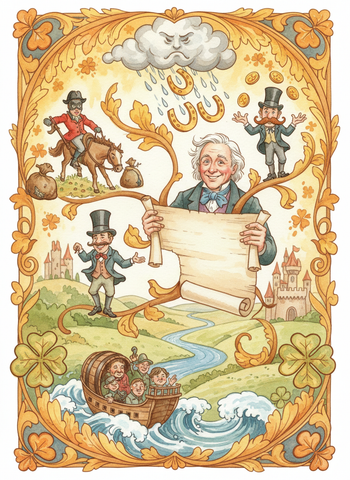
Mark Twain traces his 'noble' family tree through a parade of highwaymen, con men, and stowaways — proving his ancestors' criminal talents were matched only by their spectacularly bad luck.
Two or three persons having at different times intimated that if I would write an autobiography they would read it when they got leisure, I yield at last to this frenzied public demand and herewith tender my history.
曾有两三个人在不同场合暗示,说要是我写一部自传,等他们得空的时候便会拜读,我如今终于屈从于这股狂热的公众呼声,特此奉上我的家族史。
Ours is a noble house, and stretches a long way back into antiquity. The earliest ancestor the Twains have any record of was a friend of the family by the name of Higgins. This was in the eleventh century, when our people were living in Aberdeen, county of Cork, England. Why it is that our long line has ever since borne the maternal name (except when one of them now and then took a playful refuge in an alias to avert foolishness), instead of Higgins, is a mystery which none of us has ever felt much desire to stir. It is a kind of vague, pretty romance, and we leave it alone. All the old families do that way.
我们家可是名门望族,追溯起来源远流长。特温家族有据可查的最早祖先,是这家人的一位朋友,名叫希金斯。那是在十一世纪,那时我们家的人还住在英格兰科克郡的阿伯丁。至于为什么我们这一脉此后一直沿用母系的姓氏(除了偶尔有人为了躲避麻烦,一时兴起用个化名),而不是姓希金斯,这其中的缘由,我们谁也没什么兴致去深究。这是一段朦朦胧胧、颇为动人的传奇故事,我们索性由它去。凡是历史悠久的世家,大抵都是这样处理的。
Arthour Twain was a man of considerable note—a solicitor on the highway in William Rufus's time. At about the age of thirty he went to one of those fine old English places of resort called Newgate, to see about something, and never returned again. While there he died suddenly.
阿瑟·特温算得上是个颇有名望的人物——在威廉·鲁弗斯在位时,是个专在大路上“执业”的律师。他大约三十岁那年,去了一处英格兰有名的老去处,叫作纽盖特监狱,说是去办点事,结果再也没有回来。他就是在那里突然去世的。
Augustus Twain seems to have made something of a stir about the year 1160. He was as full of fun as he could be, and used to take his old saber and sharpen it up, and get in a convenient place on a dark night, and stick it through people as they went by, to see them jump. He was a born humorist.
奥古斯都·特温在一一六〇年前后,似乎闹出了不小的动静。他这人爱开玩笑到了极点,常常把自己那把旧军刀磨得锋利无比,趁着一个黑夜找个顺手的地方一蹲,见人经过便刺上一刀,好看人家跳起来。他天生就是个滑稽人物。
But he got to going too far with it; and the first time he was found stripping one of these parties, the authorities removed one end of him, and put it up on a nice high place on Temple Bar, where it could contemplate the people and have a good time. He never liked any situation so much or stuck to it so long.
可他这玩笑开得太过火了;有一回他正在扒一个受害者的衣物时被当场抓获,官府便把他身体的一头卸了下来,摆到寺庙关卡上一处又高又体面的地方,好让它俯瞰众人,享享清福。他这辈子从没有哪个位置比这个更中意,也没有哪个位置待得比这更久。
Then for the next two hundred years the family tree shows a succession of soldiers—noble, high-spirited fellows, who always went into battle singing, right behind the army, and always went out a-whooping, right ahead of it.
此后整整两百年间,家族的族谱上显示的尽是一连串的军人——个个都是心高气傲、意气风发的好汉,冲锋时总是唱着歌紧随大军之后,撤退时却总是呼啸着一马当先跑在大军前头。
This is a scathing rebuke to old dead Froissart's poor witticism that our family tree never had but one limb to it, and that that one stuck out at right angles, and bore fruit winter and summer.
这足以狠狠地驳斥已故的老弗鲁瓦萨那句可怜的俏皮话,他说我们家族的族谱上从来只长出过一根枝子,而且那根枝子是横着长的,还不论冬夏都结果子。
Early in the fifteenth century we have Beau Twain, called “the Scholar.” He wrote a beautiful, beautiful hand. And he could imitate anybody's hand so closely that it was enough to make a person laugh his head off to see it. He had infinite sport with his talent. But by and by he took a contract to break stone for a road, and the roughness of the work spoiled his hand. Still, he enjoyed life all the time he was in the stone business, which, with inconsiderable intervals, was some forty-two years. In fact, he died in harness.
十五世纪初,我们家出了个人称“学者”的博·特温。他写得一手漂亮至极的好字。他还能惟妙惟肖地模仿任何人的笔迹,模仿得让人看了能笑掉大牙。他靠这门手艺,玩出了无穷的乐趣。可后来他接了一份修路凿石的活计,繁重粗糙的工作把他那手好字给毁了。不过,他干凿石这一行的日子里,倒是过得始终挺快活,这份差事,除了几段无关紧要的间断,前前后后干了大约四十二年。事实上,他是死在任上的。
During all those long years he gave such satisfaction that he never was through with one contract a week till the government gave him another. He was a perfect pet. And he was always a favorite with his fellow-artists, and was a conspicuous member of their benevolent secret society, called the Chain Gang. He always wore his hair short, had a preference for striped clothes, and died lamented by the government. He was a sore loss to his country. For he was so regular.
在那漫长的岁月里,他表现得那样令人满意,以至于他一份差事还没干满一个星期,政府就又给他派了新的一份。他简直是个人见人爱的宝贝。他在同行艺人中间也一向颇受欢迎,还是他们那个互助互济的秘密团体——“铁链帮”——里一位举足轻重的成员。他一向留着短发,偏爱条纹衣裳,去世时朝廷上下无不为之哀悼。他的去世,实在是国家的一大损失。因为他做事实在是太有规律了。
Some years later we have the illustrious John Morgan Twain. He came over to this country with Columbus in 1492 as a passenger. He appears to have been of a crusty, uncomfortable disposition. He complained of the food all the way over, and was always threatening to go ashore unless there was a change. He wanted fresh shad.
几年之后,我们家又出了个大名鼎鼎的约翰·摩根·特温。一四九二年,他作为乘客随哥伦布一同来到这片新大陆。他这人性子似乎有些暴躁,很不好伺候。一路上他没完没了地抱怨伙食,动不动就威胁说,要是再不换换花样,他就要上岸去。他老念叨着想吃新鲜的西鲱鱼。
Hardly a day passed over his head that he did not go idling about the ship with his nose in the air, sneering about the commander, and saying he did not believe Columbus knew where he was going to or had ever been there before. The memorable cry of “Land ho!” thrilled every heart in the ship but his. He gazed awhile through a piece of smoked glass at the penciled line lying on the distant water, and then said: “Land be hanged—it's a raft!”
他几乎没有一天不是这样:在船上晃来晃去,鼻孔朝天,对船长冷嘲热讽,说他才不信哥伦布知道自己要往哪儿去,也不信他以前来过这地方。那句令人难忘的“陆地啊!”的呼喊,让船上人人心头一震,唯独他不为所动。他透过一片熏黑的玻璃片,朝远处水面上那道铅笔般的细线望了一会儿,然后说:“什么陆地,见鬼去吧——那不过是块木筏罢了!”
When this questionable passenger came on board the ship, he brought nothing with him but an old newspaper containing a handkerchief marked “B. G.,” one cotton sock marked “L. W. C.,” one woolen one marked “D. F.,” and a night-shirt marked “O. M. R.” And yet during the voyage he worried more about his “trunk,” and gave himself more airs about it, than all the rest of the passengers put together. If the ship was “down by the head,” and would not steer, he would go and move his “trunk” further aft, and then watch the effect. If the ship was “by the stern,” he would suggest to Columbus to detail some men to “shift that baggage.”
这位来路可疑的乘客上船的时候,除了一张旧报纸,什么也没带,报纸里裹着一块标着“B.G.”的手帕,一只标着“L.W.C.”的棉袜,一只标着“D.F.”的毛袜,还有一件标着“O.M.R.”的睡衣。可就是这么点行李,他一路上却比所有其他乘客加起来还要为自己的“大箱子”操心,还要为此摆足了派头。要是船头下沉、掌不了舵,他便跑去把自己的“箱子”再往船尾挪一挪,然后看看效果如何。要是船尾下沉了,他便去建议哥伦布派几个人来“挪一挪那些行李”。
In storms he had to be gagged, because his wailings about his “trunk” made it impossible for the men to hear the orders. The man does not appear to have been openly charged with any gravely unbecoming thing, but it is noted in the ship's log as a “curious circumstance” that albeit he brought his baggage on board the ship in a newspaper, he took it ashore in four trunks, a queensware crate, and a couple of champagne baskets. But when he came back insinuating, in an insolent, swaggering way, that some of this things were missing, and was going to search the other passengers' baggage, it was too much, and they threw him overboard.
遇到风暴的时候,别人不得不把他的嘴堵上,因为他为那只“箱子”哀号个不停,弄得水手们连命令都听不清。这个人似乎并没有被公开指控犯过什么大逆不道的事,可船上的航海日志里却记下了一桩“怪事”:他明明是用一张报纸把行李包上船的,下船时带走的却是四只大箱子、一箱瓷器,外加两篮香槟酒。可后来他竟大摇大摆、傲慢无礼地暗示说自己丢了些东西,还要去搜查别的乘客的行李,这下可太过分了,大家便把他扔下了海。
They watched long and wonderingly for him to come up, but not even a bubble rose on the quietly ebbing tide. But while every one was most absorbed in gazing over the side, and the interest was momentarily increasing, it was observed with consternation that the vessel was adrift and the anchor-cable hanging limp from the bow. Then in the ship's dimmed and ancient log we find this quaint note:
众人守着,满心疑惑地等了很久,指望看他浮上来,可平静退去的潮水上,连个泡泡都没冒出来。就在大家都全神贯注地盯着船舷、兴致越来越浓的时候,忽然惊恐地发现,船已经在漂移,锚绳软塌塌地从船头垂着,锚早已不知去向。于是在这艘船那已经模糊不清的古老航海日志里,我们发现了这样一段古怪的记载:
“In time it was discouvered yt ye troblesome passenger hadde gone downe and got ye anchor, and toke ye same and solde it to ye dam sauvages from ye interior, saying yt he hadde founde it, ye sonne of a ghun!”
“后来终于查明,那位惹是生非的乘客曾潜到水下,把锚取了上来,然后把它卖给了内陆来的那些该死的野蛮人,还谎称是自己捡来的,这个杂种!”
Yet this ancestor had good and noble instincts, and it is with pride that we call to mind the fact that he was the first white person who ever interested himself in the work of elevating and civilizing our Indians. He built a commodious jail and put up a gallows, and to his dying day he claimed with satisfaction that he had had a more restraining and elevating influence on the Indians than any other reformer that ever labored among them.
不过这位祖先倒也有几分善良高尚的天性,我们不无自豪地忆起,他是第一个致力于教化我们印第安人、提升其文明程度的白人。他修建了一座宽敞的监狱,还竖起了一座绞刑架,直到临终,他都得意地宣称,自己对印第安人所起到的规训与教化作用,胜过历史上任何一位曾在他们中间努力过的改革家。
At this point the chronicle becomes less frank and chatty, and closes abruptly by saying that the old voyager went to see his gallows perform on the first white man ever hanged in America, and while there received injuries which terminated in his death.
写到这里,家族纪事的笔调便不再像先前那样坦率健谈,最后草草收尾,只说这位老航海家去观看自己那座绞刑架首次处决一名白人——那也是美洲历史上第一个被绞死的白人——结果在那儿受了伤,不久便因伤重不治而亡。
The great-grandson of the “Reformer” flourished in sixteen hundred and something, and was known in our annals as “the old Admiral,” though in history he had other titles. He was long in command of fleets of swift vessels, well armed and manned, and did great service in hurrying up merchantmen. Vessels which he followed and kept his eagle eye on, always made good fair time across the ocean. But if a ship still loitered in spite of all he could do, his indignation would grow till he could contain himself no longer—and then he would take that ship home where he lived and keep it there carefully, expecting the owners to come for it, but they never did.
这位“改革家”的曾孙活跃于十七世纪初的某一年,在我们家族的编年史中被称为“老海军上将”,尽管在正史里他还有别的头衔。他长期统率着一支支武装精良、人手齐备的快船舰队,为催促商船加快航速立下了汗马功劳。凡是他一路跟随、用鹰一般的眼睛盯着的船只,横渡大洋的速度总是格外快。可要是有船只不顾他种种努力,依然磨磨蹭蹭,他的怒火便会越积越盛,直到再也按捺不住——于是他便把那艘船拖回自己住的地方,小心地留着,指望船主前来认领,可船主却从来没有来过。
And he would try to get the idleness and sloth out of the sailors of that ship by compelling them to take invigorating exercise and a bath. He called it “walking a plank.” All the pupils liked it. At any rate, they never found any fault with it after trying it. When the owners were late coming for their ships, the Admiral always burned them, so that the insurance money should not be lost. At last this fine old tar was cut down in the fullness of his years and honors. And to her dying day, his poor heart-broken widow believed that if he had been cut down fifteen minutes sooner he might have been resuscitated.
他还想方设法要把那船上水手们身上的懒散怠惰之气去掉,办法是逼着他们做一种强身健体的运动,外加洗个澡。他管这叫“走跳板”。所有“学员”都很喜欢这一套。至少,凡是试过一回的,事后从没有谁挑过它的毛病。要是船主迟迟不来认领自己的船,海军上将总会一把火把它烧掉,免得保险金落了空。最后,这位出色的老水手在功德圆满、荣耀加身之际溘然长逝。他那伤心欲绝的遗孀直到临终,都始终相信,要是早十五分钟把他放下来,他兴许还能被救活。
Charles Henry Twain lived during the latter part of the seventeenth century, and was a zealous and distinguished missionary. He converted sixteen thousand South Sea islanders, and taught them that a dog-tooth necklace and a pair of spectacles was not enough clothing to come to divine service in. His poor flock loved him very, very dearly; and when his funeral was over, they got up in a body (and came out of the restaurant) with tears in their eyes, and saying, one to another, that he was a good tender missionary, and they wished they had some more of him.
查尔斯·亨利·特温生活在十七世纪后半叶,是一位热忱而卓有声望的传教士。他使一万六千名南太平洋岛民皈依了基督教,还教导他们,光戴一条狗牙项链、架一副眼镜,是不足以穿着来参加宗教仪式的。他那些可怜的信徒们对他爱戴至深;等他的葬礼结束后,他们便集体起身(从一家餐馆里走出来),眼含热泪,彼此念叨着,说他实在是个心肠慈爱的好传教士,真希望还能再多来几个像他这样的人物,可惜他们已经把他给吃了。
Pah-go-to-wah-wah-pukketekeewis (Mighty-Hunter-with-a-Hog-Eye-Twain) adorned the middle of the eighteenth century, and aided General Braddock with all his heart to resist the oppressor Washington. It was this ancestor who fired seventeen times at our Washington from behind a tree. So far the beautiful romantic narrative in the moral story-books is correct; but when that narrative goes on to say that at the seventeenth round the awe-stricken savage said solemnly that that man was being reserved by the Great Spirit for some mighty mission, and he dared not lift his sacrilegious rifle against him again, the narrative seriously impairs the integrity of history. What he did say was:
“猛虎般的独眼豪杰”帕戈托瓦瓦普凯特基维斯活跃于十八世纪中叶,一心一意协助布雷多克将军抵抗压迫者华盛顿。正是这位祖先,曾躲在一棵树后朝我们的华盛顿开了十七枪。到这里为止,那些道德故事书里美丽动人的叙述都还算准确;可故事接下来说,到了第十七枪的时候,那个心怀敬畏的野蛮人肃然宣称,那个人是伟大的神灵留给他去完成某项伟大使命的,他再也不敢举起自己那杆亵渎神明的枪去对付他了——说到这里,这段叙述可就大大损害了历史的真实性了。他当时说的其实是:
“It ain't no (hic) no use. 'At man's so drunk he can't stan' still long enough for a man to hit him. I (hic) I can't 'ford to fool away any more am'nition on him.”
“没(打嗝)没用了。那家伙醉得连站都站不稳,谁想打中他都难。我(打嗝)我可不能再浪费弹药在他身上了。”
That was why he stopped at the seventeenth round, and it was a good, plain, matter-of-fact reason, too, and one that easily commends itself to us by the eloquent, persuasive flavor of probability there is about it.
这就是他在第十七枪之后住手的真正原因,而且这理由既平实又贴近事实,因为它带着一股娓娓道来、令人信服的真实况味,很容易让我们心悦诚服。
I also enjoyed the story-book narrative, but I felt a marring misgiving that every Indian at Braddock's Defeat who fired at a soldier a couple of times (two easily grows to seventeen in a century), and missed him, jumped to the conclusion that the Great Spirit was reserving that soldier for some grand mission; and so I somehow feared that the only reason why Washington's case is remembered and the others forgotten is, that in his the prophecy came true, and in that of the others it didn't.
我起初也挺喜欢故事书里的那种说法,可心里总有点不自在的疑虑:布雷多克战败那天,凡是朝一名士兵开过几枪(两枪过了一个世纪,很容易就传成十七枪)却没打中的印第安人,恐怕都会得出结论,说伟大的神灵是特意留下那个士兵去完成什么了不起的使命;因此我不免有些担心,华盛顿这桩事之所以被人记住,而其他人的却被遗忘,唯一的原因,恐怕就是他那桩预言应验了,而别人的却没有应验罢了。
There are not books enough on earth to contain the record of the prophecies Indians and other unauthorized parties have made; but one may carry in his overcoat pockets the record of all the prophecies that have been fulfilled.
世上所有的书加起来,恐怕也装不下印第安人和其他不知从哪儿冒出来的人所作的种种预言的记录;可但凡应验了的预言,一个人大衣口袋里就装得下了。
I will remark here, in passing, that certain ancestors of mine are so thoroughly well-known in history by their aliases, that I have not felt it to be worth while to dwell upon them, or even mention them in the order of their birth.
我要在此顺带一提,我的某几位祖先,因其化名在历史上早已声名远扬,我便觉得没什么必要再细细着墨,甚至没必要按出生顺序一一提及了。
Among these may be mentioned Richard Brinsley Twain, alias Guy Fawkes; John Wentworth Twain, alias Sixteen-String Jack; William Hogarth Twain, alias Jack Sheppard; Ananias Twain, alias Baron Munchausen; John George Twain, alias Captain Kydd; and then there are George Francis Twain, Tom Pepper, Nebuchadnezzar, and Baalam's Ass—they all belong to our family, but to a branch of it somewhat distinctly removed from the honorable direct line—in fact, a collateral branch, whose members chiefly differ from the ancient stock in that, in order to acquire the notoriety we have always yearned and hungered for, they have got into a low way of going to jail instead of getting hanged.
其中可以一提的有:理查德·布林斯利·特温,化名盖伊·福克斯;约翰·温特沃思·特温,化名“十六绳杰克”;威廉·贺加斯·特温,化名杰克·谢泼德;阿纳尼亚斯·特温,化名闵希豪森男爵;约翰·乔治·特温,化名基德船长;此外还有乔治·弗朗西斯·特温、汤姆·佩珀、尼布甲尼撒,以及巴兰的驴——他们都是我们家族的人,不过属于跟正统嫡系有些明显疏远的一支——事实上,是个旁支,这一支的成员与祖上的主要不同之处在于,为了博取我们家族一向梦寐以求、渴望不已的名声,他们走了条不大体面的路子,蹲了监狱,而不是被绞死了事。
It is not well, when writing an autobiography, to follow your ancestry down too close to your own time—it is safest to speak only vaguely of your great-grandfather, and then skip from there to yourself, which I now do.
写自传的时候,最好不要把祖先一路追溯到离自己太近的年代——最稳妥的做法,是只含糊其辞地提一提你的曾祖父,然后就此跳到你自己身上,我现在就这么办。
I was born without teeth—and there Richard III. had the advantage of me; but I was born without a humpback, likewise, and there I had the advantage of him. My parents were neither very poor nor conspicuously honest.
我生下来就没有牙齿——在这一点上,理查三世倒是占了我的便宜;不过我生下来也没有驼背,在这一点上,我倒是占了他的便宜。我的父母既算不上十分贫穷,也算不上出奇地诚实。
But now a thought occurs to me. My own history would really seem so tame contrasted with that of my ancestors, that it is simply wisdom to leave it unwritten until I am hanged. If some other biographies I have read had stopped with the ancestry until a like event occurred, it would have been a felicitous thing for the reading public. How does it strike you?
不过这时我忽然想到一件事。跟我这些祖先的故事一比,我自己的经历实在显得太过平淡无奇,所以最明智的做法,恐怕还是先按下不写,等到哪天我被绞死了再说。要是我读过的某些别的传记,也能在写到祖先这一段就此打住,等到那样的大事发生了再往下写,那对读者来说,倒真是件幸事。你觉得这个主意如何?
