The Grandfather's Glacier
Một truyện tiếng Anh miễn phí trình độ C1 cho người học, đọc trực tuyến bằng 5 ngôn ngữ, có thể nghe qua ứng dụng Storyteller miễn phí.
Fifty years after his grandfather photographed a glacier, Malcolm hikes to the same rock to see how far the ice has gone.
Hết phần nghe thử! Nghe trọn truyện trong ứng dụng Storyteller miễn phí. Tải app
Hiện chưa thể phát audio.
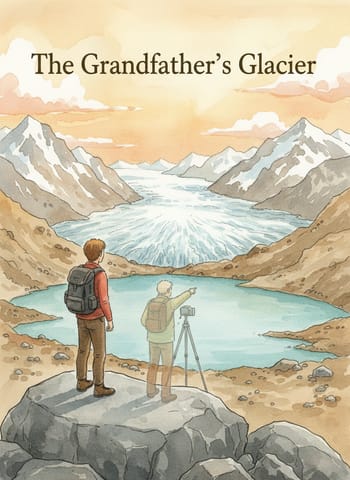
The print had lived for fifty years in a biscuit tin, and Malcolm carried it up the valley in a freezer bag inside a hardback book, which he had judged the safest place for it. It showed a wall of ice filling the head of the valley, grey-white and ribbed. A small figure in a dark jacket stood on a rock in the foreground, one arm raised against the glare. On the back, in his grandfather's pencil, were a date and four words: "Still bigger than I expected."
Tấm ảnh in đã nằm năm mươi năm trong một hộp bánh quy, và Malcolm mang nó lên thung lũng trong một túi cấp đông kẹp giữa một cuốn sách bìa cứng, nơi anh cho là an toàn nhất. Ảnh chụp một bức tường băng chắn kín đầu thung lũng, xám trắng và gân sọc. Một bóng người nhỏ trong chiếc áo khoác sẫm đứng trên một tảng đá ở tiền cảnh, một tay giơ lên che chói. Ở mặt sau, bằng bút chì của ông nội anh, có một ngày tháng và bốn từ: "Vẫn lớn hơn tôi tưởng."
The path followed a river that was the colour of weak tea and then, after the second hour, the colour of milk. Malcolm had read the trail notes the night before. The end of the glacier was now about five kilometres further up than the old maps suggested, a sentence he had read twice without taking in. He climbed steadily, stopping at each new bend to compare the print with the view, and the ridgelines matched, every one, with a precision that made the missing part easier to see.
Con đường mòn men theo một dòng sông màu nước trà loãng rồi, sau giờ thứ hai, màu sữa. Malcolm đã đọc ghi chú về đường mòn tối hôm trước. Chân sông băng giờ nằm cao hơn khoảng năm cây số so với những gì bản đồ cũ cho thấy, một câu anh đã đọc hai lần mà vẫn không thấm. Anh leo đều đều, dừng ở mỗi khúc quanh mới để so tấm ảnh với khung cảnh, và các đường sống núi khớp nhau, từng cái một, với độ chính xác khiến phần thiếu vắng càng dễ thấy.
By midday the valley held nothing but gravel, meltwater and the occasional boulder the size of a van. The ice, when he finally saw it, was a long way off and a long way up, a pale tongue wedged into a notch between two peaks. Nowhere between him and it was there any trace of the wall that the print showed. Beside the path ran a line of scraped rock, thirty metres above his head, which he understood after a moment to mark the height of the glacier on the day his grandfather stood here.
Đến giữa trưa, thung lũng chỉ còn sỏi, nước tan băng và thỉnh thoảng một tảng đá lớn cỡ chiếc xe tải. Băng, khi cuối cùng anh trông thấy, ở rất xa và rất cao, một chiếc lưỡi nhợt nhạt chêm vào khe giữa hai đỉnh núi. Giữa anh và nó không còn dấu vết nào của bức tường mà tấm ảnh cho thấy. Cạnh con đường chạy một vệt đá bị cạo trụi, cao hơn đầu anh ba mươi mét, mà sau một lúc anh hiểu là đánh dấu độ cao của sông băng vào ngày ông nội đứng ở đây.
The rock was easy to find. What made it unmistakable was the lichen: a thumb-shaped smear of orange on its north face, exactly as it appeared in the print, only a little wider now. He climbed on to it with some care, because it was wet, and stood where the small figure had stood. Having imagined this moment for months, he noticed that he felt less than he had planned to, and was paying very close attention to his boots instead.
Tảng đá dễ tìm. Điều làm nó không thể nhầm là địa y: một vệt cam hình ngón tay cái ở mặt bắc, đúng như trong ảnh, chỉ rộng hơn một chút. Anh trèo lên với chút thận trọng vì đá ướt, và đứng đúng chỗ bóng người nhỏ từng đứng. Đã tưởng tượng khoảnh khắc này suốt nhiều tháng, anh nhận ra mình cảm thấy ít hơn dự tính, và đang chú ý rất kỹ vào đôi giày của mình.
He held the print at arm's length against the valley and let the two scenes settle over one another. The ridges lined up. The dark band of rock halfway up the left-hand peak lined up. The wall of ice that had once filled the lower half of the frame was simply not there. What stood in its place was a quantity of air and distance that the paper could not account for. It was the sound, not the sight, that took him by surprise: a steady ticking of meltwater falling somewhere out of view, in a place that used to be solid.
Anh giơ tấm ảnh ra xa một sải tay, áp vào thung lũng, và để hai khung cảnh chồng lên nhau. Các sống núi khớp. Dải đá sẫm ở lưng chừng đỉnh bên trái khớp. Bức tường băng từng lấp đầy nửa dưới khung ảnh đơn giản là không còn. Thay vào đó là một khoảng không khí và khoảng cách mà tờ giấy không thể giải thích. Chính âm thanh, chứ không phải cảnh tượng, làm anh bất ngờ: tiếng tí tách đều đặn của nước tan rơi ở đâu đó ngoài tầm mắt, ở nơi từng là băng đặc.
Malcolm took the photograph with his phone, then another, in case. Had his grandfather known, he thought, he would probably have said something dry about the weather; the man had never in his life commented directly on anything he cared about. A small wind came down the valley and lifted the corner of the print, and he put his thumb on it until it settled.
Malcolm chụp bức ảnh bằng điện thoại, rồi thêm một tấm nữa, phòng khi cần. Nếu ông nội biết, anh nghĩ, có lẽ ông sẽ nói điều gì đó khô khan về thời tiết; cả đời ông chưa từng bình luận thẳng thắn về bất cứ điều gì ông quan tâm. Một cơn gió nhẹ thổi xuống thung lũng và nhấc góc tấm ảnh lên, và anh đặt ngón cái lên đó cho đến khi nó yên.
Before climbing down he turned the print over, took the pencil from his breast pocket, and wrote the date beneath the old one, in his own handwriting, which was worse. Under it he added four words of his own, then stopped, erased two of them, and left the rest. He slid the print back into its bag and the bag into the book, and started down the valley the long way, beside a river that was, for the moment, still the colour of milk.
Trước khi leo xuống, anh lật tấm ảnh lại, lấy cây bút chì từ túi ngực, và viết ngày tháng bên dưới ngày cũ, bằng nét chữ của mình, tệ hơn. Bên dưới anh thêm bốn từ của riêng mình, rồi dừng, xóa hai từ, và để nguyên phần còn lại. Anh trượt tấm ảnh vào túi, túi vào cuốn sách, rồi bắt đầu xuống thung lũng bằng đường dài, bên cạnh dòng sông mà lúc này vẫn còn màu sữa.