The Astronomer Under Another Name
Một truyện tiếng Anh miễn phí trình độ C1 cho người học, đọc trực tuyến bằng 5 ngôn ngữ, có thể nghe qua ứng dụng Storyteller miễn phí.
After her silent father's death, Lorna discovers that he spent forty years publishing astronomy observations under a pen name, and goes to meet one of his correspondents.
Hết phần nghe thử! Nghe trọn truyện trong ứng dụng Storyteller miễn phí. Tải app
Hiện chưa thể phát audio.
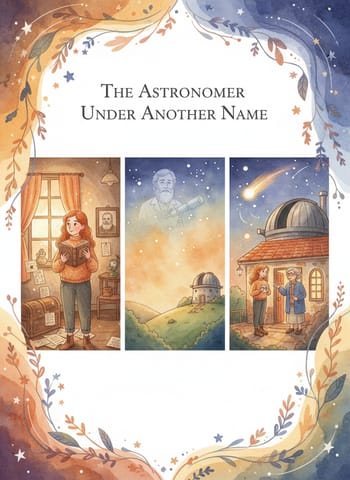
Her father had spoken, by Lorna's rough estimate, about four hundred words a month, and rarely had any of them been about himself. Clearing his loft a fortnight after the funeral, she expected tax papers, spare radiator parts, the plain residue of a plain man. What she found instead, behind the water tank, were forty years of notebooks in a tidy slanting hand, each page ruled into columns of dates, times and numbers. Beneath them lay a shoebox of printed bulletins from a society of amateur astronomers.
Theo ước tính sơ sơ của Lorna, cha cô nói chừng bốn trăm từ mỗi tháng, và hiếm khi có từ nào nói về chính ông. Dọn gác mái của ông hai tuần sau tang lễ, cô tưởng sẽ gặp giấy tờ thuế, linh kiện lò sưởi thừa, thứ cặn bã giản dị của một người giản dị. Nhưng sau bồn nước, cô tìm thấy bốn mươi năm sổ ghi chép viết bằng nét chữ nghiêng ngay ngắn, mỗi trang kẻ thành những cột ngày, giờ và con số. Bên dưới là một hộp giày đựng những bản tin in của một hội thiên văn nghiệp dư.
The bulletins carried a regular column of observations on variable stars, signed with the pen name Meridian. It took her an evening, comparing the handwriting in the margins, to be certain that Meridian was her father. He had stood in a cold garden on some thousand nights, she calculated, timing the dimming and brightening of lights she had never once seen him look at. He had told nobody: not her, and not her mother while she was alive. "Why would a man hide that?" she asked the empty loft, and found it had no more to say than he had.
Các bản tin đăng đều đặn một chuyên mục quan sát sao biến quang, ký bút danh Meridian. Cô mất một buổi tối, so nét chữ ở lề giấy, mới chắc chắn rằng Meridian chính là cha mình. Cô tính ra ông đã đứng trong khu vườn lạnh cả nghìn đêm, bấm giờ những ánh sáng lúc mờ lúc tỏ mà cô chưa từng thấy ông ngước nhìn. Ông chẳng nói với ai: không với cô, và cũng không với mẹ cô khi bà còn sống. "Sao một người lại giấu chuyện đó?" cô hỏi gác mái trống không, và thấy nó cũng chẳng có gì để nói thêm hơn ông.
One bulletin mentioned a reader who wrote to Meridian so often that the editor had started printing the replies. His name was Vidar, and he lived two hours up the coast. Lorna wrote to him without any real plan, and he answered by return, in a note that began, "I have wondered for years what he looked like."
Một bản tin nhắc tới một độc giả hay viết thư cho Meridian đến mức biên tập viên bắt đầu đăng cả thư trả lời. Tên ông là Vidar, sống cách đó hai tiếng đi dọc bờ biển. Lorna viết thư cho ông mà chẳng có kế hoạch gì rõ ràng, và ông hồi âm ngay, trong một bức thư mở đầu: "Bao năm nay tôi vẫn tự hỏi anh ấy trông thế nào."
Vidar turned out to be a small, careful man in his seventies who kept a telescope under a tarpaulin in his orchard, and he received her as though she were a rumour finally confirmed. He had a drawer of letters, he said, and brought them out. Reading them at his kitchen table, Lorna met someone she did not know. The Meridian of these pages teased and complained about the weather. Once he gave an entire page to a feud with a neighbour's floodlight, and he closed each letter with some version of "Clear skies, and say hello to the family."
Vidar hóa ra là một người đàn ông nhỏ nhắn, cẩn thận ngoài bảy mươi, giữ một chiếc kính thiên văn dưới tấm bạt trong vườn táo, và ông đón cô như thể cô là một tin đồn rốt cuộc đã được xác nhận. Ông bảo mình có cả một ngăn kéo thư, rồi mang ra. Đọc chúng ở bàn bếp nhà ông, Lorna gặp một người cô không hề quen. Meridian trong những trang này trêu chọc và than phiền về thời tiết. Có lần ông dành nguyên một trang cho cuộc cãi vã với chiếc đèn pha nhà hàng xóm, và ông kết mỗi bức thư bằng một biến thể nào đó của "Trời quang nhé, và gửi lời chào gia đình."
What unsettled her was not that her father had been different on paper. It was that she recognised the jokes. Had anyone told her, as a girl, that the long silences at the dinner table were his way of saving the words for later, she would have taken it for an excuse. Now, with the letters in front of her, she thought it might simply have been true. He had spent his talk in a place where nobody could answer back, and she could not decide whether that was a kind of generosity or a kind of absence.
Điều làm cô bất an không phải việc cha mình khác đi khi viết. Mà là cô nhận ra những câu đùa ấy. Nếu hồi bé có ai bảo cô rằng những khoảng lặng dài bên bàn ăn là cách ông để dành lời cho về sau, cô sẽ cho đó là cái cớ. Giờ đây, với những lá thư trước mặt, cô nghĩ có lẽ điều đó đơn giản là sự thật. Ông đã tiêu hết lời nói của mình ở một nơi không ai có thể cãi lại, và cô không biết nên coi đó là một kiểu hào phóng hay một kiểu vắng mặt.
Vidar asked whether she would like to look through the telescope. It was not yet dark, but a few stars had come out above the apple trees, and he aimed at one of them with the patience of a man who had done it many times. "Your father measured this one every clear night since before you were born," he said. "It fades for a day or so, then recovers. He never missed a minimum."
Vidar hỏi cô có muốn nhìn qua kính thiên văn không. Trời chưa tối, nhưng vài ngôi sao đã hiện lên phía trên những cây táo, và ông chỉnh về một ngôi với sự kiên nhẫn của người đã làm việc ấy nhiều lần. "Cha cô đã đo ngôi này mỗi đêm quang đãng từ trước khi cô ra đời," ông nói. "Nó mờ đi chừng một ngày rồi sáng lại. Ông ấy chưa từng bỏ lỡ một lần cực tiểu nào."
Lorna bent to the eyepiece. The star was small, steady and entirely ordinary, and she realised, looking at it, that she was holding her breath. It was not reverence. It was the particular stillness she had watched from the kitchen window as a child, on nights when he would not come in for supper. She did not breathe out until Vidar cleared his throat behind her and asked, very gently, whether she could see it.
Lorna cúi xuống ống ngắm. Ngôi sao nhỏ, đều đặn và hoàn toàn bình thường, và nhìn nó, cô nhận ra mình đang nín thở. Đó không phải sự tôn kính. Đó là sự tĩnh lặng đặc biệt mà hồi bé cô từng thấy từ cửa sổ bếp, vào những đêm ông không chịu vào ăn tối. Cô không thở ra cho đến khi Vidar hắng giọng sau lưng và hỏi, rất nhẹ nhàng, liệu cô có thấy nó không.
"Yes," she said, and stayed where she was.
"Có," cô nói, và vẫn đứng nguyên chỗ cũ.