The Last Box in the Apartment
भाषा सीखने वालों के लिए स्तर C1 की एक मुफ़्त अंग्रेज़ी कहानी, जिसे 6 भाषाओं में ऑनलाइन पढ़ा जा सकता है और मुफ़्त Storyteller ऐप में सुना भी जा सकता है।
Over one weekend, a couple who have parted on good terms divide their shared apartment and find that the smallest things are the hardest to split.
झलक पूरी हुई! पूरी कहानी मुफ़्त Storyteller ऐप में सुनें। ऐप पाएँ
अभी ऑडियो उपलब्ध नहीं है।
By Saturday noon the apartment has been divided so politely that it feels like a negotiation conducted by people who have never raised their voices. Teresa gets the bookshelves; he gets the stereo. She keeps the good frying pan, he takes the better knives, and the arrangement, announced over takeaway dumplings on Friday night, was so reasonable that neither of them admitted how much it hurt. They parted in March, without villains, which turns out to be the harder thing to pack.
शनिवार दोपहर तक अपार्टमेंट इतनी शिष्टता से बाँटा जा चुका है कि यह किसी ऐसी बातचीत जैसा लगता है जो उन लोगों ने की हो जिन्होंने कभी आवाज़ ऊँची नहीं की। तेरेसा को किताबों की अलमारियाँ मिलती हैं; उसे स्टीरियो। वह अच्छा फ़्राइंग पैन रखती है, वह बेहतर चाकू ले लेता है, और यह इंतज़ाम, जिसकी घोषणा शुक्रवार की रात टेकअवे मोमो खाते हुए हुई थी, इतना वाजिब था कि दोनों में से किसी ने नहीं माना कि इससे कितना दुख हुआ। वे मार्च में अलग हुए थे, बिना किसी खलनायक के, और पता चलता है कि यही बाँधकर रखने के लिए ज़्यादा मुश्किल चीज़ है।
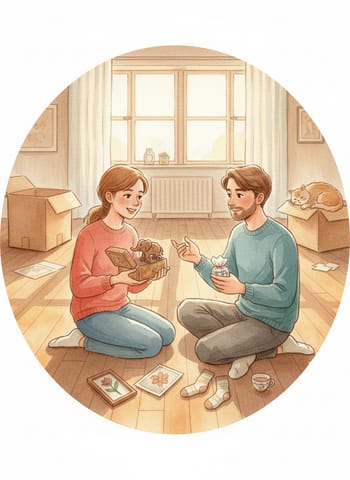
The objects are not the problem; the sentences attached to them are. "That was your aunt's." "No, she gave it to both of us." The blue lamp, which they bought at a market in the rain after haggling for twenty minutes over a price neither can now remember, goes to him because he works late. The plant, which has survived four moves and a winter of neglect, goes to her because it has always leaned toward her side of the window. Taping the first boxes, Teresa notices that the labels alternate between her handwriting and his, as though they were still a single household being sent somewhere.
सामान समस्या नहीं है; समस्या वे वाक्य हैं जो उनसे जुड़े हैं। "यह तुम्हारी मौसी का था।" "नहीं, उन्होंने हम दोनों को दिया था।" नीला लैंप, जो उन्होंने बारिश में एक बाज़ार से बीस मिनट मोलभाव करके ख़रीदा था, एक ऐसी क़ीमत पर जो अब दोनों में से किसी को याद नहीं, उसके हिस्से जाता है क्योंकि वह देर तक काम करता है। पौधा, जो चार बार घर बदलने और उपेक्षा की एक सर्दी से बचा रहा है, उसके हिस्से जाता है क्योंकि वह हमेशा से खिड़की की उसकी तरफ़ झुका रहा है। पहले डिब्बों पर टेप लगाते हुए तेरेसा देखती है कि लेबलों में कभी उसकी लिखावट है, कभी उसकी, मानो वे अब भी एक ही घर हों जिसे कहीं भेजा जा रहा हो।
By Sunday afternoon the rooms have the faintly hollow sound of a place already left, and every voice comes out like an announcement. Only the kitchen drawer remains, the one everybody has and nobody can sort. It holds batteries of uncertain charge, string, a corkscrew, six menus from restaurants that have since closed, and a photo-booth strip of two people trying not to laugh. What Teresa had not expected was that this would be the hardest part. A drawer like that has no owner. It is simply what two people accumulate when they are not paying attention, and nobody ever decided it should be kept. Only now does Teresa see how much of a life is stored in places like this.
रविवार दोपहर तक कमरों में एक हल्की खोखली गूँज है, किसी ऐसी जगह की जिसे छोड़ा जा चुका है, और हर आवाज़ किसी घोषणा जैसी निकलती है। अब सिर्फ़ रसोई की दराज़ बची है, वही जो सबके पास होती है और जिसे कोई छाँट नहीं पाता। उसमें अनिश्चित चार्ज वाली बैटरियाँ हैं, डोरी, एक कॉर्कस्क्रू, उन रेस्तराँओं के छह मेन्यू जो तब से बंद हो चुके हैं, और फ़ोटो-बूथ की एक पट्टी, जिसमें दो लोग हँसी रोकने की कोशिश कर रहे हैं। तेरेसा को यह उम्मीद नहीं थी कि यही सबसे मुश्किल हिस्सा होगा। ऐसी दराज़ का कोई मालिक नहीं होता। यह बस वह है जो दो लोग तब जमा कर लेते हैं जब वे ध्यान नहीं दे रहे होते, और किसी ने कभी तय नहीं किया कि इसे रखना चाहिए। अब जाकर तेरेसा को दिखता है कि ज़िंदगी का कितना हिस्सा ऐसी ही जगहों में रखा होता है।
He lifts out the strip and holds it at arm's length. "Do you want this?"
वह पट्टी निकालकर उसे हाथ भर की दूरी पर पकड़ता है। "तुम यह लेना चाहोगी?"
"I assumed you did," Teresa says.
"मैंने मान लिया था कि तुम लोगे," तेरेसा कहती है।
"That's what I assumed about you," he says, and they both laugh, a short, unconvincing sound. For a moment they stand there holding the question between them like a hot dish. Had they quarrelled, Teresa thinks, this would have been easy: one of them would have stormed out with the pictures, and the other would have thrown out the rest. Instead there is only the afternoon light, and the strip, and the politeness, which has begun to feel like a kind of weather.
"मैंने तुम्हारे बारे में यही मान लिया था," वह कहता है, और दोनों हँस पड़ते हैं, एक छोटी, अविश्वसनीय-सी आवाज़। कुछ पल के लिए वे वहीं खड़े रहते हैं, सवाल को अपने बीच किसी गरम बर्तन की तरह थामे हुए। अगर वे लड़े होते, तेरेसा सोचती है, तो यह आसान होता: उनमें से एक तस्वीरें लेकर तमतमाता हुआ निकल गया होता, और दूसरे ने बाक़ी सब फेंक दिया होता। इसके बजाय बस दोपहर की रोशनी है, और पट्टी है, और शिष्टता है, जो एक तरह के मौसम जैसी लगने लगी है।
In the end they cut the strip in two with the kitchen scissors, the last object in the apartment that nobody has claimed. Two frames each. His half has the frame where they are laughing; hers has the one where they are not, which is, she thinks, the more accurate picture and not the one she would have chosen. At the bottom of the drawer there is also a small brass key that neither of them can identify. They try it in the front door, the balcony door, the bicycle lock. It fits nothing.
आख़िर में वे पट्टी को रसोई की कैंची से दो हिस्सों में काट देते हैं, अपार्टमेंट की आख़िरी चीज़ जिस पर किसी ने दावा नहीं किया था। हर एक को दो फ़्रेम। उसके हिस्से में वह फ़्रेम है जिसमें वे हँस रहे हैं; उसके हिस्से में वह जिसमें नहीं, जो, उसे लगता है, ज़्यादा सही तस्वीर है, पर वह नहीं जो वह चुनती। दराज़ की तली में पीतल की एक छोटी चाबी भी है जिसे उनमें से कोई पहचान नहीं पाता। वे उसे सामने के दरवाज़े, बालकनी के दरवाज़े और साइकिल के ताले में आज़माते हैं। वह किसी में नहीं लगती।
"Yours," he says, "since you'll go on wondering."
"तुम्हारी," वह कहता है, "क्योंकि तुम सोचती रहोगी।"
"Mine," she agrees.
"मेरी," वह मान लेती है।
She tapes the last box, writes nothing on it, and carries it down to the car. On the stairs she threads the key onto her own ring, between the apartment key she must hand back tonight and the one for her office, where it hangs, small and brass, opening nothing yet.
वह आख़िरी डिब्बे पर टेप लगाती है, उस पर कुछ नहीं लिखती, और उसे नीचे कार तक ले जाती है। सीढ़ियों पर वह चाबी को अपने छल्ले में पिरोती है, उस अपार्टमेंट की चाबी के बीच जो उसे आज रात लौटानी है और उसके दफ़्तर वाली चाबी के बीच, जहाँ वह छोटी, पीतल की, लटकी रहती है, अब तक कुछ नहीं खोलती।