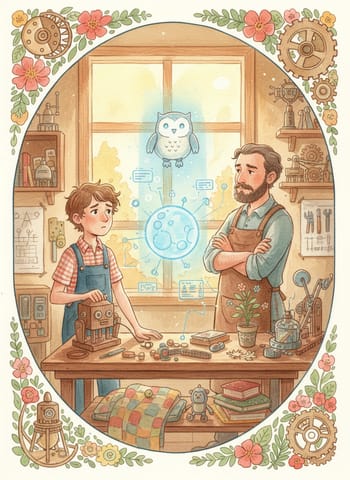
The Fair Split
भाषा सीखने वालों के लिए स्तर C1 की एक मुफ़्त अंग्रेज़ी कहानी, जिसे 6 भाषाओं में ऑनलाइन पढ़ा जा सकता है और मुफ़्त Storyteller ऐप में सुना भी जा सकता है।
Two brothers dissolving their shared workshop let an AI mediator calculate a data-based split of ownership, then have to decide what to do about the years of unlogged care it could never account for.
झलक पूरी हुई! पूरी कहानी मुफ़्त Storyteller ऐप में सुनें। ऐप पाएँ
अभी ऑडियो उपलब्ध नहीं है।
Neither Elias nor Gabriel had wanted a mediator, human or otherwise. It was only after four months of proposing numbers to each other over increasingly clipped phone calls that they agreed, mostly out of exhaustion, to let Ledger decide instead. The platform promised what neither brother could offer the other anymore: a split of the workshop based strictly on contribution. It was calculated from a decade of invoices, logged hours, and client records neither of them could argue with, because neither of them had entered the data by hand.
न एलियास को, न गैब्रियल को किसी बिचौलिए की ज़रूरत महसूस हुई थी, चाहे वह इंसान हो या कुछ और। चार महीने तक फ़ोन पर, लगातार रूखी होती बातचीत में, एक-दूसरे को आँकड़े सुझाते रहने के बाद ही, ज़्यादातर थककर, वे इस पर राज़ी हुए कि फ़ैसला लेजर करे। इस प्लेटफ़ॉर्म ने वही वादा किया जो अब कोई भाई दूसरे को नहीं दे सकता था: वर्कशॉप का बँटवारा, जो पूरी तरह हर किसी के योगदान पर टिका हो। यह दस साल के इनवॉइस, दर्ज किए गए घंटों और ग्राहकों के रिकॉर्ड से निकाला गया था, जिन पर कोई भी बहस नहीं कर सकता था, क्योंकि उनमें से कोई भी डेटा उनमें से किसी ने हाथ से नहीं भरा था।
The proposal arrived on a Thursday. Sixty-one percent to Elias, thirty-nine to Gabriel — with a page of reasoning behind it. Square footage of workshop time was logged under each brother's name, revenue directly attributable to each, client retention tied to whoever had done the final handoff on a job. It was thorough. It was defensible. Gabriel read it twice and said nothing for long enough that Elias began to wonder. Maybe the number, however fairly derived, had simply confirmed something Gabriel had always suspected about how the two of them were regarded.
प्रस्ताव गुरुवार को आया। एलियास को इकसठ प्रतिशत, गैब्रियल को उनतालीस, और साथ में तर्कों का एक पूरा पन्ना। हर भाई के नाम पर दर्ज वर्कशॉप के समय का दायरा, हर एक से सीधे जुड़ी आमदनी, और ग्राहकों का बने रहना, जो उस इंसान के नाम लिखा गया था जिसने काम की आख़िरी हैंडओवर की थी। वह विस्तृत था। उसका बचाव किया जा सकता था। गैब्रियल ने उसे दो बार पढ़ा और इतनी देर तक चुप रहा कि एलियास सोचने लगा। शायद यह संख्या, चाहे कितनी भी निष्पक्षता से निकाली गई हो, उसी बात की पुष्टि कर रही थी जो गैब्रियल को हमेशा से शक रहा था कि दोनों को कैसे देखा जाता है।
"It's not wrong," Gabriel said finally, "about the hours."
"घंटों के बारे में यह ग़लत नहीं है," गैब्रियल ने आख़िर में कहा।
"But," Elias said, because there was obviously a but coming.
"लेकिन," एलियास ने कहा, क्योंकि साफ़ था कि एक 'लेकिन' आने वाला है।
"But it has no line for the two years I drove out to Dad's place every Tuesday so you could cover the shop alone on invoicing day. That's not in anyone's ledger. I never logged it because I wasn't doing it for the business."
"लेकिन इसमें उन दो सालों के लिए कोई पंक्ति नहीं है जब मैं हर मंगलवार पिताजी के घर जाता था, ताकि तुम इनवॉइस वाले दिन दुकान अकेले सँभाल सको। वह किसी के खाते में नहीं है। मैंने उसे कभी दर्ज नहीं किया, क्योंकि मैं वह कारोबार के लिए नहीं कर रहा था।"
Elias hadn't considered, in four months of arguing about percentages, that the unlogged parts of the decade might weigh as much as the logged ones. A decade run by two brothers, it turned out, produces two ledgers — only one of which any software could ever see. Had Gabriel's Tuesdays been billable, they would have shown up in the sixty-one/thirty-nine split as clearly as anything else. They weren't billable. They were, simply, brotherhood, performed quietly enough that even the person performing it hadn't thought to mention it until now.
एलियास ने चार महीने प्रतिशतों पर बहस करते हुए कभी यह सोचा ही नहीं था कि उस दशक के बिना दर्ज हिस्से भी उतने ही भारी हो सकते हैं जितने दर्ज हिस्से। दो भाइयों के चलाए एक दशक से, पता चला, दो बही-खाते बनते हैं, जिनमें से सिर्फ़ एक को कोई सॉफ़्टवेयर देख सकता है। अगर गैब्रियल के मंगलवारों का बिल बनता, तो वे इकसठ-उनतालीस के बँटवारे में बाकी हर चीज़ की तरह साफ़ दिखते। पर वे बिल वाले नहीं थे। वे बस भाईचारा थे, इतनी ख़ामोशी से निभाया गया कि निभाने वाले ने भी अब तक इसका ज़िक्र करना ज़रूरी नहीं समझा था।
What the two of them did next, Ledger had no category for at all. Rather than accepting or disputing the number, they sat down together with the report and amended it by hand, in pen. They adjusted the split not by some formula either could defend to a stranger, but by a rough, mutually agreed sense of what four unlogged years were worth against a decade of logged ones. Fifty-five to forty-five, they wrote, and initialed the change themselves. It was the unlogged Tuesdays, not a single line in the invoices, that had actually moved the number.
इसके बाद दोनों ने जो किया, उसके लिए लेजर के पास कोई श्रेणी ही नहीं थी। संख्या को स्वीकार करने या उसे चुनौती देने के बजाय, वे रिपोर्ट लेकर साथ बैठे और उसे हाथ से, क़लम से, बदल दिया। उन्होंने बँटवारा किसी ऐसे फ़ॉर्मूले से नहीं बदला जिसका बचाव वे किसी अजनबी के सामने कर पाते, बल्कि इस मोटे, आपसी सहमति वाले अंदाज़े से कि दस साल के दर्ज घंटों के सामने चार साल के बिना दर्ज मंगलवार कितने के हैं। उन्होंने लिखा पचपन-पैंतालीस, और बदलाव पर ख़ुद अपने-अपने हस्ताक्षर कर दिए। संख्या को असल में इनवॉइस की कोई एक पंक्ति नहीं, बल्कि वही बिना दर्ज मंगलवार सरका गए थे।
It was not, by any rigorous standard, a fairer number than the algorithm's. It was, however, the first number either of them had actually agreed to rather than merely accepted. Walking out of the workshop together for what would be the last time as co-owners, both brothers found that distinction mattered more than either had expected it to.
किसी कड़े पैमाने से देखें तो यह संख्या एल्गोरिदम की संख्या से ज़्यादा निष्पक्ष नहीं थी। फिर भी, यह पहली संख्या थी जिस पर उन दोनों में से किसी ने सचमुच सहमति दी थी, सिर्फ़ उसे स्वीकार नहीं किया था। सह-मालिकों के रूप में आख़िरी बार साथ वर्कशॉप से बाहर निकलते हुए, दोनों भाइयों को लगा कि यह फ़र्क़ उनकी उम्मीद से कहीं ज़्यादा मायने रखता था।