Why the Sea is Salt
A free B1-level English story for language learners, readable online in 7 languages, with an option to listen via the free Storyteller app.
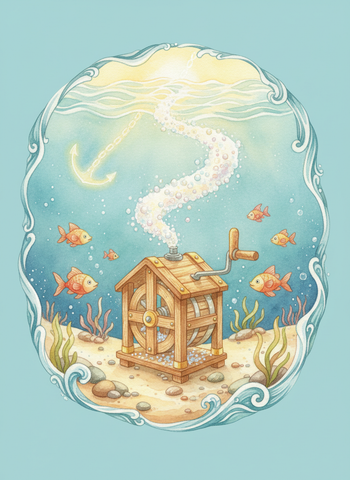
A magic hand-mill that grinds anything its owner asks for ends up at the bottom of the sea, grinding salt to this very day.
Once on a time, but it was a long, long time ago, there were two brothers, one rich and one poor. Now, one Christmas eve, the poor one hadn’t so much as a crumb in the house, either of meat or bread, so he went to his brother to ask him for something to keep Christmas with, in God’s name. It was not the first time his brother had been forced to help him, and you may fancy he wasn’t very glad to see his face, but he said:
Érase una vez, pero hace muchísimo tiempo, dos hermanos, uno rico y otro pobre. Pues bien, una Nochebuena, el pobre no tenía ni una miga en casa, ni de carne ni de pan, así que fue a ver a su hermano para pedirle algo con qué celebrar la Navidad, en nombre de Dios. No era la primera vez que su hermano se había visto obligado a ayudarlo, y os podéis imaginar que no le alegró mucho verle la cara, pero dijo:
“If you will do what I ask you to do, I’ll give you a whole flitch of bacon.”
«Si haces lo que te pida, te daré un costillar entero de tocino.»
So the poor brother said he would do anything, and was full of thanks.
Así que el hermano pobre dijo que haría cualquier cosa, y estaba lleno de agradecimiento.
“Well, here is the flitch”, said the rich brother, “and now go straight to Hell.”
«Bueno, aquí está el costillar», dijo el hermano rico, «y ahora vete derecho al Infierno.»
“What I have given my word to do, I must stick to”, said the other; so he took the flitch and set off. He walked the whole day, and at dusk he came to a place where he saw a very bright light.
«Lo que he dado mi palabra de hacer, debo cumplirlo», dijo el otro; así que tomó el costillar y se puso en marcha. Caminó todo el día, y al anochecer llegó a un lugar donde vio una luz muy brillante.
“Maybe this is the place”, said the man to himself. So he turned aside, and the first thing he saw was an old, old man, with a long white beard, who stood in an outhouse, hewing wood for the Christmas fire.
«Quizá este sea el sitio», se dijo el hombre a sí mismo. Así que se desvió, y lo primero que vio fue a un anciano, muy anciano, de larga barba blanca, que estaba en un cobertizo, cortando leña para el fuego de Navidad.
“Good even”, said the man with the flitch.
«Buenas noches», dijo el hombre con el costillar.
“The same to you; whither are you going so late?” said the man.
«Buenas noches a ti también; ¿adónde vas tan tarde?», dijo el hombre.
“Oh! I’m going to Hell, if I only knew the right way”, answered the poor man.
«¡Ah! Voy camino al Infierno, si tan solo supiera el camino correcto», respondió el hombre pobre.
“Well, you’re not far wrong, for this is Hell”, said the old man; “when you get inside they will be all for buying your flitch, for meat is scarce in Hell; but mind, you don’t sell it unless you get the hand-quern which stands behind the door for it. When you come out, I’ll teach you how to handle the quern, for it’s good to grind almost anything.”
«Bueno, no vas muy desencaminado, pues este es el Infierno», dijo el anciano; «cuando entres, todos querrán comprarte el costillar, pues la carne escasea en el Infierno; pero ten cuidado, no lo vendas a menos que te den a cambio el molinillo de mano que está detrás de la puerta. Cuando salgas, te enseñaré cómo manejar el molinillo, pues sirve para moler casi cualquier cosa.»
So the man with the flitch thanked the other for his good advice, and gave a great knock at the Devil’s door.
Así que el hombre con el costillar agradeció al otro su buen consejo, y dio un fuerte golpe en la puerta del Diablo.
When he got in, everything went just as the old man had said. All the devils, great and small, came swarming up to him like ants round an anthill, and each tried to outbid the other for the flitch.
Cuando entró, todo sucedió tal como había dicho el anciano. Todos los diablos, grandes y pequeños, se le vinieron encima en tropel como hormigas alrededor de un hormiguero, y cada uno trataba de superar la oferta del otro por el costillar.
“Well!” said the man, “by rights my old dame and I ought to have this flitch for our Christmas dinner; but since you have all set your hearts on it, I suppose I must give it up to you; but if I sell it at all, I’ll have for it that quern behind the door yonder.”
«¡Bueno!», dijo el hombre, «por derecho propio, mi vieja y yo deberíamos tener este costillar para nuestra cena de Navidad; pero ya que todos lo tenéis tan metido en el corazón, supongo que debo cedéroslo; pero si lo vendo, será a cambio de aquel molinillo detrás de la puerta.»
At first the Devil wouldn’t hear of such a bargain, and chaffered and haggled with the man; but he stuck to what he said, and at last the Devil had to part with his quern. When the man got out into the yard, he asked the old woodcutter how he was to handle the quern; and after he had learned how to use it, he thanked the old man and went off home as fast as he could, but still the clock had struck twelve on Christmas eve before he reached his own door.
Al principio el Diablo no quiso ni oír hablar de tal trato, y regateó y discutió con el hombre; pero este se mantuvo firme en lo dicho, y al fin el Diablo tuvo que desprenderse de su molinillo. Cuando el hombre salió al patio, le preguntó al viejo leñador cómo debía manejar el molinillo; y después de aprender a usarlo, le dio las gracias al anciano y se fue a casa tan rápido como pudo, pero aun así el reloj ya había dado las doce de la Nochebuena antes de que llegara a su propia puerta.
“Wherever in the world have you been?” said his old dame, “here have I sat hour after hour waiting and watching, without so much as two sticks to lay together under the Christmas brose.”
«¿Dónde diablos has estado?», dijo su vieja esposa, «aquí he estado sentada hora tras hora esperando y vigilando, sin siquiera dos palos que juntar bajo las gachas de Navidad.»
“Oh!” said the man, “I couldn’t get back before, for I had to go a long way first for one thing, and then for another; but now you shall see what you shall see.”
«¡Ah!», dijo el hombre, «no pude volver antes, pues tuve que ir un largo trecho primero por una cosa, y luego por otra; pero ahora verás lo que verás.»
So he put the quern on the table, and bade it first of all grind lights, then a table-cloth, then meat, then ale, and so on till they had got everything that was nice for Christmas fare. He had only to speak the word, and the quern ground out what he wanted. The old dame stood by blessing her stars, and kept on asking where he had got this wonderful quern, but he wouldn’t tell her.
Así que puso el molinillo sobre la mesa, y le ordenó primero que moliera luces, luego un mantel, luego carne, luego cerveza, y así sucesivamente hasta que tuvieron todo lo que era bueno para las viandas de Navidad. Solo tenía que decir la palabra, y el molinillo molía lo que él quería. La vieja se quedó ahí, bendiciendo su suerte, y seguía preguntando dónde había conseguido este maravilloso molinillo, pero él no quiso decírselo.
“It’s all one where I got it from; you see the quern is a good one, and the mill-stream never freezes, that’s enough.”
«Da igual dónde lo conseguí; ya ves que el molinillo es bueno, y el arroyo del molino nunca se congela, con eso basta.»
So he ground meat and drink and dainties enough to last out till Twelfth Day, and on the third day he asked all his friends and kin to his house, and gave a great feast. Now, when his rich brother saw all that was on the table, and all that was behind in the larder, he grew quite spiteful and wild, for he couldn’t bear that his brother should have anything.
Así que molió carne y bebida y golosinas suficientes para durar hasta el Día de Reyes, y al tercer día invitó a todos sus amigos y parientes a su casa, y dio un gran banquete. Ahora bien, cuando su hermano rico vio todo lo que había en la mesa, y todo lo que quedaba en la despensa, se puso bastante rencoroso y furioso, pues no podía soportar que su hermano tuviera nada.
“’Twas only on Christmas eve”, he said to the rest, “he was in such straits, that he came and asked for a morsel of food in God’s name, and now he gives a feast as if he were count or king”; and he turned to his brother and said:
«Fue apenas en Nochebuena», les dijo a los demás, «que estaba en tal apuro, que vino a pedirme un bocado de comida en nombre de Dios, y ahora da un banquete como si fuera conde o rey»; y se volvió hacia su hermano y dijo:
“But whence, in Hell’s name, have you got all this wealth?”
«Pero, ¿de dónde diablos has sacado toda esta riqueza?»
“From behind the door”, answered the owner of the quern, for he didn’t care to let the cat out of the bag. But later on the evening, when he had got a drop too much, he could keep his secret no longer, and brought out the quern and said:
«De detrás de la puerta», respondió el dueño del molinillo, pues no quería revelar el secreto. Pero más tarde en la noche, cuando había bebido un poco de más, ya no pudo guardar el secreto, y sacó el molinillo y dijo:
“There, you see what has gotten me all this wealth”; and so he made the quern grind all kind of things. When his brother saw it, he set his heart on having the quern, and, after a deal of coaxing, he got it; but he had to pay three hundred dollars for it, and his brother bargained to keep it till hay-harvest, for he thought, if I keep it till then, I can make it grind meat and drink that will last for years. So you may fancy the quern didn’t grow rusty for want of work, and when hay-harvest came, the rich brother got it, but the other took care not to teach him how to handle it.
«Ahí tienes, ves lo que me ha conseguido toda esta riqueza»; y así hizo que el molinillo moliera toda clase de cosas. Cuando su hermano lo vio, se le metió en la cabeza tener el molinillo, y, después de mucho rogar, lo consiguió; pero tuvo que pagar trescientos dólares por él, y su hermano acordó quedárselo hasta la siega del heno, pues pensó, si me lo quedo hasta entonces, puedo hacer que muela carne y bebida que duren años. Así que os podéis imaginar que el molinillo no se oxidó por falta de trabajo, y cuando llegó la siega del heno, el hermano rico lo recibió, pero el otro se cuidó de no enseñarle cómo manejarlo.
It was evening when the rich brother got the quern home, and next morning he told his wife to go out into the hay-field and toss, while the mowers cut the grass, and he would stay at home and get the dinner ready. So, when dinner-time drew near, he put the quern on the kitchen table and said:
Era de noche cuando el hermano rico llevó el molinillo a casa, y a la mañana siguiente le dijo a su esposa que fuera al campo de heno a voltearlo, mientras los segadores cortaban la hierba, y él se quedaría en casa a preparar la comida. Así que, cuando se acercaba la hora de comer, puso el molinillo sobre la mesa de la cocina y dijo:
“Grind herrings and broth, and grind them good and fast.”
«Muele arenques y caldo, y muélelos bien y rápido.»
So the quern began to grind herrings and broth; first of all, all the dishes full, then all the tubs full, and so on till the kitchen floor was quite covered. Then the man twisted and twirled at the quern to get it to stop, but for all his twisting and fingering the quern went on grinding, and in a little while the broth rose so high that the man was like to drown.
Así que el molinillo empezó a moler arenques y caldo; primero llenó todos los platos, luego todas las tinas, y así sucesivamente hasta que el suelo de la cocina quedó completamente cubierto. Entonces el hombre retorció y giró el molinillo para que se detuviera, pero por más que lo retorcía y manipulaba, el molinillo seguía moliendo, y al poco rato el caldo subió tan alto que el hombre casi se ahoga.
So he threw open the kitchen door and ran into the parlour, but it wasn’t long before the quern had ground the parlour full too, and it was only at the risk of his life that the man could get hold of the latch of the house door through the stream of broth. When he got the door open, he ran out and set off down the road, with the stream of herrings and broth at his heels, roaring like a waterfall over the whole farm.
Así que abrió de golpe la puerta de la cocina y corrió hacia la sala, pero no pasó mucho antes de que el molinillo también llenara la sala, y solo arriesgando su vida pudo el hombre alcanzar el pestillo de la puerta de la casa a través del torrente de caldo. Cuando logró abrir la puerta, salió corriendo y se echó a andar por el camino, con el torrente de arenques y caldo pisándole los talones, rugiendo como una cascada sobre toda la granja.
Now, his old dame, who was in the field tossing hay, thought it a long time to dinner, and at last she said:
Ahora bien, su vieja esposa, que estaba en el campo volteando el heno, pensó que la comida tardaba mucho, y al fin dijo:
“Well! though the master doesn’t call us home, we may as well go. Maybe he finds it hard work to boil the broth, and will be glad of my help.”
«¡Bueno! Aunque el amo no nos llame a casa, más vale que vayamos. Quizás le cueste trabajo hervir el caldo, y agradecerá mi ayuda.»
The men were willing enough, so they sauntered homewards; but just as they had got a little way up the hill, what should they meet but herrings, and broth, and bread, all running and dashing, and splashing together in a stream, and the master himself running before them for his life, and as he passed them he bawled out:
Los hombres estuvieron bastante dispuestos, así que se encaminaron tranquilamente hacia casa; pero apenas habían subido un poco por la colina, ¿con qué se encontraron sino con arenques, y caldo, y pan, todo corriendo y chapoteando y salpicando junto en un torrente, y el amo mismo corriendo delante de ellos por su vida, y al pasar junto a ellos gritó:
“Would to heaven each of you had a hundred throats! but take care you’re not drowned in the broth.”
«¡Ojalá el cielo le hubiera dado a cada uno de vosotros cien gargantas! Pero tened cuidado de no ahogaros en el caldo.»
Away he went, as though the Evil One were at his heels, to his brother’s house, and begged him for God’s sake to take back the quern that instant; for, said he:
Se fue corriendo, como si el Maligno mismo le pisara los talones, hacia la casa de su hermano, y le rogó por el amor de Dios que se llevara de vuelta el molinillo en ese mismo instante; pues, dijo:
“If it grinds only one hour more, the whole parish will be swallowed up by herrings and broth.”
«Si muele solo una hora más, toda la parroquia quedará tragada por arenques y caldo.»
But his brother wouldn’t hear of taking it back till the other paid him down three hundred dollars more.
Pero su hermano no quiso ni oír hablar de recuperarlo hasta que el otro le pagara trescientos dólares más.
So the poor brother got both the money and the quern, and it wasn’t long before he set up a farm-house far finer than the one in which his brother lived, and with the quern he ground so much gold that he covered it with plates of gold; and as the farm lay by the sea-side, the golden house gleamed and glistened far away over the sea. All who sailed by put ashore to see the rich man in the golden house, and to see the wonderful quern, the fame of which spread far and wide, till there was nobody who hadn’t heard tell of it.
Así que el hermano pobre se quedó tanto con el dinero como con el molinillo, y no pasó mucho tiempo antes de que levantara una granja mucho más hermosa que aquella en la que vivía su hermano, y con el molinillo molió tanto oro que la cubrió con planchas de oro; y como la granja quedaba a la orilla del mar, la casa dorada relucía y resplandecía a lo lejos sobre el mar. Todos los que navegaban por allí atracaban para ver al hombre rico en la casa dorada, y para ver el maravilloso molinillo, cuya fama se extendió por todas partes, hasta que no quedó nadie que no hubiera oído hablar de él.
So one day there came a skipper who wanted to see the quern; and the first thing he asked was if it could grind salt.
Así que un día llegó un capitán de barco que quería ver el molinillo; y lo primero que preguntó fue si podía moler sal.
“Grind salt!” said the owner; “I should just think it could. It can grind anything.”
«¡Moler sal!», dijo el dueño; «pues claro que puede. Puede moler cualquier cosa.»
When the skipper heard that, he said he must have the quern, cost what it would; for if he only had it, he thought he should be rid of his long voyages across stormy seas for a lading of salt. Well, at first the man wouldn’t hear of parting with the quern; but the skipper begged and prayed so hard, that at last he let him have it, but he had to pay many, many thousand dollars for it.
Cuando el capitán oyó esto, dijo que debía tener el molinillo, costara lo que costara; pues si lo tuviera, pensó, se libraría de sus largos viajes por mares tempestuosos en busca de un cargamento de sal. Bueno, al principio el hombre no quiso ni oír hablar de desprenderse del molinillo; pero el capitán rogó e imploró con tanta insistencia, que al fin se lo dejó tener, pero tuvo que pagar muchos, muchísimos miles de dólares por él.
Now, when the skipper had got the quern on his back, he soon made off with it, for he was afraid lest the man should change his mind; so he had no time to ask how to handle the quern, but got on board his ship as fast as he could, and set sail. When he had sailed a good way off, he brought the quern on deck and said:
Ahora bien, cuando el capitán tuvo el molinillo a cuestas, pronto se marchó con él, pues temía que el hombre cambiara de opinión; así que no tuvo tiempo de preguntar cómo manejar el molinillo, sino que subió a bordo de su barco tan rápido como pudo, y zarpó. Cuando ya había navegado un buen trecho, sacó el molinillo a cubierta y dijo:
“Grind salt, and grind both good and fast.”
«Muele sal, y muélela bien y rápido.»
Well, the quern began to grind salt so that it poured out like water; and when the skipper had got the ship full, he wished to stop the quern, but whichever way he turned it, and however much he tried, it was no good; the quern kept grinding on, and the heap of salt grew higher and higher, and at last down sank the ship.
Bueno, el molinillo empezó a moler sal de tal manera que salía a chorros como agua; y cuando el capitán tuvo el barco lleno, quiso detener el molinillo, pero por más que lo giraba de un lado a otro, y por mucho que lo intentara, no había manera; el molinillo seguía moliendo, y el montón de sal crecía cada vez más alto, y al fin el barco se hundió.
There lies the quern at the bottom of the sea, and grinds away at this very day, and that’s why the sea is salt.
Ahí está el molinillo, en el fondo del mar, y sigue moliendo hasta el día de hoy, y por eso el mar es salado.
