The Recount
Una historia gratuita en inglés de nivel C1 para estudiantes, para leer en línea en 5 idiomas, con opción de escucharla en la app gratuita Storyteller.
When a town council election ends in an exact tie, the clerk must organise a drawing of lots that is part ceremony and part comedy.
¡Ese fue el avance! Escucha la historia completa en la app gratuita Storyteller. Descargar la app
El audio no está disponible en este momento.
By the time the second recount ended, Sebastian had handled every one of the 1,846 ballots at least four times, and the result had not moved. Nell and Quincy, rivals for the one open seat on the town council, had received exactly 923 votes each. Never in his twenty-two years as election clerk had a tie come to him in person. He had read about the procedure, naturally, in the way one reads the instructions on a fire extinguisher.
Cuando terminó el segundo recuento, Sebastian había manejado cada una de las 1.846 papeletas al menos cuatro veces, y el resultado no se había movido. Nell y Quincy, rivales por el único escaño libre del concejo municipal, habían recibido exactamente 923 votos cada uno. Nunca en sus veintidós años como secretario electoral se le había presentado un empate en persona. Había leído sobre el procedimiento, naturalmente, de la manera en que uno lee las instrucciones de un extintor.
The law was clear and a hundred and forty years old. Where a recount produced equal numbers, the winner was to be "determined by lot, in the presence of the public." It said nothing about what a lot was or where the public should sit. Nor did it say what to do if the public consisted, as it did that Thursday evening, of thirty-one people on folding chairs and one man who had come about a parking permit.
La ley era clara y tenía ciento cuarenta años. Cuando un recuento arrojaba cifras iguales, el ganador debía «determinarse por sorteo, en presencia del público». No decía nada de qué era un sorteo ni de dónde debía sentarse el público. Tampoco decía qué hacer si el público consistía, como esa tarde de jueves, en treinta y una personas en sillas plegables y un hombre que había venido por un permiso de estacionamiento.
Sebastian had searched the town hall for a hat and found none. What he found instead was the large ceramic soup tureen from the retirement party, which was clean, opaque and, he decided, dignified enough. If the town had bought a proper ballot box in 1990, he would not now be standing at the front of the council chamber holding a tureen. There was no use thinking about that.
Sebastian había buscado un sombrero por todo el ayuntamiento y no había encontrado ninguno. Lo que encontró fue la gran sopera de cerámica de la fiesta de jubilación, que estaba limpia, era opaca y, decidió, tenía dignidad suficiente. Si el pueblo hubiera comprado una urna como Dios manda en 1990, él no estaría ahora de pie al frente de la sala del concejo sosteniendo una sopera. No servía de nada pensar en eso.
Nell and Quincy had spent five months disagreeing in public about whether the weekly market should move to the car park. Now they sat in the front row, a chair apart, not looking at each other with great concentration. Each had insisted on a third recount, and each had been refused. Had either asked a fourth time, Sebastian suspected, he would have gone home and let the town run itself.
Nell y Quincy llevaban cinco meses discrepando en público sobre si el mercado semanal debía mudarse al estacionamiento. Ahora estaban sentados en la primera fila, con una silla de por medio, sin mirarse con gran concentración. Cada uno había exigido un tercer recuento, y a cada uno se lo habían negado. Si cualquiera de los dos lo hubiera pedido por cuarta vez, sospechaba Sebastian, él se habría ido a casa y habría dejado que el pueblo se gobernara solo.
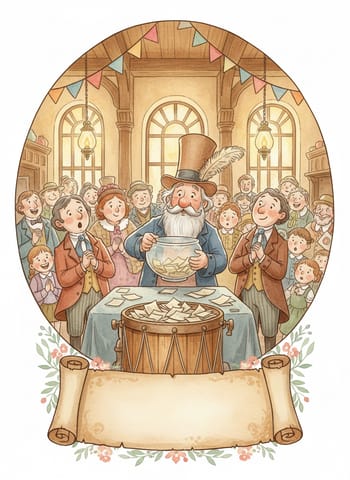
What made the ceremony absurd was its solemnity. He wore his jacket and read the statute aloud in full. Then he asked the man with the parking permit to confirm that the two slips of paper were identical, which the man did with the gravity of someone signing a treaty. One slip was blank. On the other Sebastian had written, in his best clerk's hand, the word ELECTED. What made it oddly moving, though he could not have said why, was the silence that followed, in which thirty-odd adults stood listening to a soup tureen.
Lo que volvía absurda la ceremonia era su solemnidad. Llevaba puesta la chaqueta y leyó el estatuto entero en voz alta. Luego pidió al hombre del permiso de estacionamiento que confirmara que los dos papelitos eran idénticos, cosa que el hombre hizo con la gravedad de quien firma un tratado. Uno estaba en blanco. En el otro, Sebastian había escrito, con su mejor letra de secretario, la palabra ELECTO. Lo que lo hacía curiosamente conmovedor, aunque no habría sabido decir por qué, era el silencio que siguió, en el que unos treinta adultos se quedaron escuchando una sopera.
"Alphabetical order," said Quincy, without turning. "Nell first. I've never liked being the last to find out."
«Orden alfabético», dijo Quincy, sin volverse. «Primero Nell. Nunca me ha gustado ser el último en enterarme».
Nell rose, put her hand into the tureen as if into cold water, and drew out a slip. Quincy drew the other. Neither unfolded theirs. They stood facing each other across the tureen, and Sebastian, who had rehearsed this moment in his head, discovered that his voice had gone.
Nell se levantó, metió la mano en la sopera como en agua fría y sacó un papelito. Quincy sacó el otro. Ninguno desdobló el suyo. Se quedaron de frente, a ambos lados de la sopera, y Sebastian, que había ensayado ese momento en su cabeza, descubrió que se había quedado sin voz.
"On three, then," Nell said. "Together."
«A la de tres, entonces», dijo Nell. «Juntos».
They opened the slips. Quincy's was blank. Nell looked at hers for a long time, and when she finally held it up to the room, nobody applauded; the chamber was too quiet, and the thing too strange. Quincy crossed the floor and shook her hand with real warmth, then held on to it a second longer than strictly necessary.
Abrieron los papelitos. El de Quincy estaba en blanco. Nell miró el suyo durante mucho rato, y cuando por fin lo levantó ante la sala, nadie aplaudió; la sala estaba demasiado silenciosa y la cosa era demasiado extraña. Quincy cruzó el piso y le estrechó la mano con auténtico calor, y luego la retuvo un segundo más de lo estrictamente necesario.
"The market stays where it is until we've talked," Nell said. "That was always going to be my first act."
«El mercado se queda donde está hasta que hayamos hablado», dijo Nell. «Ese iba a ser mi primer acto de todos modos».
"It was always going to be mine," said Quincy. He turned to the clerk. "Best of three?"
«Iba a ser el mío», dijo Quincy. Se volvió hacia el secretario. «¿Mejor de tres?»
"The statute is silent on that," Sebastian said, lowering the tureen, "and I intend to keep it that way."
«El estatuto guarda silencio al respecto», dijo Sebastian, bajando la sopera, «y pienso mantenerlo así».