The Recount
A free C1-level English story for language learners, readable online in 5 languages, with an option to listen via the free Storyteller app.
When a town council election ends in an exact tie, the clerk must organise a drawing of lots that is part ceremony and part comedy.
That was the preview! Hear the full story in the free Storyteller app. Get the app
Audio isn't available right now.
By the time the second recount ended, Sebastian had handled every one of the 1,846 ballots at least four times, and the result had not moved. Nell and Quincy, rivals for the one open seat on the town council, had received exactly 923 votes each. Never in his twenty-two years as election clerk had a tie come to him in person. He had read about the procedure, naturally, in the way one reads the instructions on a fire extinguisher.
The law was clear and a hundred and forty years old. Where a recount produced equal numbers, the winner was to be "determined by lot, in the presence of the public." It said nothing about what a lot was or where the public should sit. Nor did it say what to do if the public consisted, as it did that Thursday evening, of thirty-one people on folding chairs and one man who had come about a parking permit.
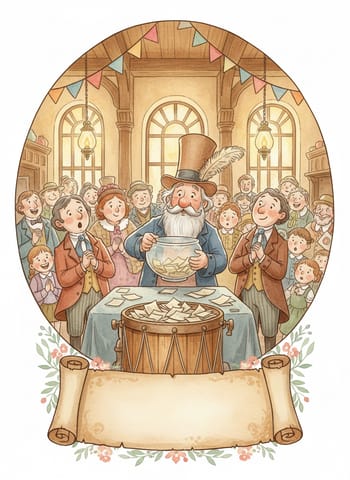
Sebastian had searched the town hall for a hat and found none. What he found instead was the large ceramic soup tureen from the retirement party, which was clean, opaque and, he decided, dignified enough. If the town had bought a proper ballot box in 1990, he would not now be standing at the front of the council chamber holding a tureen. There was no use thinking about that.
Nell and Quincy had spent five months disagreeing in public about whether the weekly market should move to the car park. Now they sat in the front row, a chair apart, not looking at each other with great concentration. Each had insisted on a third recount, and each had been refused. Had either asked a fourth time, Sebastian suspected, he would have gone home and let the town run itself.
What made the ceremony absurd was its solemnity. He wore his jacket and read the statute aloud in full. Then he asked the man with the parking permit to confirm that the two slips of paper were identical, which the man did with the gravity of someone signing a treaty. One slip was blank. On the other Sebastian had written, in his best clerk's hand, the word ELECTED. What made it oddly moving, though he could not have said why, was the silence that followed, in which thirty-odd adults stood listening to a soup tureen.
"Alphabetical order," said Quincy, without turning. "Nell first. I've never liked being the last to find out."
Nell rose, put her hand into the tureen as if into cold water, and drew out a slip. Quincy drew the other. Neither unfolded theirs. They stood facing each other across the tureen, and Sebastian, who had rehearsed this moment in his head, discovered that his voice had gone.
"On three, then," Nell said. "Together."
They opened the slips. Quincy's was blank. Nell looked at hers for a long time, and when she finally held it up to the room, nobody applauded; the chamber was too quiet, and the thing too strange. Quincy crossed the floor and shook her hand with real warmth, then held on to it a second longer than strictly necessary.
"The market stays where it is until we've talked," Nell said. "That was always going to be my first act."
"It was always going to be mine," said Quincy. He turned to the clerk. "Best of three?"
"The statute is silent on that," Sebastian said, lowering the tureen, "and I intend to keep it that way."