The Assessor of Success
A free B2-level English story for language learners, readable online in 7 languages, with an option to listen via the free Storyteller app.
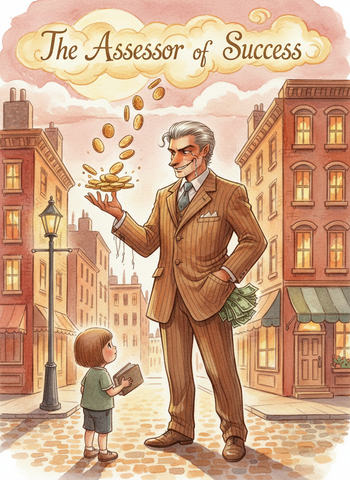
A silver-tongued swindler cons his way from empty pockets to a fat wad of cash in a single New York evening — until one unexpected face on a street corner cracks his practiced charm.
Hastings Beauchamp Morley sauntered across Union Square with a pitying look at the hundreds that lolled upon the park benches. They were a motley lot, he thought; the men with stolid, animal, unshaven faces; the women wriggling and self-conscious, twining and untwining their feet that hung four inches above the gravelled walks.
Hastings Beauchamp Morley atravessou a Union Square passeando, com um olhar de piedade para as centenas de pessoas espalhadas nos bancos do parque. Eram uma multidão variada, pensou ele; os homens com rostos embrutecidos, animalescos, mal barbeados; as mulheres se contorcendo, constrangidas, entrelaçando e desentrelaçando os pés que pendiam a dez centímetros das calçadas de cascalho.
Were I Mr. Carnegie or Mr. Rockefeller I would put a few millions in my inside pocket and make an appointment with all the Park Commissioners (around the corner, if necessary), and arrange for benches in all the parks of the world low enough for women to sit upon, and rest their feet upon the ground. After that I might furnish libraries to towns that would pay for ’em, or build sanitariums for crank professors, and call ’em colleges, if I wanted to.
Se eu fosse o senhor Carnegie ou o senhor Rockefeller, colocaria alguns milhões no bolso interno e marcaria um encontro com todos os Comissários de Parques (na esquina, se necessário), e providenciaria bancos em todos os parques do mundo baixos o bastante para as mulheres se sentarem e apoiarem os pés no chão. Depois disso, poderia até fornecer bibliotecas às cidades que pagassem por elas, ou construir sanatórios para professores excêntricos, e chamá-los de faculdades, se eu quisesse.
Women’s rights societies have been laboring for many years after equality with man. With what result? When they sit on a bench they must twist their ankles together and uncomfortably swing their highest French heels clear of earthly support. Begin at the bottom, ladies. Get your feet on the ground, and then rise to theories of mental equality.
As sociedades de direitos das mulheres vêm lutando há muitos anos pela igualdade com os homens. Com que resultado? Quando se sentam num banco, precisam entrelaçar os tornozelos e balançar desconfortavelmente seus salsos franceses mais altos, longe de qualquer apoio terreno. Comecem pelo básico, senhoras. Ponham os pés no chão, e depois se elevem às teorias da igualdade mental.
Hastings Beauchamp Morley was carefully and neatly dressed. That was the result of an instinct due to his birth and breeding. It is denied us to look further into a man’s bosom than the starch on his shirt front; so it is left to us only to recount his walks and conversation.
Hastings Beauchamp Morley estava vestido com cuidado e esmero. Era o resultado de um instinto devido ao seu nascimento e criação. Não nos é permitido enxergar mais fundo no peito de um homem do que a goma de sua camisa; assim, resta-nos apenas relatar seus passeios e conversas.
Morley had not a cent in his pockets; but he smiled pityingly at a hundred grimy, unfortunate ones who had no more, and who would have no more when the sun’s first rays yellowed the tall paper-cutter building on the west side of the square. But Morley would have enough by then. Sundown had seen his pockets empty before; but sunrise had always seen them lined.
Morley não tinha um centavo nos bolsos; mas sorria com piedade para uma centena de infelizes sujos e desafortunados que não tinham mais que ele, e que não teriam mais quando os primeiros raios do sol amarelassem o alto prédio de escritórios do lado oeste da praça. Mas Morley teria o suficiente até lá. O pôr do sol já vira seus bolsos vazios antes; mas o nascer do sol sempre os vira forrados.
First he went to the house of a clergyman off Madison avenue and presented a forged letter of introduction that holily purported to issue from a pastorate in Indiana. This netted him $5 when backed up by a realistic romance of a delayed remittance.
Primeiro, ele foi à casa de um clérigo perto da Madison Avenue e apresentou uma carta de apresentação falsificada que, piedosamente, alegava vir de uma paróquia em Indiana. Isso lhe rendeu 5 dólares, apoiado por um romance realista sobre uma remessa atrasada.
On the sidewalk, twenty steps from the clergyman’s door, a pale-faced, fat man huskily enveloped him with a raised, red fist and the voice of a bell buoy, demanding payment of an old score.
Na calçada, vinte passos da porta do clérigo, um homem pálido e gordo o envolveu com um punho vermelho erguido e a voz de uma boia sonora, exigindo o pagamento de uma dívida antiga.
“Why, Bergman, man,” sang Morley, dulcetly, “is this you? I was just on my way up to your place to settle up. That remittance from my aunt arrived only this morning. Wrong address was the trouble. Come up to the corner and I’ll square up. Glad to see you. Saves me a walk.”
"Ora, Bergman, meu caro," cantarolou Morley, docemente, "é você mesmo? Eu estava justamente a caminho da sua casa para acertar as contas. Aquela remessa da minha tia chegou só esta manhã. O endereço errado era o problema. Venha até a esquina que eu acerto tudo. Que bom te ver. Me poupa uma caminhada."
Four drinks placated the emotional Bergman. There was an air about Morley when he was backed by money in hand that would have stayed off a call loan at Rothschilds’. When he was penniless his bluff was pitched half a tone lower, but few are competent to detect the difference in the notes.
Quatro doses aplacaram o emotivo Bergman. Havia em Morley um ar que, quando respaldado por dinheiro na mão, teria sustentado um empréstimo à vista nos Rothschild. Quando estava sem um tostão, seu blefe se afinava meio tom mais baixo, mas poucos são capazes de perceber a diferença nas notas.
“You gum to mine blace and bay me to-morrow, Mr. Morley,” said Bergman. “Oxcuse me dat I dun you on der street. But I haf not seen you in dree mont’. Pros’t!”
"O senhor vem à minha loja e me paga amanhã, senhor Morley," disse Bergman. "Me desculpe por ter cobrado o senhor na rua. Mas eu não o via há três meses. Saúde!"
Morley walked away with a crooked smile on his pale, smooth face. The credulous, drink-softened German amused him. He would have to avoid Twenty-ninth street in the future. He had not been aware that Bergman ever went home by that route.
Morley se afastou com um sorriso torto no rosto pálido e liso. O alemão crédulo, amolecido pela bebida, o divertia. Ele teria que evitar a Rua Vinte e Nove no futuro. Não sabia que Bergman costumava voltar para casa por aquele caminho.
At the door of a darkened house two squares to the north Morley knocked with a peculiar sequence of raps. The door opened to the length of a six-inch chain, and the pompous, important black face of an African guardian imposed itself in the opening. Morley was admitted.
À porta de uma casa escura, dois quarteirões ao norte, Morley bateu numa sequência peculiar de toques. A porta se abriu até o comprimento de uma corrente de quinze centímetros, e o rosto negro, pomposo e importante de um guardião africano se impôs na abertura. Morley foi admitido.
In a third-story room, in an atmosphere opaque with smoke, he hung for ten minutes above a roulette wheel. Then downstairs he crept, and was out-sped by the important negro, jingling in his pocket the 40 cents in silver that remained to him of his five-dollar capital. At the corner he lingered, undecided.
Numa sala do terceiro andar, numa atmosfera opaca de fumaça, ele se debruçou por dez minutos sobre uma roleta. Depois desceu as escadas, sorrateiro, e foi apressado para fora pelo importante negro, chacoalhando no bolso os 40 centavos em moedas que restavam de seu capital de cinco dólares. Na esquina, ele se demorou, indeciso.
Across the street was a drug store, well lighted, sending forth gleams from the German silver and crystal of its soda fountain and glasses. Along came a youngster of five, headed for the dispensary, stepping high with the consequence of a big errand, possibly one to which his advancing age had earned him promotion. In his hand he clutched something tightly, publicly, proudly, conspicuously.
Do outro lado da rua havia uma farmácia, bem iluminada, emitindo brilhos da prata alemã e do cristal de sua fonte de refrigerantes e de seus copos. Vinha chegando um garotinho de cinco anos, rumo à farmácia, andando com passos altivos pela consequência de um grande recado, possivelmente um a que sua idade avançada lhe havia rendido promoção. Na mão apertava algo firmemente, publicamente, orgulhosamente, de modo bem visível.
Morley stopped him with his winning smile and soft speech.
Morley o deteve com seu sorriso cativante e sua fala mansa.
“Me?” said the youngster. “I’m doin’ to the drug ’tore for mamma. She dave me a dollar to buy a bottle of med’cin.”
"Eu?" disse o garotinho. "Eu tô indo pra farmácia pra mamãe. Ela me deu um dólar pra comprar um vidro de remédio."
“Now, now, now!” said Morley. “Such a big man you are to be doing errands for mamma. I must go along with my little man to see that the cars don’t run over him. And on the way we’ll have some chocolates. Or would he rather have lemon drops?”
"Ora, ora, ora!" disse Morley. "Que homem grande você é, para estar fazendo recados para a mamãe. Preciso ir junto com meu homenzinho para garantir que os bondes não passem por cima dele. E no caminho vamos comer uns chocolates. Ou ele prefere balas de limão?"
Morley entered the drug store leading the child by the hand. He presented the prescription that had been wrapped around the money.
Morley entrou na farmácia levando a criança pela mão. Apresentou a receita que estava enrolada no dinheiro.
On his face was a smile, predatory, parental, politic, profound.
Em seu rosto havia um sorriso, predatório, paternal, calculista, profundo.
“Aqua pura, one pint,” said he to the druggist. “Sodium chloride, ten grains. Fiat solution. And don’t try to skin me, because I know all about the number of gallons of H2O in the Croton reservoir, and I always use the other ingredient on my potatoes.”
"Água pura, meio litro," disse ele ao farmacêutico. "Cloreto de sódio, dez grãos. Faça a solução. E não tente me enganar, porque eu sei tudo sobre o número de galões de H2O no reservatório de Croton, e sempre uso o outro ingrediente nas minhas batatas."
“Fifteen cents,” said the druggist, with a wink after he had compounded the order. “I see you understand pharmacy. A dollar is the regular price.”
"Quinze centavos," disse o farmacêutico, piscando o olho depois de preparar o pedido. "Vejo que o senhor entende de farmácia. Um dólar é o preço normal."
“To gulls,” said Morley, smilingly.
"Para os trouxas," disse Morley, sorrindo.
He settled the wrapped bottle carefully in the child’s arms and escorted him to the corner. In his own pocket he dropped the 85 cents accruing to him by virtue of his chemical knowledge.
Ele acomodou cuidadosamente o vidro embrulhado nos braços da criança e a acompanhou até a esquina. No próprio bolso, guardou os 85 centavos que lhe cabiam em virtude de seu conhecimento de química.
“Look out for the cars, sonny,” he said, cheerfully, to his small victim.
"Cuidado com os bondes, garotinho," disse ele, alegremente, à sua pequena vítima.
Two street cars suddenly swooped in opposite directions upon the youngster. Morley dashed between them and pinned the infantile messenger by the neck, holding him in safety. Then from the corner of his street he sent him on his way, swindled, happy, and sticky with vile, cheap candy from the Italian’s fruit stand.
Dois bondes de repente avançaram em direções opostas sobre o garotinho. Morley disparou entre eles e segurou o mensageiro infantil pelo pescoço, mantendo-o em segurança. Depois, na esquina de sua rua, o mandou seguir seu caminho, ludibriado, feliz, e grudento de doce vil e barato da barraca de frutas do italiano.
Morley went to a restaurant and ordered a sirloin and a pint of inexpensive Chateau Breuille. He laughed noiselessly, but so genuinely that the waiter ventured to premise that good news had come his way.
Morley foi a um restaurante e pediu um contrafilé e meio litro de um Château Breuille barato. Riu sem fazer barulho, mas de forma tão genuína que o garçom se aventurou a supor que uma boa notícia lhe tinha chegado.
“Why, no,” said Morley, who seldom held conversation with any one. “It is not that. It is something else that amuses me. Do you know what three divisions of people are easiest to over-reach in transactions of all kinds?”
"Ah, não," disse Morley, que raramente conversava com alguém. "Não é isso. É outra coisa que me diverte. Você sabe quais são os três grupos de pessoas mais fáceis de enganar em qualquer tipo de transação?"
“Sure,” said the waiter, calculating the size of the tip promised by the careful knot of Morley’s tie; “there’s the buyers from the dry goods stores in the South during August, and honeymooners from Staten Island, and”—
"Claro," disse o garçom, calculando o tamanho da gorjeta prometida pelo nó cuidadoso da gravata de Morley; "tem os compradores das lojas de tecido do Sul durante agosto, e os recém-casados de Staten Island, e"—
“Wrong!” said Morley, chuckling happily. “The answer is just—men, women and children. The world—well, say New York and as far as summer boarders can swim out from Long Island—is full of greenhorns. Two minutes longer on the broiler would have made this steak fit to be eaten by a gentleman, Francois.”
"Errado!" disse Morley, rindo alegremente. "A resposta é simplesmente: homens, mulheres e crianças. O mundo — bem, digamos Nova York e até onde os veranistas conseguem nadar a partir de Long Island — está cheio de otários. Mais dois minutos na grelha teriam deixado esse bife apto a ser comido por um cavalheiro, François."
“If yez t’inks it’s on de bum,” said the waiter, “Oi’ll”—
"Se o senhor acha que 'tá ruim," disse o garçom, "eu vô"—
Morley lifted his hand in protest—slightly martyred protest.
Morley ergueu a mão em protesto — um protesto levemente de mártir.
“It will do,” he said, magnanimously. “And now, green Chartreuse, frappe and a demi-tasse.”
"Vai servir," disse ele, magnanimamente. "E agora, uma Chartreuse verde, frappé, e um cafezinho."
Morley went out leisurely and stood on a corner where two tradeful arteries of the city cross. With a solitary dime in his pocket, he stood on the curb watching with confident, cynical, smiling eyes the tides of people that flowed past him. Into that stream he must cast his net and draw fish for his further sustenance and need. Good Izaak Walton had not the half of his self-reliance and bait-lore.
Morley saiu a passos calmos e parou numa esquina onde duas artérias comerciais da cidade se cruzavam. Com uma única moeda de dez centavos no bolso, ficou na calçada observando, com olhos confiantes, cínicos e sorridentes, as marés de gente que passavam por ele. Naquele rio ele precisava lançar sua rede e pescar peixes para seu sustento e necessidades futuras. O bom Izaak Walton não tinha nem a metade de sua autoconfiança e de sua sabedoria em iscas.
A joyful party of four—two women and two men—fell upon him with cries of delight. There was a dinner party on—where had he been for a fortnight past?—what luck to thus run upon him! They surrounded and engulfed him—he must join them—tra la la—and the rest.
Um grupo alegre de quatro pessoas — duas mulheres e dois homens — caiu sobre ele com gritos de deleite. Havia um jantar em andamento — onde ele tinha estado nas últimas duas semanas? — que sorte encontrá-lo assim! Cercaram-no e o engoliram — ele precisava se juntar a eles — tralalá — e por aí vai.
One with a white hat plume curving to the shoulder touched his sleeve, and cast at the others a triumphant look that said: “See what I can do with him?” and added her queen’s command to the invitations.
Uma delas, com uma pluma branca no chapéu curvando-se até o ombro, tocou sua manga, e lançou aos outros um olhar triunfante que dizia: "Vejam o que eu consigo fazer com ele?" e acrescentou seu comando de rainha aos convites.
“I leave you to imagine,” said Morley, pathetically, “how it desolates me to forego the pleasure. But my friend Carruthers, of the New York Yacht Club, is to pick me up here in his motor car at 8.”
"Deixo que imaginem," disse Morley, com pesar, "o quanto isso me desola, ter que abrir mão do prazer. Mas meu amigo Carruthers, do Iate Clube de Nova York, virá me buscar aqui em seu automóvel às oito."
The white plume tossed, and the quartet danced like midges around an arc light down the frolicsome way.
A pluma branca se agitou, e o quarteto dançou como mosquitos ao redor de um poste de luz, pelo caminho travesso.
Morley stood, turning over and over the dime in his pocket and laughing gleefully to himself. “‘Front,’” he chanted under his breath; “‘front’ does it. It is trumps in the game. How they take it in! Men, women and children—forgeries, water-and-salt lies—how they all take it in!”
Morley ficou parado, girando a moeda de dez centavos no bolso e rindo alegremente para si mesmo. "'Aparência,'" cantarolou baixinho; "'aparência' é o que faz. É o trunfo do jogo. Como caem nessa! Homens, mulheres e crianças — falsificações, mentiras de água com sal — como todos caem nessa!"
An old man with an ill-fitting suit, a straggling gray beard and a corpulent umbrella hopped from the conglomeration of cabs and street cars to the sidewalk at Morley’s side.
Um velho de terno mal ajustado, barba grisalha desgrenhada e um guarda-chuva corpulento saltou do aglomerado de táxis e bondes até a calçada ao lado de Morley.
“Stranger,” said he, “excuse me for troubling you, but do you know anybody in this here town named Solomon Smothers? He’s my son, and I’ve come down from Ellenville to visit him. Be darned if I know what I done with his street and number.”
"Desculpe, estranho," disse ele, "me perdoe por incomodá-lo, mas o senhor conhece alguém nesta cidade chamado Solomon Smothers? É meu filho, e vim de Ellenville para visitá-lo. Que me condenem se eu sei o que fiz com o nome e o número da rua dele."
“I do not, sir,” said Morley, half closing his eyes to veil the joy in them. “You had better apply to the police.”
"Não conheço, senhor," disse Morley, semicerrando os olhos para velar a alegria neles. "É melhor o senhor recorrer à polícia."
“The police!” said the old man. “I ain’t done nothin’ to call in the police about. I just come down to see Ben. He lives in a five-story house, he writes me. If you know anybody by that name and could”—
"A polícia!" disse o velho. "Eu não fiz nada que precise chamar a polícia. Só vim ver o Ben. Ele mora numa casa de cinco andares, é o que ele me escreve. Se o senhor conhece alguém com esse nome e pudesse"—
“I told you I did not,” said Morley, coldly. “I know no one by the name of Smithers, and I advise you to”—
"Já disse que não conheço," disse Morley, friamente. "Não conheço ninguém chamado Smithers, e aconselho o senhor a"—
“Smothers not Smithers,” interrupted the old man hopefully. “A heavy-set man, sandy complected, about twenty-nine, two front teeth out, about five foot”—
"Smothers, não Smithers," interrompeu o velho, esperançoso. "Um homem corpulento, de tez clara, uns vinte e nove anos, faltando dois dentes da frente, uns metro e meio e"—
“Oh, ‘Smothers!’” exclaimed Morley. “Sol Smothers? Why, he lives in the next house to me. I thought you said ‘Smithers.’”
"Ah, 'Smothers'!" exclamou Morley. "Sol Smothers? Ora, ele mora na casa ao lado da minha. Achei que o senhor tinha dito 'Smithers'."
Morley looked at his watch. You must have a watch. You can do it for a dollar. Better go hungry than forego a gunmetal or the ninety-eight-cent one that the railroads—according to these watchmakers—are run by.
Morley olhou para o relógio. É preciso ter um relógio. Dá para conseguir um por um dólar. Melhor passar fome do que abrir mão de um niquelado, ou daquele de noventa e oito centavos com que — segundo esses relojoeiros — funcionam as ferrovias.
“The Bishop of Long Island,” said Morley, “was to meet me here at 8 to dine with me at the Kingfishers’ Club. But I can’t leave the father of my friend Sol Smothers alone on the street. By St. Swithin, Mr. Smothers, we Wall street men have to work! Tired is no name for it! I was about to step across to the other corner and have a glass of ginger ale with a dash of sherry when you approached me. You must let me take you to Sol’s house, Mr. Smothers. But, before we take the car I hope you will join me in”—
"O Bispo de Long Island," disse Morley, "deveria me encontrar aqui às oito para jantarmos no Clube dos Martins-Pescadores. Mas não posso deixar o pai do meu amigo Sol Smothers sozinho na rua. Por Santo Suíbito, senhor Smothers, nós, homens de Wall Street, temos que trabalhar! Cansado nem é a palavra! Eu estava prestes a atravessar até a outra esquina para tomar um copo de ginger ale com um toque de xerez quando o senhor se aproximou de mim. Precisa me deixar levá-lo até a casa do Sol, senhor Smothers. Mas, antes de pegarmos o bonde, espero que se junte a mim para"—
An hour later Morley seated himself on the end of a quiet bench in Madison Square, with a twenty-five-cent cigar between his lips and $140 in deeply creased bills in his inside pocket. Content, light-hearted, ironical, keenly philosophic, he watched the moon drifting in and out amidst a maze of flying clouds. An old, ragged man with a low-bowed head sat at the other end of the bench.
Uma hora depois, Morley se sentou na ponta de um banco tranquilo em Madison Square, com um charuto de vinte e cinco centavos entre os lábios e 140 dólares em notas profundamente amassadas no bolso interno. Contente, leve de coração, irônico, agudamente filosófico, observava a lua indo e vindo em meio a um labirinto de nuvens que voavam. Um velho maltrapilho, com a cabeça curvada, estava sentado na outra ponta do banco.
Presently the old man stirred and looked at his bench companion. In Morley’s appearance he seemed to recognize something superior to the usual nightly occupants of the benches.
Logo o velho se mexeu e olhou para seu companheiro de banco. Na aparência de Morley, parecia reconhecer algo superior aos habituais ocupantes noturnos dos bancos.
“Kind sir,” he whined, “if you could spare a dime or even a few pennies to one who”—
"Gentil senhor," choramingou ele, "se pudesse poupar uma moedinha de dez centavos, ou até uns trocados, para alguém que"—
Morley cut short his stereotyped appeal by throwing him a dollar.
Morley cortou seu apelo estereotipado, atirando-lhe um dólar.
“God bless you!” said the old man. “I’ve been trying to find work for”—
"Deus o abençoe!" disse o velho. "Tenho tentado encontrar trabalho para"—
“Work!” echoed Morley with his ringing laugh. “You are a fool, my friend. The world is a rock to you, no doubt; but you must be an Aaron and smite it with your rod. Then things better than water will gush out of it for you. That is what the world is for. It gives to me whatever I want from it.”
"Trabalho!" ecoou Morley com sua risada sonora. "Você é um tolo, meu amigo. O mundo é uma rocha para você, sem dúvida; mas você precisa ser um Aarão e golpeá-la com seu bordão. Então coisas melhores que água jorrarão dela para você. É para isso que o mundo serve. Ele me dá tudo o que eu quero dele."
“God has blessed you,” said the old man. “It is only work that I have known. And now I can get no more.”
"Deus o abençoou," disse o velho. "Só o trabalho é o que conheci. E agora não consigo mais nenhum."
“I must go home,” said Morley, rising and buttoning his coat. “I stopped here only for a smoke. I hope you may find work.”
"Preciso ir para casa," disse Morley, levantando-se e abotoando o casaco. "Parei aqui só para fumar. Espero que encontre trabalho."
“May your kindness be rewarded this night,” said the old man.
"Que sua bondade seja recompensada esta noite," disse o velho.
“Oh,” said Morley, “you have your wish already. I am satisfied. I think good luck follows me like a dog. I am for yonder bright hotel across the square for the night. And what a moon that is lighting up the city to-night. I think no one enjoys the moonlight and such little things as I do. Well, a good-night to you.”
"Ah," disse Morley, "seu desejo já se realizou. Estou satisfeito. Acho que a boa sorte me segue como um cão. Vou para aquele hotel iluminado do outro lado da praça, para passar a noite. E que lua é essa que ilumina a cidade esta noite. Acho que ninguém aprecia o luar e coisinhas assim tanto quanto eu. Bem, boa noite para o senhor."
Morley walked to the corner where he would cross to his hotel. He blew slow streams of smoke from his cigar heavenward. A policeman passing saluted to his benign nod. What a fine moon it was.
Morley caminhou até a esquina onde atravessaria para seu hotel. Soprou lentas nuvens de fumaça do charuto para o céu. Um policial que passava saudou seu aceno benigno. Que lua fina era aquela.
The clock struck nine as a girl just entering womanhood stopped on the corner waiting for the approaching car. She was hurrying as if homeward from employment or delay. Her eyes were clear and pure, she was dressed in simple white, she looked eagerly for the car and neither to the right nor the left.
O relógio bateu nove horas quando uma moça, entrando na idade adulta, parou na esquina esperando o bonde que se aproximava. Ela parecia apressada, como se voltasse para casa do trabalho ou de algum atraso. Seus olhos eram claros e puros, ela estava vestida de branco simples, e olhava ansiosamente pelo bonde, sem olhar nem para a direita nem para a esquerda.
Morley knew her. Eight years before he had sat on the same bench with her at school. There had been no sentiment between them—nothing but the friendship of innocent days.
Morley a conhecia. Oito anos antes, ele se sentara no mesmo banco com ela, na escola. Não houvera nenhum sentimento entre eles — nada além da amizade dos dias inocentes.
But he turned down the side street to a quiet spot and laid his suddenly burning face against the cool iron of a lamp-post, and said dully:
Mas ele virou pela rua lateral, para um canto tranquilo, e encostou o rosto, subitamente ardente, contra o ferro frio de um poste de luz, e disse, embotado:
“God! I wish I could die.”
"Deus! Como eu queria poder morrer."
