The Assessor of Success
A free B2-level English story for language learners, readable online in 7 languages, with an option to listen via the free Storyteller app.
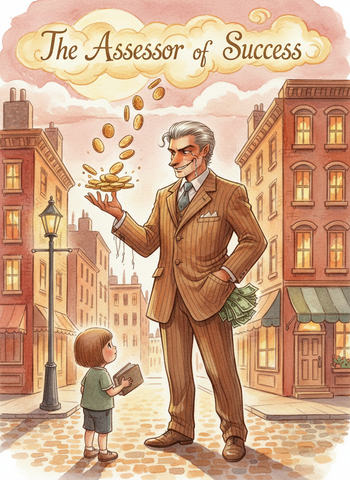
A silver-tongued swindler cons his way from empty pockets to a fat wad of cash in a single New York evening — until one unexpected face on a street corner cracks his practiced charm.
Hastings Beauchamp Morley sauntered across Union Square with a pitying look at the hundreds that lolled upon the park benches. They were a motley lot, he thought; the men with stolid, animal, unshaven faces; the women wriggling and self-conscious, twining and untwining their feet that hung four inches above the gravelled walks.
Hastings Beauchamp Morley cruzó Union Square con una mirada compasiva hacia los cientos que se repantigaban en los bancos del parque. Eran un grupo variopinto, pensó; los hombres de rostros embrutecidos, animales, sin afeitar; las mujeres retorciéndose, cohibidas, entrelazando y desenlazando los pies que colgaban a diez centímetros de los senderos de grava.
Were I Mr. Carnegie or Mr. Rockefeller I would put a few millions in my inside pocket and make an appointment with all the Park Commissioners (around the corner, if necessary), and arrange for benches in all the parks of the world low enough for women to sit upon, and rest their feet upon the ground. After that I might furnish libraries to towns that would pay for ’em, or build sanitariums for crank professors, and call ’em colleges, if I wanted to.
Si yo fuera el señor Carnegie o el señor Rockefeller, me metería unos cuantos millones en el bolsillo interior y concertaría una cita con todos los comisionados de parques (a la vuelta de la esquina, si hiciera falta), y dispondría bancos en todos los parques del mundo lo bastante bajos para que las mujeres pudieran sentarse y apoyar los pies en el suelo. Después quizá donaría bibliotecas a los pueblos que las pagaran, o construiría sanatorios para profesores excéntricos, y los llamaría universidades, si me daba la gana.
Women’s rights societies have been laboring for many years after equality with man. With what result? When they sit on a bench they must twist their ankles together and uncomfortably swing their highest French heels clear of earthly support. Begin at the bottom, ladies. Get your feet on the ground, and then rise to theories of mental equality.
Las sociedades por los derechos de la mujer llevan muchos años luchando por la igualdad con el hombre. ¿Con qué resultado? Cuando se sientan en un banco, deben cruzar los tobillos y balancear incómodamente sus altísimos tacones franceses lejos de todo apoyo terrenal. Empiecen por la base, señoras. Pongan los pies en el suelo, y luego elévense hacia las teorías de la igualdad mental.
Hastings Beauchamp Morley was carefully and neatly dressed. That was the result of an instinct due to his birth and breeding. It is denied us to look further into a man’s bosom than the starch on his shirt front; so it is left to us only to recount his walks and conversation.
Hastings Beauchamp Morley vestía con esmero y pulcritud. Era el resultado de un instinto debido a su cuna y crianza. No nos es dado ver más allá del almidón de la pechera de un hombre; así que solo nos queda relatar sus andanzas y su conversación.
Morley had not a cent in his pockets; but he smiled pityingly at a hundred grimy, unfortunate ones who had no more, and who would have no more when the sun’s first rays yellowed the tall paper-cutter building on the west side of the square. But Morley would have enough by then. Sundown had seen his pockets empty before; but sunrise had always seen them lined.
Morley no tenía un centavo en los bolsillos; pero sonreía con compasión a un centenar de desdichados mugrientos que no tenían más, y que no tendrían más cuando los primeros rayos del sol tiñeran de amarillo el alto edificio en forma de cortapapeles del lado oeste de la plaza. Pero Morley tendría suficiente para entonces. La puesta de sol había visto sus bolsillos vacíos antes; pero el amanecer siempre los había visto llenos.
First he went to the house of a clergyman off Madison avenue and presented a forged letter of introduction that holily purported to issue from a pastorate in Indiana. This netted him $5 when backed up by a realistic romance of a delayed remittance.
Primero fue a la casa de un clérigo cerca de Madison Avenue y presentó una carta de presentación falsificada que pretendía piadosamente provenir de un pastorado en Indiana. Esto le reportó cinco dólares, respaldado por un realista relato de una remesa retrasada.
On the sidewalk, twenty steps from the clergyman’s door, a pale-faced, fat man huskily enveloped him with a raised, red fist and the voice of a bell buoy, demanding payment of an old score.
En la acera, a veinte pasos de la puerta del clérigo, un hombre pálido y gordo lo envolvió con voz ronca, un puño rojo en alto y una voz de boya de campana, exigiendo el pago de una vieja deuda.
“Why, Bergman, man,” sang Morley, dulcetly, “is this you? I was just on my way up to your place to settle up. That remittance from my aunt arrived only this morning. Wrong address was the trouble. Come up to the corner and I’ll square up. Glad to see you. Saves me a walk.”
—Vaya, Bergman, hombre —canturreó Morley con dulzura—, ¿eres tú? Justo iba camino a tu casa a saldar cuentas. Esa remesa de mi tía llegó apenas esta mañana. El problema fue la dirección equivocada. Ven a la esquina y arreglamos todo. Qué bueno verte. Me ahorras una caminata.
Four drinks placated the emotional Bergman. There was an air about Morley when he was backed by money in hand that would have stayed off a call loan at Rothschilds’. When he was penniless his bluff was pitched half a tone lower, but few are competent to detect the difference in the notes.
Cuatro tragos apaciguaron al emotivo Bergman. Había un aire en Morley cuando lo respaldaba dinero en mano que habría detenido un préstamo exigible en Rothschild's. Cuando estaba sin blanca, su farol se afinaba medio tono más bajo, pero pocos son capaces de detectar la diferencia entre las notas.
“You gum to mine blace and bay me to-morrow, Mr. Morley,” said Bergman. “Oxcuse me dat I dun you on der street. But I haf not seen you in dree mont’. Pros’t!”
—Ben a mi tienda y me baga mañana, señor Morley —dijo Bergman—. Discúlbeme por reclamárselo en la calle. Pero no lo había visto en tres meses. ¡Salud!
Morley walked away with a crooked smile on his pale, smooth face. The credulous, drink-softened German amused him. He would have to avoid Twenty-ninth street in the future. He had not been aware that Bergman ever went home by that route.
Morley se alejó con una sonrisa torcida en su rostro pálido y liso. El alemán crédulo y ablandado por el trago lo divertía. Tendría que evitar la calle Veintinueve en el futuro. No sabía que Bergman regresara a casa por esa ruta.
At the door of a darkened house two squares to the north Morley knocked with a peculiar sequence of raps. The door opened to the length of a six-inch chain, and the pompous, important black face of an African guardian imposed itself in the opening. Morley was admitted.
En la puerta de una casa a oscuras, dos manzanas al norte, Morley llamó con una secuencia peculiar de golpes. La puerta se abrió hasta el largo de una cadena de quince centímetros, y el rostro negro, pomposo e importante de un guardián africano se impuso en la abertura. Dejaron entrar a Morley.
In a third-story room, in an atmosphere opaque with smoke, he hung for ten minutes above a roulette wheel. Then downstairs he crept, and was out-sped by the important negro, jingling in his pocket the 40 cents in silver that remained to him of his five-dollar capital. At the corner he lingered, undecided.
En una habitación del tercer piso, en una atmósfera opaca de humo, se quedó diez minutos suspendido sobre una ruleta. Luego bajó las escaleras a hurtadillas, y el importante negro lo despidió con premura, mientras él hacía tintinear en su bolsillo los cuarenta centavos en plata que le quedaban de su capital de cinco dólares. En la esquina se demoró, indeciso.
Across the street was a drug store, well lighted, sending forth gleams from the German silver and crystal of its soda fountain and glasses. Along came a youngster of five, headed for the dispensary, stepping high with the consequence of a big errand, possibly one to which his advancing age had earned him promotion. In his hand he clutched something tightly, publicly, proudly, conspicuously.
Al otro lado de la calle había una farmacia, bien iluminada, que despedía destellos de la plata alemana y el cristal de su fuente de soda y sus vasos. Se acercaba un pequeño de cinco años, camino de la dispensaría, dando pasos altivos por la importancia de un gran mandado, quizá uno para el que su edad avanzada le había ganado el ascenso. En la mano apretaba algo con fuerza, públicamente, con orgullo, de forma bien visible.
Morley stopped him with his winning smile and soft speech.
Morley lo detuvo con su sonrisa cautivadora y su hablar suave.
“Me?” said the youngster. “I’m doin’ to the drug ’tore for mamma. She dave me a dollar to buy a bottle of med’cin.”
—¿Yo? —dijo el pequeño—. Voy a la farmacia por mi mamá. Me dio un dólar para comprar un frasco de medicina.
“Now, now, now!” said Morley. “Such a big man you are to be doing errands for mamma. I must go along with my little man to see that the cars don’t run over him. And on the way we’ll have some chocolates. Or would he rather have lemon drops?”
—¡Vaya, vaya, vaya! —dijo Morley—. Qué hombrecito tan grande eres, haciendo mandados para mamá. Debo acompañar a mi hombrecito para que los tranvías no lo atropellen. Y de paso comeremos unos chocolates. ¿O preferirá caramelos de limón?
Morley entered the drug store leading the child by the hand. He presented the prescription that had been wrapped around the money.
Morley entró a la farmacia llevando al niño de la mano. Presentó la receta que había estado envuelta alrededor del dinero.
On his face was a smile, predatory, parental, politic, profound.
En su rostro había una sonrisa, depredadora, paternal, calculadora, profunda.
“Aqua pura, one pint,” said he to the druggist. “Sodium chloride, ten grains. Fiat solution. And don’t try to skin me, because I know all about the number of gallons of H2O in the Croton reservoir, and I always use the other ingredient on my potatoes.”
—Agua pura, medio litro —le dijo al farmacéutico—. Cloruro de sodio, diez granos. Fiat solución. Y no intente estafarme, porque conozco bien el número de galones de H2O en el embalse del Croton, y siempre uso el otro ingrediente en mis papas.
“Fifteen cents,” said the druggist, with a wink after he had compounded the order. “I see you understand pharmacy. A dollar is the regular price.”
—Quince centavos —dijo el farmacéutico, con un guiño después de preparar el pedido—. Veo que entiende de farmacia. El precio normal es un dólar.
“To gulls,” said Morley, smilingly.
—Para los incautos —dijo Morley, sonriendo.
He settled the wrapped bottle carefully in the child’s arms and escorted him to the corner. In his own pocket he dropped the 85 cents accruing to him by virtue of his chemical knowledge.
Acomodó con cuidado el frasco envuelto en los brazos del niño y lo escoltó hasta la esquina. En su propio bolsillo se guardó los ochenta y cinco centavos que le correspondían en virtud de sus conocimientos de química.
“Look out for the cars, sonny,” he said, cheerfully, to his small victim.
—Cuidado con los tranvías, hijo —dijo alegremente a su pequeña víctima.
Two street cars suddenly swooped in opposite directions upon the youngster. Morley dashed between them and pinned the infantile messenger by the neck, holding him in safety. Then from the corner of his street he sent him on his way, swindled, happy, and sticky with vile, cheap candy from the Italian’s fruit stand.
Dos tranvías se abalanzaron de pronto desde direcciones opuestas sobre el pequeño. Morley se lanzó entre ellos y sujetó al mensajero infantil por el cuello, poniéndolo a salvo. Luego, desde la esquina de su calle, lo mandó de nuevo por su camino, estafado, feliz, y pegajoso de dulces baratos y de mala calidad del puesto de fruta del italiano.
Morley went to a restaurant and ordered a sirloin and a pint of inexpensive Chateau Breuille. He laughed noiselessly, but so genuinely that the waiter ventured to premise that good news had come his way.
Morley fue a un restaurante y pidió un lomo y medio litro de un Château Breuille económico. Rio sin hacer ruido, pero con tanta sinceridad que el mesero se atrevió a suponer que le habían llegado buenas noticias.
“Why, no,” said Morley, who seldom held conversation with any one. “It is not that. It is something else that amuses me. Do you know what three divisions of people are easiest to over-reach in transactions of all kinds?”
—Ah, no —dijo Morley, que rara vez conversaba con nadie—. No es eso. Es otra cosa lo que me divierte. ¿Sabe usted qué tres tipos de personas son las más fáciles de engañar en toda clase de transacciones?
“Sure,” said the waiter, calculating the size of the tip promised by the careful knot of Morley’s tie; “there’s the buyers from the dry goods stores in the South during August, and honeymooners from Staten Island, and”—
—Claro —dijo el mesero, calculando el tamaño de la propina que prometía el nudo cuidadoso de la corbata de Morley—; están los compradores de las tiendas de telas del sur durante agosto, y los recién casados de Staten Island que van de luna de miel, y…
“Wrong!” said Morley, chuckling happily. “The answer is just—men, women and children. The world—well, say New York and as far as summer boarders can swim out from Long Island—is full of greenhorns. Two minutes longer on the broiler would have made this steak fit to be eaten by a gentleman, Francois.”
—¡Incorrecto! —dijo Morley, riendo satisfecho—. La respuesta es simplemente: hombres, mujeres y niños. El mundo —bueno, digamos Nueva York y hasta donde los veraneantes puedan nadar desde Long Island— está lleno de incautos. Dos minutos más en la parrilla habrían hecho de este bistec algo comestible para un caballero, Francois.
“If yez t’inks it’s on de bum,” said the waiter, “Oi’ll”—
—Si cree que está pasado —dijo el mesero—, yo…
Morley lifted his hand in protest—slightly martyred protest.
Morley alzó la mano en protesta, una protesta ligeramente mártir.
“It will do,” he said, magnanimously. “And now, green Chartreuse, frappe and a demi-tasse.”
—Servirá —dijo, magnánimamente—. Y ahora, Chartreuse verde, bien frío, y un café.
Morley went out leisurely and stood on a corner where two tradeful arteries of the city cross. With a solitary dime in his pocket, he stood on the curb watching with confident, cynical, smiling eyes the tides of people that flowed past him. Into that stream he must cast his net and draw fish for his further sustenance and need. Good Izaak Walton had not the half of his self-reliance and bait-lore.
Morley salió con calma y se plantó en una esquina donde se cruzaban dos arterias comerciales de la ciudad. Con una sola moneda de diez centavos en el bolsillo, se quedó en el borde de la acera observando con ojos seguros, cínicos y sonrientes las mareas de gente que fluían frente a él. En ese torrente debía lanzar su red y sacar peces para su sustento y necesidad futuros. El buen Izaak Walton no tenía ni la mitad de su confianza en sí mismo ni de su conocimiento del cebo.
A joyful party of four—two women and two men—fell upon him with cries of delight. There was a dinner party on—where had he been for a fortnight past?—what luck to thus run upon him! They surrounded and engulfed him—he must join them—tra la la—and the rest.
Un alegre grupo de cuatro —dos mujeres y dos hombres— cayó sobre él con gritos de deleite. Había una cena en marcha —¿dónde había estado durante las últimas dos semanas?— ¡qué suerte encontrarlo así! Lo rodearon y lo engulleron: debía unirse a ellos, tra la la, y demás.
One with a white hat plume curving to the shoulder touched his sleeve, and cast at the others a triumphant look that said: “See what I can do with him?” and added her queen’s command to the invitations.
Una con una pluma blanca en el sombrero, curvada hasta el hombro, le tocó la manga, y les lanzó a los demás una mirada triunfante que decía: "¿Ven lo que puedo hacer con él?", y añadió su orden de reina a las invitaciones.
“I leave you to imagine,” said Morley, pathetically, “how it desolates me to forego the pleasure. But my friend Carruthers, of the New York Yacht Club, is to pick me up here in his motor car at 8.”
—Los dejo imaginar —dijo Morley, con patetismo—, cuánto me desconsuela renunciar a este placer. Pero mi amigo Carruthers, del Club de Yates de Nueva York, va a recogerme aquí en su automóvil a las ocho.
The white plume tossed, and the quartet danced like midges around an arc light down the frolicsome way.
La pluma blanca se agitó, y el cuarteto bailó como mosquitos alrededor de un farol de arco por el camino travieso.
Morley stood, turning over and over the dime in his pocket and laughing gleefully to himself. “‘Front,’” he chanted under his breath; “‘front’ does it. It is trumps in the game. How they take it in! Men, women and children—forgeries, water-and-salt lies—how they all take it in!”
Morley se quedó allí, dando vueltas y vueltas a la moneda de diez centavos en su bolsillo y riendo alegremente para sus adentros. "'Aplomo'", canturreó por lo bajo; "'aplomo' es lo que hace falta. Es el triunfo en el juego. ¡Cómo se lo tragan! Hombres, mujeres y niños: falsificaciones, mentiras de agua con sal, ¡cómo se lo tragan todos!"
An old man with an ill-fitting suit, a straggling gray beard and a corpulent umbrella hopped from the conglomeration of cabs and street cars to the sidewalk at Morley’s side.
Un anciano con un traje mal ajustado, una barba gris desaliñada y un paraguas corpulento saltó de la maraña de coches y tranvías hasta la acera, junto a Morley.
“Stranger,” said he, “excuse me for troubling you, but do you know anybody in this here town named Solomon Smothers? He’s my son, and I’ve come down from Ellenville to visit him. Be darned if I know what I done with his street and number.”
—Forastero —dijo—, disculpe la molestia, pero ¿conoce usted a alguien en este pueblo llamado Solomon Smothers? Es mi hijo, y he venido desde Ellenville a visitarlo. Que me aspen si sé qué hice con su calle y número.
“I do not, sir,” said Morley, half closing his eyes to veil the joy in them. “You had better apply to the police.”
—No lo conozco, señor —dijo Morley, entornando los ojos para velar el gozo en ellos—. Mejor recurra a la policía.
“The police!” said the old man. “I ain’t done nothin’ to call in the police about. I just come down to see Ben. He lives in a five-story house, he writes me. If you know anybody by that name and could”—
—¡La policía! —dijo el anciano—. No he hecho nada que merezca llamar a la policía. Solo vine a ver a Ben. Vive en una casa de cinco pisos, me escribe. Si conoce a alguien con ese nombre y pudiera…
“I told you I did not,” said Morley, coldly. “I know no one by the name of Smithers, and I advise you to”—
—Le dije que no lo conozco —dijo Morley con frialdad—. No conozco a nadie llamado Smithers, y le aconsejo que…
“Smothers not Smithers,” interrupted the old man hopefully. “A heavy-set man, sandy complected, about twenty-nine, two front teeth out, about five foot”—
—Smothers, no Smithers —interrumpió el anciano, esperanzado—. Un hombre corpulento, de tez rojiza, de unos veintinueve años, sin dos dientes delanteros, de unos cinco pies…
“Oh, ‘Smothers!’” exclaimed Morley. “Sol Smothers? Why, he lives in the next house to me. I thought you said ‘Smithers.’”
—¡Ah, "Smothers"! —exclamó Morley—. ¿Sol Smothers? Pero si vive en la casa de al lado de la mía. Creí que había dicho "Smithers".
Morley looked at his watch. You must have a watch. You can do it for a dollar. Better go hungry than forego a gunmetal or the ninety-eight-cent one that the railroads—according to these watchmakers—are run by.
Morley miró su reloj. Hay que tener un reloj. Se puede conseguir uno por un dólar. Mejor pasar hambre que renunciar a uno de metal negro, o al de noventa y ocho centavos con el que —según estos relojeros— funcionan los ferrocarriles.
“The Bishop of Long Island,” said Morley, “was to meet me here at 8 to dine with me at the Kingfishers’ Club. But I can’t leave the father of my friend Sol Smothers alone on the street. By St. Swithin, Mr. Smothers, we Wall street men have to work! Tired is no name for it! I was about to step across to the other corner and have a glass of ginger ale with a dash of sherry when you approached me. You must let me take you to Sol’s house, Mr. Smothers. But, before we take the car I hope you will join me in”—
—El obispo de Long Island —dijo Morley— iba a encontrarse conmigo aquí a las ocho para cenar en el Club de los Martín Pescadores. Pero no puedo dejar al padre de mi amigo Sol Smothers solo en la calle. ¡Por San Swithin, señor Smothers, los hombres de Wall Street tenemos que trabajar! Cansado no le hace justicia. Estaba a punto de cruzar a la otra esquina a tomar un vaso de ginger ale con un toque de jerez cuando usted se acercó. Debe dejarme llevarlo a la casa de Sol, señor Smothers. Pero, antes de tomar el tranvía, espero que me acompañe en…
An hour later Morley seated himself on the end of a quiet bench in Madison Square, with a twenty-five-cent cigar between his lips and $140 in deeply creased bills in his inside pocket. Content, light-hearted, ironical, keenly philosophic, he watched the moon drifting in and out amidst a maze of flying clouds. An old, ragged man with a low-bowed head sat at the other end of the bench.
Una hora después, Morley se sentó en el extremo de un tranquilo banco de Madison Square, con un cigarro de veinticinco centavos entre los labios y ciento cuarenta dólares en billetes profundamente doblados en el bolsillo interior. Satisfecho, ligero de ánimo, irónico, agudamente filosófico, observaba la luna deslizarse dentro y fuera de un laberinto de nubes veloces. Un anciano andrajoso, con la cabeza gacha, estaba sentado en el otro extremo del banco.
Presently the old man stirred and looked at his bench companion. In Morley’s appearance he seemed to recognize something superior to the usual nightly occupants of the benches.
Pronto el anciano se removió y miró a su compañero de banco. En la apariencia de Morley pareció reconocer algo superior a los habituales ocupantes nocturnos de los bancos.
“Kind sir,” he whined, “if you could spare a dime or even a few pennies to one who”—
—Amable señor —gimoteó—, si pudiera darme diez centavos, o siquiera unos pocos, a quien…
Morley cut short his stereotyped appeal by throwing him a dollar.
Morley acortó su súplica estereotipada arrojándole un dólar.
“God bless you!” said the old man. “I’ve been trying to find work for”—
—¡Dios lo bendiga! —dijo el anciano—. He estado tratando de encontrar trabajo para…
“Work!” echoed Morley with his ringing laugh. “You are a fool, my friend. The world is a rock to you, no doubt; but you must be an Aaron and smite it with your rod. Then things better than water will gush out of it for you. That is what the world is for. It gives to me whatever I want from it.”
—¡Trabajo! —repitió Morley con su risa resonante—. Es usted un necio, amigo mío. El mundo es una roca para usted, sin duda; pero debe ser un Aarón y golpearla con su vara. Entonces brotarán para usted cosas mejores que el agua. Para eso está el mundo. A mí me da todo lo que le pido.
“God has blessed you,” said the old man. “It is only work that I have known. And now I can get no more.”
—Dios lo ha bendecido —dijo el anciano—. Yo solo he conocido el trabajo. Y ahora ya no puedo conseguir más.
“I must go home,” said Morley, rising and buttoning his coat. “I stopped here only for a smoke. I hope you may find work.”
—Debo irme a casa —dijo Morley, levantándose y abotonándose el abrigo—. Solo me detuve aquí a fumar. Espero que encuentre trabajo.
“May your kindness be rewarded this night,” said the old man.
—Que su bondad sea recompensada esta noche —dijo el anciano.
“Oh,” said Morley, “you have your wish already. I am satisfied. I think good luck follows me like a dog. I am for yonder bright hotel across the square for the night. And what a moon that is lighting up the city to-night. I think no one enjoys the moonlight and such little things as I do. Well, a good-night to you.”
—Ah —dijo Morley—, ya tiene su deseo cumplido. Estoy satisfecho. Creo que la buena suerte me sigue como un perro. Voy hacia aquel hotel resplandeciente al otro lado de la plaza, para pasar la noche. Y qué luna esa que ilumina la ciudad esta noche. Creo que nadie disfruta de la luz de la luna y de cosas tan pequeñas como yo. Bueno, que tenga buena noche.
Morley walked to the corner where he would cross to his hotel. He blew slow streams of smoke from his cigar heavenward. A policeman passing saluted to his benign nod. What a fine moon it was.
Morley caminó hacia la esquina por donde cruzaría hacia su hotel. Exhalaba lentas volutas de humo de su cigarro hacia el cielo. Un policía que pasaba saludó a su gesto benigno. Qué luna tan hermosa.
The clock struck nine as a girl just entering womanhood stopped on the corner waiting for the approaching car. She was hurrying as if homeward from employment or delay. Her eyes were clear and pure, she was dressed in simple white, she looked eagerly for the car and neither to the right nor the left.
El reloj dio las nueve mientras una muchacha que apenas entraba en la mujer se detenía en la esquina, esperando el tranvía que se acercaba. Iba de prisa, como si volviera a casa desde el trabajo o de algún retraso. Sus ojos eran claros y puros, iba vestida de blanco sencillo, y miraba con ansia el tranvía sin mirar ni a la derecha ni a la izquierda.
Morley knew her. Eight years before he had sat on the same bench with her at school. There had been no sentiment between them—nothing but the friendship of innocent days.
Morley la conocía. Ocho años atrás había compartido con ella el mismo banco de la escuela. No había habido sentimiento alguno entre ellos, nada más que la amistad de los días inocentes.
But he turned down the side street to a quiet spot and laid his suddenly burning face against the cool iron of a lamp-post, and said dully:
Pero él dobló por la calle lateral hacia un lugar tranquilo y apoyó su rostro, de pronto ardiendo, contra el hierro frío de un farol, y dijo con voz apagada:
“God! I wish I could die.”
—¡Dios! Cómo quisiera morirme.
