The One-Line Review
Cerita bahasa Inggris gratis level C1 untuk pelajar, bisa dibaca online dalam 5 bahasa, dengan pilihan untuk mendengarkannya di aplikasi Storyteller gratis.
An exhausted restaurant critic files a one-line review that makes a tiny restaurant famous, then visits to see what he has done.
Itu cuplikannya! Dengarkan cerita lengkapnya di aplikasi Storyteller gratis. Unduh aplikasi
Audio belum tersedia saat ini.
At two in the morning, with the deadline behind him and nothing ahead but a blank page and nine years of adjectives, Sindre files a review of a restaurant in exactly one line. "The soup was the only honest thing I was served this year." He reads it back, decides it is a kind of resignation letter, and sends it. Then he goes to bed.
Pukul dua dini hari, dengan tenggat di belakangnya dan tak ada yang di depan selain halaman kosong dan sembilan tahun kata sifat, Sindre mengirim ulasan sebuah restoran dalam tepat satu baris. "Sup itu satu-satunya hal jujur yang disajikan kepadaku tahun ini." Ia membacanya kembali, memutuskan itu semacam surat pengunduran diri, dan mengirimkannya. Lalu ia tidur.
Had he been less tired, he would have written six hundred words on texture, service and the lighting, and nobody would have read past the second paragraph. Never had so few words cost so much. By Wednesday strangers are quoting the line to him on the tram. By Friday the little place behind the fish market, nine tables, one cook, a pot of beans, has a queue around the block, and a television crew is filming the soup from three angles. What he had meant as a shrug has been received as a verdict.
Seandainya ia tidak sepenat itu, ia akan menulis enam ratus kata tentang tekstur, pelayanan, dan pencahayaan, dan tak seorang pun akan membaca melewati paragraf kedua. Belum pernah kata yang begitu sedikit harganya sebegitu mahal. Pada hari Rabu, orang-orang asing mengutip baris itu kepadanya di trem. Pada hari Jumat, tempat kecil di belakang pasar ikan itu, sembilan meja, satu juru masak, satu panci kacang, memiliki antrean mengular sepanjang blok, dan kru televisi merekam sup itu dari tiga sudut. Apa yang ia maksudkan sebagai angkat bahu telah diterima sebagai vonis.
Sindre follows the news on his phone with the uneasy fascination of a man who coughed and set off an avalanche. Reservations at the Little Kettle are full until spring. A website has ranked the soup against other soups. His editor sends one message, in capitals, that says only: MORE OF THESE.
Sindre mengikuti berita di ponselnya dengan rasa tertarik yang gelisah, seperti orang yang terbatuk dan memicu longsoran salju. Reservasi di Little Kettle penuh sampai musim semi. Sebuah situs web memeringkat sup itu dengan sup-sup lain. Editornya mengirim satu pesan, dengan huruf kapital, yang hanya berbunyi: LEBIH BANYAK YANG SEPERTI INI.
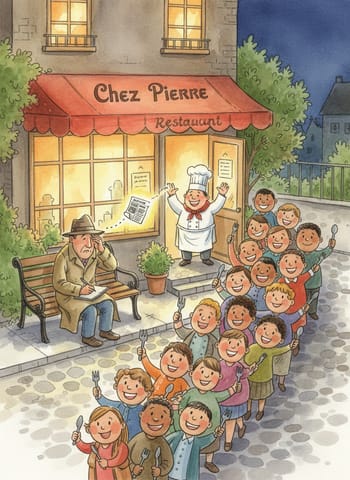
Three weeks later he goes to see what his line has done, in a scarf and a hat that make him look exactly like a critic in disguise. The queue is forty people long. A handwritten sign on the door says, NO PHOTOS OF THE SOUP, PLEASE, and beneath it, in a different pen, WE MEAN IT. Inside, twenty-six chairs have been wedged into a room built for nine. The soup now comes from a pot the size of a bathtub, and a young man in an apron carries bowls over his head like a waiter in a flood.
Tiga minggu kemudian ia pergi melihat apa yang telah diperbuat barisnya, dengan syal dan topi yang membuatnya tampak persis seperti kritikus yang menyamar. Antreannya empat puluh orang panjangnya. Sebuah tulisan tangan di pintu berbunyi, MOHON JANGAN MEMOTRET SUPNYA, dan di bawahnya, dengan pena lain, KAMI SERIUS. Di dalam, dua puluh enam kursi telah dijejalkan ke ruangan yang dibangun untuk sembilan. Sup itu kini berasal dari panci sebesar bak mandi, dan seorang pemuda berapron membawa mangkuk-mangkuk di atas kepalanya seperti pelayan di tengah banjir.
He waits two hours and eats. The soup is the same soup: plain, patient, a little salty, tasting of something that was cooked slowly by someone who did not expect to be watched. It is also, he suspects, tireder. Around him, people photograph it anyway, with a kind of reverent guilt, and he cannot decide whether he has done a good thing or merely a loud one.
Ia menunggu dua jam dan makan. Supnya sup yang sama: sederhana, sabar, agak asin, berasa sesuatu yang dimasak perlahan oleh seseorang yang tidak mengira akan ditonton. Sup itu juga, ia curiga, lebih letih. Di sekelilingnya, orang-orang tetap memotretnya, dengan semacam rasa bersalah yang khidmat, dan ia tak bisa memutuskan apakah ia telah berbuat baik atau sekadar berbuat gaduh.
When he puts down the spoon, the cook is standing beside the table. She is small and grey with fatigue, and she holds a ladle the way some people hold a handrail on a moving bus. "You're the one who wrote it," she says.
Ketika ia meletakkan sendok, sang juru masak sudah berdiri di samping meja. Ia kecil dan kelabu karena lelah, dan memegang sebuah sendok sayur seperti orang memegang pegangan tangan di bus yang melaju. "Kamu yang menulisnya," katanya.
"How did you know?"
"Bagaimana Ibu tahu?"
"Nobody in nine years has finished a bowl looking that guilty." She pulls out the chair opposite and sits without asking. "I'm sold out until April. My nephew has quit twice. My mother has framed your line and hung it above the stove, where it gets splashed."
"Selama sembilan tahun tak ada yang menghabiskan semangkuk dengan wajah sebersalah itu." Ia menarik kursi di seberang dan duduk tanpa bertanya. "Aku sudah penuh sampai April. Keponakanku sudah dua kali berhenti. Ibuku membingkai barismu dan menggantungnya di atas kompor, tempat ia terciprat."
"I'm sorry," Sindre says. "It was meant to be a throwaway."
"Saya minta maaf," kata Sindre. "Itu maksudnya cuma tulisan sambil lalu."
"Don't be sorry. I haven't slept since the first Tuesday."
"Jangan minta maaf. Aku belum tidur sejak Selasa pertama itu."
"Nor have I. That's why it was only one line."
"Saya juga. Karena itulah cuma satu baris."
The cook looks at him for a long moment, and something at the corner of her mouth gives way. Then she stands, takes an apron from a hook, and drops it into his lap along with a small, sharp knife.
Sang juru masak menatapnya lama, dan sesuatu di sudut mulutnya luluh. Lalu ia berdiri, mengambil celemek dari gantungan, dan menjatuhkannya ke pangkuan Sindre bersama sebilah pisau kecil yang tajam.
"If it's honest you want," she says, "there's a sack of potatoes in the back."
"Kalau kejujuran yang kamu mau," katanya, "ada sekarung kentang di belakang."
He ties the apron on and follows her through the swing door.
Ia mengikat celemek itu dan mengikutinya melewati pintu ayun.