The Locksmith's Box
Cerita bahasa Inggris gratis level C1 untuk pelajar, bisa dibaca online dalam 5 bahasa, dengan pilihan untuk mendengarkannya di aplikasi Storyteller gratis.
A locksmith opens a late woman's metal box for her family and finds something she has to decide how to describe.
Itu cuplikannya! Dengarkan cerita lengkapnya di aplikasi Storyteller gratis. Unduh aplikasi
Audio belum tersedia saat ini.
The box has been in the family for fifty years, and nobody has ever seen it open. Octavia sets her bag on the dining table of a house that smells of lemon polish and warm radiators. A nephew, his sister and her husband stand in a loose half-circle around it, wearing the careful faces of people at the reading of a will. "She kept the key on a chain," the nephew says. "It went missing before she died. Or she lost it on purpose."
Kotak itu sudah lima puluh tahun berada dalam keluarga, dan belum pernah ada yang melihatnya terbuka. Octavia meletakkan tasnya di meja makan sebuah rumah yang berbau semir lemon dan radiator hangat. Seorang keponakan, saudara perempuannya, dan suami perempuan itu berdiri setengah melingkar di sekelilingnya, dengan wajah-wajah hati-hati seperti orang yang sedang menghadiri pembacaan surat wasiat. "Dulu kuncinya ia simpan pada sebuah rantai," kata si keponakan. "Hilang sebelum ia meninggal. Atau sengaja ia hilangkan."
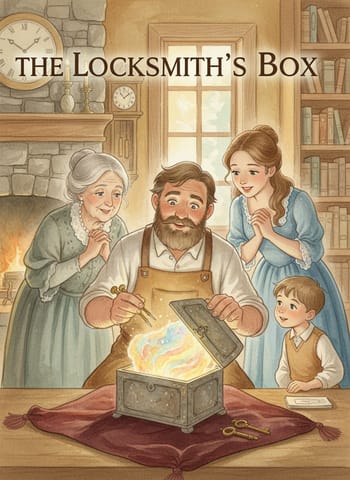
It is a plain grey metal box, the kind that once held petty cash behind a shop counter, with a handle worn smooth by decades of one particular hand. Octavia turns it over, checks the hinges, and decides the lock is cheaper than the box. She takes out two thin tools, closes her eyes the way she always does, and begins to listen with her fingertips.
Kotak itu polos, dari logam abu-abu, jenis yang dulu dipakai menyimpan uang kas kecil di balik meja toko, dengan gagang yang licin karena puluhan tahun dipegang tangan yang itu-itu juga. Octavia membaliknya, memeriksa engselnya, dan memutuskan bahwa kuncinya lebih murah daripada kotaknya. Ia mengeluarkan dua alat tipis, memejamkan mata seperti biasa, dan mulai mendengarkan dengan ujung jarinya.
It takes four minutes. Had the lock been newer, she would have had to drill it, and she would never have seen what was inside.
Butuh empat menit. Seandainya kuncinya lebih baru, ia terpaksa mengebornya, dan ia takkan pernah melihat isinya.
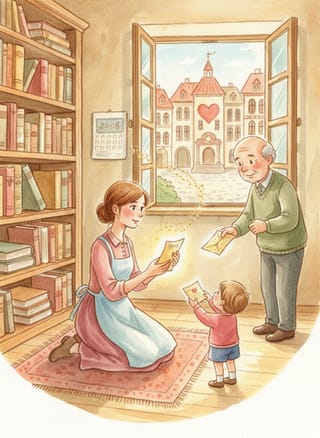
The lid rises with a small dry sigh. Inside, packed on edge like cards in an index, are envelopes, perhaps fifty of them, each addressed in the same upright hand. The ink runs from brown at the back to blue near the front. None of them has a stamp. None, as far as she can see, has ever been near a post box.
Tutupnya terangkat dengan desah kering yang kecil. Di dalamnya, berjajar tegak seperti kartu dalam kotak indeks, ada amplop-amplop, mungkin lima puluh jumlahnya, masing-masing ditulisi dengan tulisan tegak yang sama. Tintanya berubah dari cokelat di bagian belakang menjadi biru di dekat bagian depan. Tak satu pun berperangko. Tak satu pun, sejauh yang bisa ia lihat, pernah mendekati kotak pos.
She does not mean to read anything. It is simply that the front envelope has slid open at the flap, and the top line of the page is facing her. I am sorry that I let you think it was your fault. She looks away at once, but the sentence has already gone in, and it sits in her like a swallowed stone.
Ia tidak berniat membaca apa pun. Hanya saja amplop paling depan sudah terbuka pada lipatannya, dan baris teratas kertasnya menghadap ke arahnya. Maafkan aku karena membiarkanmu mengira itu salahmu. Ia langsung memalingkan muka, tetapi kalimat itu sudah telanjur masuk, dan mengendap di dalam dirinya seperti batu yang tertelan.
What she notices next is not the contents but the pattern. Every envelope carries a different name, and she has just filled out the work order with the family's names, so she recognises the one on the seventh envelope from the front. Another belongs, she guesses, to the husband's mother. There are names she does not know at all, some with dates in the corner going back to before anyone in this room was born.
Yang ia perhatikan berikutnya bukan isinya, melainkan polanya. Setiap amplop memuat nama yang berbeda, dan ia baru saja mengisi surat perintah kerja dengan nama-nama keluarga ini, jadi ia mengenali nama pada amplop ketujuh dari depan. Satu lagi, ia menduga, milik ibu si suami. Ada pula nama-nama yang sama sekali tak ia kenal, sebagian dengan tanggal di sudutnya yang berasal dari masa sebelum siapa pun di ruangan ini lahir.
"Well?" the nephew says. His voice is too casual. He is hoping, she can tell, for a deed or a bank book, something with a number on it. "Is there anything in it?"
"Bagaimana?" tanya si keponakan. Suaranya terlalu santai. Ia berharap, Octavia bisa merasakannya, ada akta atau buku tabungan, sesuatu yang ada angkanya. "Ada isinya?"
"Papers," Octavia says.
"Kertas-kertas," kata Octavia.
"What sort of papers?" says the sister.
"Kertas apa?" tanya si saudara perempuan.
Octavia has stood in a great many strangers' hallways with a bag of tools, and she knows how much a house can bear to be told in one afternoon. She could say nothing more and let the family find out alone. She could say everything and make herself the person who spoiled it. Neither seems right, and she is aware of how little the choice belongs to her.
Octavia sudah berdiri di banyak lorong rumah orang asing sambil membawa tas peralatan, dan ia tahu seberapa banyak yang sanggup ditanggung sebuah rumah untuk diberi tahu dalam satu sore. Ia bisa tak mengatakan apa-apa lagi dan membiarkan keluarga itu mencari tahu sendiri. Ia bisa mengatakan semuanya dan menjadi orang yang merusak segalanya. Keduanya terasa tidak tepat, dan ia sadar betapa sedikit pilihan itu menjadi haknya.
"Letters," she says at last. "A lot of them. Some of them are addressed to people in this room. I haven't read them, and I won't." She lifts the lid fully and steps back from the table, so that the box belongs to them again.
"Surat," katanya akhirnya. "Banyak sekali. Sebagian ditujukan kepada orang-orang di ruangan ini. Saya belum membacanya, dan tidak akan." Ia mengangkat tutupnya sepenuhnya dan mundur dari meja, sehingga kotak itu kembali menjadi milik mereka.
Nobody moves. The sister puts a hand to her mouth.
Tak ada yang bergerak. Si saudara perempuan menutup mulut dengan tangan.
At the front door, bag on her shoulder, Octavia hears the nephew come out of the dining room behind her. "Were they ever posted?" he asks.
Di pintu depan, tas di bahunya, Octavia mendengar si keponakan keluar dari ruang makan di belakangnya. "Apakah surat-surat itu pernah dikirim?" tanyanya.
"I don't think so. Not one."
"Kurasa tidak. Satu pun tidak."
"Then why would she keep them? Why not just send them?"
"Lalu kenapa ia menyimpannya? Kenapa tidak langsung dikirim saja?"
Octavia thinks of every key she has ever cut for someone who later changed the locks. "Some things are easier to write than to hand over," she says, and opens the door onto the cold.
Octavia teringat setiap kunci yang pernah ia buatkan untuk seseorang yang kemudian mengganti gemboknya. "Beberapa hal lebih mudah ditulis daripada diserahkan," katanya, dan membuka pintu ke arah udara dingin.