The Unanswered Letters
Una historia gratuita en inglés de nivel C1 para estudiantes, para leer en línea en 3 idiomas, con opción de escucharla en la app gratuita Storyteller.
Marguerite drives to her silent brother's house after a year of unanswered letters and finds out why he never opened one.
¡Ese fue el avance! Escucha la historia completa en la app gratuita Storyteller. Descargar la app
El audio no está disponible en este momento.
Marguerite had written to her brother every Sunday for eleven months before she let herself notice that he never wrote back.
Marguerite le había escrito a su hermano todos los domingos durante once meses antes de permitirse notar que él nunca le respondía.
The letters were not complicated. She told him about the garden, about her knee giving her trouble on the stairs, about a neighbor's dog that had taken to sleeping under her porch. She signed each one the same way, "with love, as always," and dropped it in the mailbox before her coffee got cold. Kojo did not reply, not once. For a long time she told herself that was simply who he had become — a man too busy, or too proud, or too far gone into whatever quiet resentment had opened between them. It had started, she assumed, the year their mother died.
Las cartas no eran complicadas. Le contaba sobre el jardín, sobre las molestias que le daba la rodilla al subir las escaleras, sobre el perro de un vecino que se había acostumbrado a dormir bajo su porche. Firmaba cada una de la misma manera, «con cariño, como siempre», y la echaba al correo antes de que se le enfriara el café. Kojo no respondía, ni una sola vez. Durante mucho tiempo se dijo a sí misma que eso era simplemente en quién se había convertido él: un hombre demasiado ocupado, o demasiado orgulloso, o demasiado hundido en algún resentimiento silencioso que se había abierto entre ellos. Había comenzado, suponía, el año en que murió su madre.
It was the silence itself that finally undid her, not any single letter. Had she known how heavy eleven months of it would feel, she might have stopped after the third or fourth. Instead she kept writing, less because she expected an answer and more because stopping would have meant admitting the distance was permanent.
Fue el silencio en sí lo que finalmente la venció, no ninguna carta en particular. Si hubiera sabido lo pesado que se sentiría al cabo de once meses, quizás habría dejado de escribir después de la tercera o la cuarta. En cambio siguió escribiendo, menos porque esperara una respuesta y más porque detenerse habría significado admitir que la distancia era permanente.
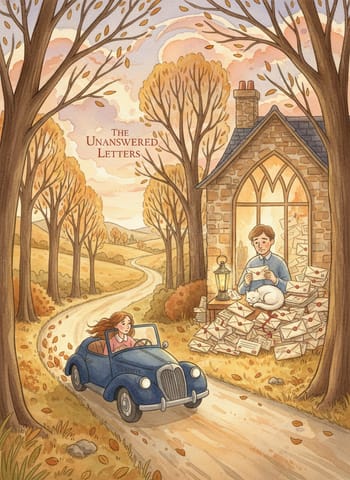
She drove the four hours to his house in October, unannounced, telling herself she only wanted to see that he was well. Kojo opened the door looking older than she remembered, and for a moment neither of them said anything useful.
Condujo las cuatro horas hasta la casa de él en octubre, sin avisar, diciéndose que solo quería ver que estuviera bien. Kojo abrió la puerta con un aspecto más viejo del que ella recordaba, y por un momento ninguno de los dos dijo nada útil.
"You could have called," he said finally.
«Podrías haber llamado», dijo él finalmente.
"I wrote," she said. "Every week. You never wrote back."
«Escribí», dijo ella. «Cada semana. Nunca me respondiste».
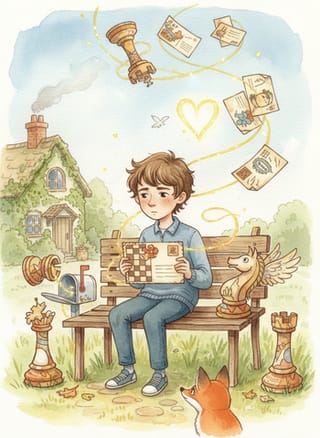
He didn't answer right away. Instead he led her to a kitchen drawer, the kind every house has, crowded with rubber bands and dead batteries and a spare key to a door that no longer existed. Underneath all of it, in a bundle held together with a hair tie, were her letters, every one unopened, the envelopes gone soft at the corners from handling. Reading none of them, he had still touched every single one, turning each over the way a person turns over a decision not yet made.
Él no contestó de inmediato. En cambio, la llevó a un cajón de la cocina, del tipo que hay en toda casa, lleno de ligas de goma y pilas muertas y una llave de repuesto de una puerta que ya no existía. Debajo de todo eso, en un fajo sujeto con una liga para el cabello, estaban sus cartas, todas sin abrir, los sobres suavizados en las esquinas por el manejo. Sin leer ninguna, aun así había tocado cada una, dándoles vuelta como alguien que da vuelta a una decisión que todavía no ha tomado.
"I couldn't open them," he said. "Not because I didn't want to know how you were. Because I was afraid of what it would mean if I read one and you sounded fine without me."
«No podía abrirlas», dijo él. «No porque no quisiera saber cómo estabas. Sino porque temía lo que significaría si leía una y sonabas bien sin mí».
Marguerite sat down at his table without being asked. What surprised her most was not that he had kept the letters, but that he had handled them so often without ever opening one.
Marguerite se sentó a su mesa sin que la invitaran. Lo que más le sorprendió no fue que él hubiera guardado las cartas, sino que las hubiera manejado tantas veces sin abrir ninguna.
"They're not that interesting," she said eventually. "Mostly the garden."
«No son tan interesantes», dijo ella al final. «Sobre todo el jardín».
"I know," Kojo said. "I could tell by the weight."
«Lo sé», dijo Kojo. «Podía notarlo por el peso».
She almost laughed. Rarely had a joke landed so strangely, half comfort and half accusation. But it was the first thing either of them had said all afternoon that sounded like the two of them, ten years ago, before whatever had gone wrong between them.
Ella casi se rio. Pocas veces una broma había caído de manera tan extraña, mitad consuelo y mitad acusación. Pero fue lo primero que cualquiera de los dos había dicho en toda la tarde que sonara como ellos mismos, diez años atrás, antes de lo que fuera que se hubiera roto entre ellos.
Neither opened the letters that day. Marguerite left the bundle on the table when she drove home. It was three weeks before Kojo called to say he had finally read the first one, and did she still have the recipe for the soup their mother used to make.
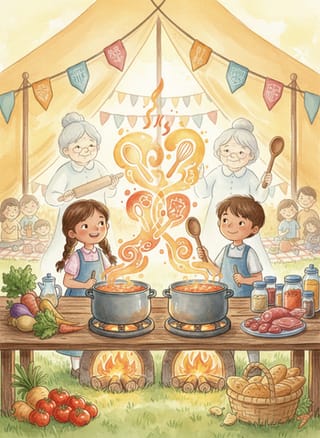
Ninguno abrió las cartas ese día. Marguerite dejó el fajo sobre la mesa cuando condujo de vuelta a casa. Pasaron tres semanas antes de que Kojo llamara para decir que finalmente había leído la primera, y preguntar si todavía tenía la receta de la sopa que hacía su madre.
She said she did. She did not ask why it had taken him three weeks to open one envelope out of forty-something. Some arithmetic, she had decided, was not hers to check.
Ella dijo que sí la tenía. No preguntó por qué le había tomado tres semanas abrir un solo sobre de los cuarenta y tantos. Cierta aritmética, había decidido, no le correspondía a ella comprobarla.