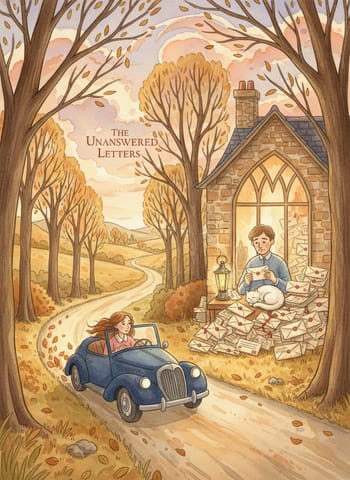
The Unanswered Letters
قصة إنجليزية مجانية بالمستوى C1 لمتعلمي اللغات، يمكن قراءتها على الإنترنت بلغات عددها 8، مع إمكانية الاستماع إليها عبر تطبيق Storyteller المجاني.
Marguerite drives to her silent brother's house after a year of unanswered letters and finds out why he never opened one.
انتهى المقطع التجريبي! استمع إلى القصة كاملة في تطبيق Storyteller المجاني. حمّل التطبيق
الصوت غير متاح الآن.
Marguerite had written to her brother every Sunday for eleven months before she let herself notice that he never wrote back.
كانت مارغريت قد كتبت إلى أخيها في يوم الأحد من كل أسبوع طوال أحد عشر شهرًا قبل أن تسمح لنفسها بأن تنتبه إلى أنه لم يردّ عليها يومًا.
The letters were not complicated. She told him about the garden, about her knee giving her trouble on the stairs, about a neighbor's dog that had taken to sleeping under her porch. She signed each one the same way, "with love, as always," and dropped it in the mailbox before her coffee got cold. Kojo did not reply, not once. For a long time she told herself that was simply who he had become — a man too busy, or too proud, or too far gone into whatever quiet resentment had opened between them. It had started, she assumed, the year their mother died.
لم تكن الرسائل معقدة. كانت تحكي له عن الحديقة، وعن ركبتها التي تؤلمها على الدرج، وعن كلب أحد الجيران الذي اعتاد أن ينام تحت شرفة بيتها. وكانت تختم كل رسالة بالعبارة نفسها، «مع حبي، كما هي العادة»، وتضعها في صندوق البريد قبل أن تبرد قهوتها. لم يردّ كوجو، ولو مرة واحدة. وظلت زمنًا طويلًا تقول لنفسها إن هذا هو ما صار إليه: رجل مشغول أكثر من اللازم، أو معتدّ بنفسه، أو غارق في ضغينة هادئة انفتحت بينهما. افترضت أنها بدأت في السنة التي ماتت فيها أمهما.
It was the silence itself that finally undid her, not any single letter. Had she known how heavy eleven months of it would feel, she might have stopped after the third or fourth. Instead she kept writing, less because she expected an answer and more because stopping would have meant admitting the distance was permanent.
لم تكن رسالة بعينها هي التي أنهكتها في النهاية، بل الصمت ذاته. ولو علمت كم سيكون ثقيلًا صمتُ أحد عشر شهرًا لربما توقفت بعد الرسالة الثالثة أو الرابعة. لكنها واصلت الكتابة، وما دفعها إلى ذلك أن التوقف سيعني الإقرار بأن المسافة دائمة، أكثر مما دفعها أملها في جواب.
She drove the four hours to his house in October, unannounced, telling herself she only wanted to see that he was well. Kojo opened the door looking older than she remembered, and for a moment neither of them said anything useful.
قادت السيارة أربع ساعات إلى بيته في أكتوبر دون أن تخبره، وهي تقنع نفسها بأنها تريد فقط أن تطمئن إلى أنه بخير. فتح كوجو الباب وقد بدا أكبر سنًّا مما تذكر، ولبرهة لم يقل أحدهما شيئًا مفيدًا.
"You could have called," he said finally.
«كان بإمكانك أن تتصلي»، قال أخيرًا.
"I wrote," she said. "Every week. You never wrote back."
«كتبتُ إليك»، قالت. «كل أسبوع. ولم تردّ عليّ يومًا.»
He didn't answer right away. Instead he led her to a kitchen drawer, the kind every house has, crowded with rubber bands and dead batteries and a spare key to a door that no longer existed. Underneath all of it, in a bundle held together with a hair tie, were her letters, every one unopened, the envelopes gone soft at the corners from handling. Reading none of them, he had still touched every single one, turning each over the way a person turns over a decision not yet made.
لم يجب على الفور. بل قادها إلى درج في المطبخ، من النوع الذي يوجد في كل بيت، مكتظ بالأربطة المطاطية والبطاريات التالفة ومفتاح احتياطي لباب لم يعد موجودًا. وتحت ذلك كله، في رزمة مشدودة بربطة شعر، كانت رسائلها، كلها مغلقة، لم يُفتح منها ظرف واحد، وقد لانت حواف الأظرف من كثرة تناولها. لم يقرأ منها شيئًا، ومع ذلك لمس كل واحدة منها، وقلّبها كما يقلّب المرء قرارًا لم يحسمه بعد.
"I couldn't open them," he said. "Not because I didn't want to know how you were. Because I was afraid of what it would mean if I read one and you sounded fine without me."
«لم أستطع فتحها»، قال. «لا لأنني لم أرد أن أعرف كيف حالك، بل لأنني كنت أخشى ما سيعنيه أن أقرأ واحدة منها فأجدك تبدين بخير من دوني.»
Marguerite sat down at his table without being asked. What surprised her most was not that he had kept the letters, but that he had handled them so often without ever opening one.
جلست مارغريت إلى طاولته دون أن يطلب منها ذلك. ولم يكن أكثر ما فاجأها أنه احتفظ بالرسائل، بل أنه تناولها بين يديه مرارًا دون أن يفتح واحدة منها.
"They're not that interesting," she said eventually. "Mostly the garden."
«ليست مشوّقة إلى هذا الحد»، قالت بعد حين. «معظمها عن الحديقة.»
"I know," Kojo said. "I could tell by the weight."
«أعرف»، قال كوجو. «كان بوسعي أن أعرف ذلك من وزنها.»
She almost laughed. Rarely had a joke landed so strangely, half comfort and half accusation. But it was the first thing either of them had said all afternoon that sounded like the two of them, ten years ago, before whatever had gone wrong between them.
كادت تضحك. قلّما وقعت نكتة موقعًا بهذه الغرابة، نصفها مواساة ونصفها اتهام. لكنها كانت أول جملة يقولها أحدهما طوال ذلك اليوم تشبههما حقًّا، كما كانا قبل عشر سنوات، قبل أن يختل ما اختل بينهما.
Neither opened the letters that day. Marguerite left the bundle on the table when she drove home. It was three weeks before Kojo called to say he had finally read the first one, and did she still have the recipe for the soup their mother used to make.
لم يفتح أيٌّ منهما الرسائل في ذلك اليوم. وتركت مارغريت الرزمة على الطاولة حين عادت إلى بيتها بالسيارة. ولم يتصل كوجو إلا بعد ثلاثة أسابيع ليقول إنه قرأ أخيرًا أولى الرسائل، وليسأل هل ما زالت تحتفظ بوصفة الحساء الذي كانت أمهما تعدّه.
She said she did. She did not ask why it had taken him three weeks to open one envelope out of forty-something. Some arithmetic, she had decided, was not hers to check.
قالت إنها ما زالت تحتفظ بها. ولم تسأله لماذا استغرق ثلاثة أسابيع ليفتح ظرفًا واحدًا من أصل أربعين ونيّف. فقد قررت أن بعض الحسابات ليس من شأنها أن تراجعها.