The Street That Isn't There
Una historia gratuita en inglés de nivel C1 para estudiantes, para leer en línea en 5 idiomas, con opción de escucharla en la app gratuita Storyteller.
A map-data checker finds a lane that exists in the records but not on the ground, and has to decide whether an old woman's memory is enough to keep it.
¡Ese fue el avance! Escucha la historia completa en la app gratuita Storyteller. Descargar la app
El audio no está disponible en este momento.
Linus had been checking map data for eleven months before he met a street that failed every test. The aerial images showed a row of lock-up garages and a drainage ditch where the record claimed a lane called Tallow Row. It was one hundred and forty metres long, with seven house numbers and a dead end. No survey had touched it since the file was created, no delivery driver had ever flagged it, and no postcode pointed its way. By the rules of his job it was a ghost, and ghosts were deleted.
Linus llevaba once meses revisando datos cartográficos cuando se topó con una calle que no pasaba ninguna de las pruebas. Las imágenes aéreas mostraban una hilera de garajes de alquiler y una zanja de drenaje allí donde el registro afirmaba que había un callejón llamado Tallow Row. Medía ciento cuarenta metros, tenía siete números de casa y terminaba en un fondo de saco. Ninguna medición la había tocado desde que se creó el archivo, ningún repartidor la había señalado jamás y ningún código postal apuntaba hacia ella. Según las reglas de su trabajo era un fantasma, y los fantasmas se eliminaban.
He could have clicked "remove" and moved on to the next of the afternoon's two hundred flags. Had the queue been shorter that Friday, he probably would have done exactly that. Instead, because the name nagged at him and the office was half empty, he took a train out to the district and walked to the place where the lane ought to have begun.
Podría haber hecho clic en «eliminar» y pasar a la siguiente de las doscientas alertas de esa tarde. Si la cola hubiera sido más corta ese viernes, probablemente lo habría hecho. En cambio, como el nombre le daba vueltas en la cabeza y la oficina estaba medio vacía, tomó un tren hasta ese distrito y caminó hasta el lugar donde el callejón debería haber empezado.
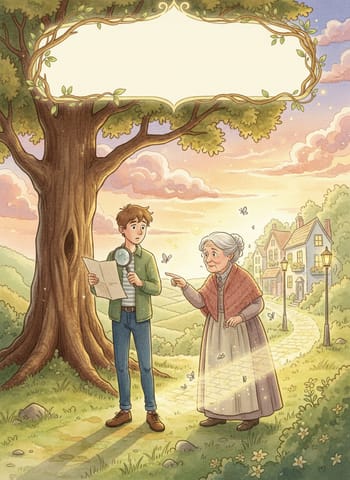
There was only a concrete wall, streaked green at the base, and in front of it an old woman on a folding stool with a flask of tea, sitting as if she were on guard. When he explained that he worked for the company that kept the maps, she nodded without surprise.
Solo había un muro de hormigón, veteado de verde en la base, y frente a él una anciana sentada en un taburete plegable con un termo de té, como si montara guardia. Cuando él le explicó que trabajaba para la empresa que mantenía los mapas, ella asintió sin sorpresa.
"Then you've come about Tallow Row," she said.
«Entonces viene por Tallow Row», dijo.
Her name was Wilhelmina, and she told the story with the evenness of someone who had rehearsed it for years without an audience. The lane had been cleared in her youth to make way for a road that was never finished. Within a year the neighbours had scattered across the city, and the garages had gone up over whatever remained. What she still did, most mornings, was walk it. Starting at the wall, she counted seven doors, past the cobbler's radio in the window and the third paving stone that always rocked, to the bakery's side entrance where the lane stopped.
Se llamaba Wilhelmina y contó la historia con la serenidad de quien la ha ensayado durante años sin público. El callejón se había despejado cuando ella era joven, para abrir paso a una carretera que nunca se terminó. En menos de un año los vecinos se habían dispersado por la ciudad, y los garajes se habían levantado sobre lo que quedaba. Lo que ella seguía haciendo, casi todas las mañanas, era recorrerlo. Desde el muro contaba siete puertas, pasaba junto a la radio del zapatero en la ventana y la tercera losa, que siempre se movía, hasta la entrada lateral de la panadería, donde el callejón terminaba.
Linus looked down. Beneath the skin of the tarmac he could just make out the grey line of an old kerb, curving where no kerb should. It would seem that the street had existed in every sense except the one his software could verify. Not until that moment had it occurred to him that a map might be less a record of where things are than an argument about which things count.
Linus miró hacia abajo. Bajo la piel del asfalto alcanzaba a distinguir la línea gris de un antiguo bordillo, que curvaba donde ningún bordillo debería curvar. Parecía que la calle había existido en todos los sentidos menos en el único que su programa podía verificar. Hasta ese momento no se le había ocurrido que un mapa podía ser menos un registro de dónde están las cosas que un argumento sobre cuáles cuentan.
"It would take me a quarter of a minute to remove it," he said, more to himself than to her.
«Me llevaría un cuarto de minuto eliminarla», dijo, más para sí mismo que para ella.
"I know." Wilhelmina poured the last of the tea into the flask's cup and held it out to him. "It took them rather longer to build the road, and they never finished that either."
«Lo sé». Wilhelmina vertió el último té en la taza del termo y se la ofreció. «A ellos les tomó bastante más construir la carretera, y tampoco la terminaron».
On the train back he opened the file and let the cursor rest over "remove" until the screen dimmed. The system would allow him to mark the street as unverified for ninety days, after which the flag would return. That, he decided, was as much as a person in his position could honestly claim. He typed a single line into the notes field, "Visited; absent on the ground; walked daily by a resident", and saved it. Outside, the backs of the houses slid past in the dusk, and he caught himself counting their doors, seven to a row.
De regreso en el tren abrió el archivo y dejó el cursor sobre «eliminar» hasta que la pantalla se atenuó. El sistema le permitía marcar la calle como no verificada durante noventa días, tras los cuales la alerta volvería. Eso, decidió, era todo lo que una persona en su posición podía afirmar con honestidad. Escribió una sola línea en el campo de notas, «Visitada; ausente sobre el terreno; recorrida a diario por una residente», y la guardó. Afuera, los fondos de las casas pasaban deslizándose en el crepúsculo, y se descubrió contando sus puertas, siete por hilera.