The Four-Day Week
Una historia gratuita en inglés de nivel B2 para estudiantes, para leer en línea en 5 idiomas, con opción de escucharla en la app gratuita Storyteller.
Dragan has no idea what to do with his free Fridays until his grandfather's old sketchbook gives him something to learn.
¡Ese fue el avance! Escucha la historia completa en la app gratuita Storyteller. Descargar la app
El audio no está disponible en este momento.
The announcement comes on a Monday: the company will trial a four-day week for three months. Dragan claps politely with everyone else, then goes back to his desk and wonders what he will do with a free Friday.
El anuncio llega un lunes: la empresa probará una semana laboral de cuatro días durante tres meses. Dragan aplaude cortésmente con todos los demás, luego vuelve a su escritorio y se pregunta qué hará con un viernes libre.
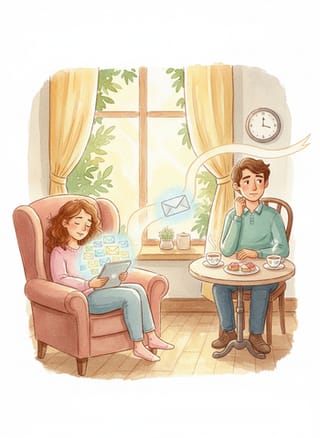
By the first Friday, he has been checking his email since eight o'clock. There is nothing urgent. Nothing is ever urgent on Fridays, which he now realizes is the whole point. He answers a message that could easily have waited until Monday and feels faintly ridiculous.
Para el primer viernes, lleva revisando el correo desde las ocho. No hay nada urgente. Nunca hay nada urgente los viernes, y ahora se da cuenta de que ese es justamente el punto. Contesta un mensaje que perfectamente podría haber esperado hasta el lunes y se siente vagamente ridículo.
"You're supposed to rest," his sister tells him on the phone. "Do something with your hands, not your inbox."
«Se supone que debes descansar», le dice su hermana por teléfono. «Haz algo con las manos, no con la bandeja de entrada».
"Like what?" he asks.
«¿Como qué?», pregunta él.
"Like anything. Didn't you use to draw on everything when we were kids? Mum had to hide the wallpaper from you."
«Como cualquier cosa. ¿No dibujabas en todo cuando éramos niños? Mamá tenía que esconderte el papel tapiz».
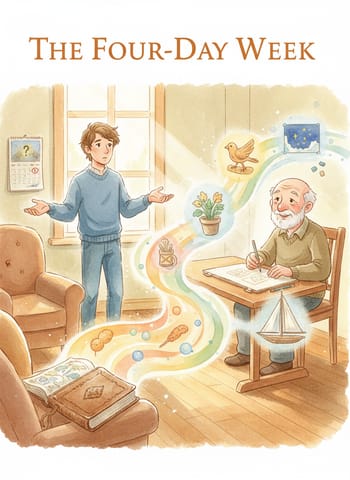
He had forgotten that. After lunch, he climbs into the attic and finds a box his grandfather left him. Inside are a flat tin of pencils, worn down to different lengths, and a sketchbook with half its pages still empty. The full half is street scenes: a tram stop, a market awning, a man asleep on a bench with his hat over his face.
Se le había olvidado. Después del almuerzo, sube al ático y encuentra una caja que le dejó su abuelo. Dentro hay una lata plana de lápices, gastados a distintas longitudes, y un cuaderno de dibujo con la mitad de las páginas todavía vacías. La otra mitad son escenas de calle: una parada de tranvía, el toldo de un mercado, un hombre dormido en una banca con el sombrero sobre la cara.
The second Friday, he sits at the kitchen window with the tin open and tries to draw the bakery across the road. The result looks like a bakery that has been in an accident. The roof slopes the wrong way, and the door would only fit a child. He borrows a library book on perspective and learns that he has been drawing what he expects to see, not what is actually there.
El segundo viernes, se sienta junto a la ventana de la cocina con la lata abierta e intenta dibujar la panadería de enfrente. El resultado parece una panadería que ha sufrido un accidente. El techo se inclina hacia el lado equivocado y la puerta solo le serviría a un niño. Toma prestado de la biblioteca un libro sobre perspectiva y aprende que ha estado dibujando lo que espera ver, no lo que realmente hay.
At work, his colleagues swap stories. One of them has been sleeping until ten. Another has repainted a bedroom. Dragan says he is "learning something," and when they ask what, he finds he doesn't want to explain. It feels too private, like admitting that he enjoys it.
En el trabajo, sus colegas intercambian historias. Uno ha estado durmiendo hasta las diez. Otra ha repintado un dormitorio. Dragan dice que está «aprendiendo algo», y cuando le preguntan qué, descubre que no quiere explicarlo. Le parece demasiado privado, como admitir que lo disfruta.
By the third Friday, he has stopped looking at his phone. He pushes it into a kitchen drawer at eight o'clock and forgets it. He draws the bakery four more times. The roof straightens. He shades the shadows under the awning with the side of the pencil. Judging by the smudges on every page, his grandfather must have done the same.
Para el tercer viernes, ha dejado de mirar el teléfono. A las ocho lo mete en un cajón de la cocina y se olvida de él. Dibuja la panadería cuatro veces más. El techo se endereza. Sombrea las sombras bajo el toldo con el costado del lápiz. A juzgar por las manchas en cada página, su abuelo debió de hacer lo mismo.
On the last Thursday of the month, his manager stops by his desk. She says the trial is going well. Productivity hasn't dropped, and several people have reportedly never felt so rested. "Anything you'd change?" she asks.
El último jueves del mes, su jefa se detiene junto a su escritorio. Dice que la prueba va bien. La productividad no ha bajado y, según se dice, varias personas nunca se habían sentido tan descansadas. «¿Cambiarías algo?», pregunta.
"If it were up to me," Dragan says, "I'd make it permanent."
«Si dependiera de mí», dice Dragan, «la dejaría permanente».
The next morning, he sits at the kitchen window with the phone shut away in its drawer. The baker comes out to lower the awning, as she does every Friday at nine. She stands for a moment with her hands on her hips. Dragan draws her quickly, before she can move.
A la mañana siguiente, se sienta junto a la ventana de la cocina con el teléfono encerrado en su cajón. La panadera sale a bajar el toldo, como hace todos los viernes a las nueve. Se queda un momento con las manos en la cintura. Dragan la dibuja rápido, antes de que se mueva.
When he has finished, he opens his grandfather's sketchbook at the first empty page. He copies her in carefully, next to the man asleep on the bench.
Cuando termina, abre el cuaderno de su abuelo en la primera página vacía. La copia con esmero, junto al hombre dormido en la banca.