The Cobbler and the Financier
قصة إنجليزية مجانية بالمستوى B2 لمتعلمي اللغات، يمكن قراءتها على الإنترنت بلغات عددها 8، مع إمكانية الاستماع إليها عبر تطبيق Storyteller المجاني.
A cheerful cobbler loses his happiness when a wealthy neighbor gives him money, discovering that worry over wealth destroys the joy of simple living.
انتهى المقطع التجريبي! استمع إلى القصة كاملة في تطبيق Storyteller المجاني. حمّل التطبيق
الصوت غير متاح الآن.
There was once a cobbler who was so light hearted that he sang from morning to night. It was wonderful to watch him at his work, and more wonderful still to hear his runs and trills. He was in fact happier than the Seven Sages.
كان هناك ذات مرة إسكافي خفيف القلب إلى حد أنه كان يغني من الصباح إلى المساء. وكان من الرائع أن تراه وهو يعمل، وأروع من ذلك أن تسمع ألحانه وزقزقاته. بل كان في الواقع أسعد من الحكماء السبعة.
This merry soul had a neighbour who was exactly the reverse. He sang little and slept less; for he was a financier, and made of money, as they say. Whenever it happened that after a sleepless night he would doze off in the early morning, the cobbler, who was always up betimes, would wake him up again with his joyful songs. "Ha!" thought the man of wealth, "what a misfortune it is that one cannot buy sleep in the open market as one buys food and drink!" Then an idea came to him. He invited the cobbler to his house, where he asked him some questions.
وكان لهذا الرجل المرح جار على النقيض منه تمامًا. فهو قليل الغناء، وأقل منه نومًا؛ لأنه مموّل غارق في المال كما يقولون. كلما غلبه النعاس في الصباح الباكر بعد ليلة بلا نوم، أيقظه الإسكافي، وكان يصحو مبكرًا دائمًا، بأغانيه المبتهجة. «يا للمصيبة!» فكّر الثري، «كيف لا يستطيع المرء أن يشتري النوم من السوق كما يشتري الطعام والشراب!» ثم خطرت له فكرة. فدعا الإسكافي إلى بيته وسأله بعض الأسئلة.
"Tell me, Master Gregory, what do you suppose your earnings amount to in a year?"
«قل لي يا معلم غريغوري، كم تظن أن دخلك يبلغ في السنة؟»
"In a year," laughed the cobbler, "that's more than I know. I never keep accounts that way, nor even keep one day from another. So long as I can make both ends meet, that's good enough for me!"
«في السنة؟» قال الإسكافي ضاحكًا، «هذا أكثر مما أعرف. فأنا لا أمسك حسابات بهذه الطريقة، ولا أفرّق حتى بين يوم ويوم. ما دمت أستطيع أن أسدّ رمقي فهذا يكفيني!»
"Really!" replied the financier. "But what can you earn in one day?"
«حقًا!» ردّ المموّل. «لكن كم تكسب في يوم واحد؟»
"Oh, sometimes more and sometimes less. The mischief of it is that there are so many fête days and high-days and fast-days crowded into the year, on which, as the priest tells us, it is wicked to work at all; and worse still he keeps on finding some new saint or other to give weight to his sermons. If it were not for that, cobbling would be a fine paying game."
«آه، أحيانًا أكثر وأحيانًا أقل. المصيبة أن السنة مزدحمة بالأعياد وأيام الاحتفال وأيام الصيام، التي يقول لنا الكاهن إن العمل فيها كله إثم؛ والأسوأ أنه لا يكفّ عن اكتشاف قدّيس جديد يعطي مواعظه وزنًا. لولا ذلك لكانت حرفة الأساكفة مربحة جدًا.»
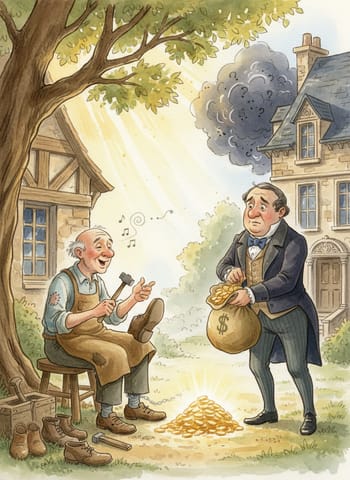
At this the wealthy man laughed. "Look here, my friend, to-day I'll lift you to the seats of the mighty! Here is a hundred pounds. Guard them and use them with care."
عند ذلك ضحك الثري. «اسمع يا صديقي، اليوم سأرفعك إلى مصاف الكبار! هذه مئة جنيه. احفظها واستعملها بحذر.»
When the cobbler held the bag of money in his hand he imagined that it must be as much as would be coined in a hundred years.
عندما أمسك الإسكافي كيس المال في يده تخيّل أنه لا بد يعادل ما يُسكّ من نقود في مئة عام.
Returning home he buried the cash in his cellar. Alas! he buried his joy with it, for there were no more songs. From the moment he came into possession of this wealth, the love of which is the root of all evil, his voice left him, and not only his voice, but his sleep also. And in place of these came anxiety, suspicion, and alarms; guests which abode with him constantly. All day he kept his eye on the cellar door. Did a cat make a noise in the night, then for a certainty that cat was after his money.
وعاد إلى بيته ودفن النقود في قبوه. يا للأسف! لقد دفن فرحته معها، فلم تعد هناك أغانٍ. فمنذ اللحظة التي امتلك فيها هذه الثروة، التي يقال إن حبها أصل كل الشرور، فارقه صوته، ولم يفارقه صوته وحده بل نومه أيضًا. وحلّ محلهما القلق والشك والفزع؛ ضيوف أقاموا عنده بلا انقطاع. ظل طوال النهار يراقب باب القبو. إذا أحدثت قطة ضجة في الليل فلا بد أن تلك القطة تطمع في ماله.
At last, in despair, the wretched cobbler ran to the financier whom he now no longer kept awake. "Oh, give me back my joy in life, my songs, my sleep; and take your hundred pounds again."
أخيرًا، في يأس، ركض الإسكافي البائس إلى المموّل الذي لم يعد يوقظه الآن. «آه، أعد إليّ فرحتي بالحياة، وأغانيّ، ونومي؛ وخذ مئة جنيهك مرة أخرى.»