The Analog Rebellion
一个面向英语学习者的免费 C1 级英语故事,可用 7 种语言在线阅读,也可以在免费的 Storyteller 应用中收听。
After a professor bans laptops, her students escalate into typewriters, quills, and Morse code, unaware she is secretly ranking their commitment.
试听结束!在免费的 Storyteller 应用中收听完整故事。 下载应用
音频暂时无法播放。
Dr. Marlowe banned laptops from her seminar in the second week of term, citing a study on note-taking that half the class suspected she had invented on the spot.
马洛博士在学期第二周,禁止在她的研讨课上使用笔记本电脑,理由是一项关于记笔记的研究,班上一半的人怀疑那是她当场编出来的。
"Longhand or nothing," she said, and returned to her podium as if the matter were now permanently closed.
“要么手写,要么不写,”她说,然后回到讲台后面,仿佛这件事现在已经永远定案了。
It was not. Bellamy, who considered himself only a mild instigator, brought a manual typewriter to the following class, purely, he insisted, to comply with the letter of the new rule. Dr. Marlowe watched him carry it in, said nothing, and let him type through the entire ninety minutes, the room clattering around every one of her sentences.
并没有。贝拉米自认为只是个温和的起哄者,下一节课,他带来了一台手动打字机,他坚称,纯粹是为了遵守这条新规定的字面意思。马洛博士看着他把它搬进来,什么也没说,任由他在整整九十分钟里一直打字,整个教室在她每一句话周围咔嗒作响。
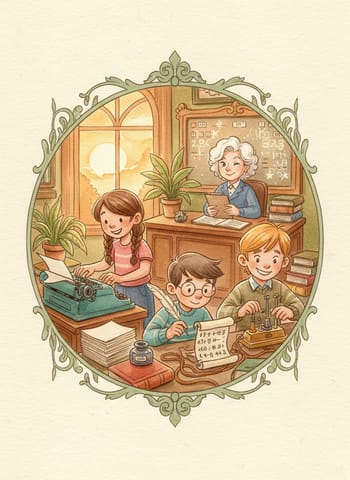
By the fourth week, what had started as Bellamy's private joke had become a genuine, if unspoken, competition. A classmate brought an actual quill and a small bottle of ink, apologizing sincerely for the occasional splatter. Another began taking notes exclusively in shorthand, flipping her notebook shut whenever Dr. Marlowe walked past, as if guarding state secrets. Someone, memorably, tried Morse code for a single class before admitting defeat.
到了第四周,起初只是贝拉米个人的玩笑,已经成了一场真正的,尽管没有说出口的竞赛。一位同学带来了一支真正的羽毛笔和一小瓶墨水,为偶尔溅出的墨点诚恳地道歉。另一位开始只用速记做笔记,每当马洛博士走过,就把笔记本合上,好像在守护国家机密。还有人,令人难忘地,试过用摩尔斯电码记一节课,然后承认失败。
Not once did Dr. Marlowe ask anyone to stop. Had she found any of it genuinely disruptive, she would have said so within the first ten minutes of the typewriter's debut. Instead, she seemed, if anything, subtly delighted by an arms race she had accidentally started.
马洛博士一次也没有要求任何人停下。要是她觉得其中哪一样真的干扰了课堂,她早在打字机首次亮相的头十分钟里就说了。相反,对于自己无意中挑起的这场军备竞赛,她似乎,要是说有什么的话,暗暗地感到高兴。
"I banned laptops," she told a colleague in the hallway, within Bellamy's overhearing, "and now I'm teaching a seminar that occasionally sounds like a newsroom from 1955. I have never once considered lifting the rule."
“我禁了笔记本电脑,”她对走廊里的一位同事说,当时贝拉米恰好听到了,“现在我教的研讨课,偶尔听起来像1955年的报社。我从来没有想过要取消这条规定。”
What none of the students realized, until a classmate let it slip near the end of the term, was that Dr. Marlowe had been quietly keeping her own log of every analog method attempted, ranked by what she called "commitment to the bit."
直到学期快结束,一位同学说漏了嘴,学生们才知道,马洛博士一直在悄悄地记着自己的一本记录,把每一种尝试过的模拟方法都列了出来,按她所说的“对这个梗的投入程度”排名。
The quill, she noted, showed real dedication but poor practicality. The shorthand student, in her private ranking, had shown actual skill worth taking seriously. Bellamy's typewriter, however, topped the list, less for its cleverness than for the sheer, defiant nerve of hauling twelve pounds of machinery up three flights of stairs twice a week.
她写道,羽毛笔体现了真正的敬业,但实用性很差。那位用速记的学生,在她私下的排名里,表现出了值得认真对待的真本事。可是,贝拉米的打字机却排在榜首,与其说是因为它的聪明,不如说是因为那种纯粹的、不服输的胆量:每周两次,把十二磅重的机器扛上三层楼梯。
On the last day of the seminar, Dr. Marlowe read the ranking aloud, without warning, to a room that had no idea it was being evaluated on a scale that had nothing to do with grades.
研讨课的最后一天,马洛博士毫无预兆地把这份排名大声读了出来,对着一屋子完全不知道自己正被按一套与成绩毫无关系的标准评判的学生。
"Congratulations, Bellamy," she said, deadpan, over the sound of the room's stunned laughter. "You have won an entirely unofficial contest with an entirely unofficial prize."
“恭喜你,贝拉米,”她面无表情地说,教室里响起一片惊愕的笑声,“你赢得了一场完全非官方的比赛,奖品也完全非官方。”
The prize turned out to be a single ribbon spool for his typewriter, wrapped, somewhat absurdly, in exam paper.
奖品原来是一个给他的打字机用的色带轴,有点荒唐地,用试卷纸包着。
Bellamy kept it on his desk long after the semester ended, more proud of it, if he was honest, than of the actual grade the course eventually gave him.
学期结束很久之后,贝拉米还把它放在书桌上,说句实话,他对它的自豪,超过了这门课最终给他的实际成绩。