The Ghostwriter's Chapter
Cerita bahasa Inggris gratis level B2 untuk pelajar, bisa dibaca online dalam 5 bahasa, dengan pilihan untuk mendengarkannya di aplikasi Storyteller gratis.
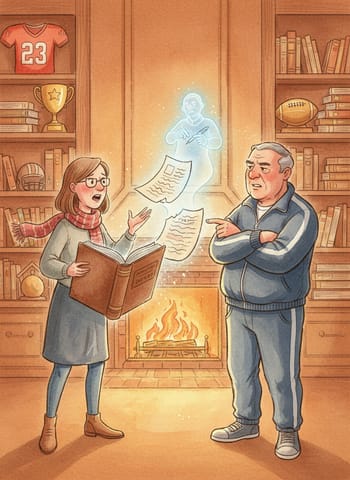
A ghostwriter argues with a retired football coach who wants to cut the most honest chapter from his memoir.
Itu cuplikannya! Dengarkan cerita lengkapnya di aplikasi Storyteller gratis. Unduh aplikasi
Audio belum tersedia saat ini.
Dafne has been working with Jens for five months, and she knows his habits by now. He drinks his tea cold. He answers her questions with a short nod, as if every one of them were a referee's decision. And he writes in the margins in thick red pen, always in capitals. Today, beside the title of chapter nine, he has written a single word: CUT.
Dafne sudah bekerja dengan Jens selama lima bulan, dan kini ia hafal kebiasaannya. Jens minum tehnya dalam keadaan dingin. Ia menjawab pertanyaan-pertanyaan Dafne dengan anggukan singkat, seakan setiap pertanyaan adalah keputusan seorang wasit. Dan ia menulis di pinggir halaman dengan pena merah tebal, selalu dalam huruf kapital. Hari ini, di samping judul bab sembilan, ia menulis satu kata: POTONG.
Chapter nine is called "The Winter Without a Win." It covers the season, forty years ago, when his youth team lost twelve matches in a row. Dafne has spent two weeks on it, working from a biscuit tin of old scoresheets that has never been shown to anyone. Each sheet is marked in his handwriting with the date, the score and the weather.
Bab sembilan berjudul "Musim Dingin Tanpa Kemenangan". Bab itu menceritakan musim, empat puluh tahun lalu, ketika tim pemuda asuhannya kalah dua belas pertandingan berturut-turut. Dafne menghabiskan dua minggu mengerjakannya, berbekal sebuah kaleng biskuit berisi lembar-lembar skor lama yang tidak pernah diperlihatkan kepada siapa pun. Setiap lembar ditandai dengan tulisan tangannya: tanggal, skor, dan cuaca.
"Nobody wants to read about losing," Jens says, stirring his tea. "People buy a coach's book to read about the cups."
"Tidak ada yang mau membaca soal kekalahan," kata Jens sambil mengaduk tehnya. "Orang membeli buku pelatih untuk membaca soal piala-piala."
"People buy a coach's book to find out who he is," Dafne says. "May I tell you what I think?"
"Orang membeli buku pelatih untuk mengetahui siapa dirinya," kata Dafne. "Boleh saya sampaikan pendapat saya?"
He shrugs, which she has learned means yes.
Jens mengangkat bahu, yang telah Dafne pelajari berarti ya.
"The cup chapters are good, but they could have been written about anyone. If a stranger had won those games, the sentences would be the same. This is the only chapter where you sound like a man who is afraid." She turns the page toward him. "You wrote that you stood in the cold after the twelfth defeat and told the boys you were proud of them. And that you didn't know whether it was true."
"Bab-bab tentang piala itu bagus, tetapi bisa saja ditulis tentang siapa pun. Kalau orang asing yang memenangkan pertandingan-pertandingan itu, kalimatnya akan sama. Ini satu-satunya bab di mana Anda terdengar seperti seseorang yang takut." Ia memutar halaman itu ke arah Jens. "Anda menulis bahwa Anda berdiri di tengah dingin setelah kekalahan kedua belas dan mengatakan kepada anak-anak itu bahwa Anda bangga pada mereka. Dan bahwa Anda tidak tahu apakah itu benar."
Jens looks out of the window. Outside, a neighbor's children are kicking a ball against a garage door, over and over, the sound as steady as a clock.
Jens memandang ke luar jendela. Di luar, anak-anak tetangga menendang bola ke pintu garasi, berulang-ulang, bunyinya mantap seperti jam.
"That's private," he says. "If I print it, the boys will read it. Some of them are grandfathers now."
"Itu pribadi," katanya. "Kalau saya cetak, anak-anak itu akan membacanya. Sebagian dari mereka sekarang sudah jadi kakek."
"They will read what you wrote," Dafne says. "They will also find out that somebody remembered what that winter was like for them. You remember the weather, Jens. Every match. Rain, sleet, wind from the east. You couldn't have kept such records if you hadn't cared."
"Mereka akan membaca apa yang Anda tulis," kata Dafne. "Mereka juga akan tahu bahwa ada seseorang yang mengingat seperti apa musim dingin itu bagi mereka. Anda ingat cuacanya, Jens. Setiap pertandingan. Hujan, hujan es, angin dari timur. Anda tidak mungkin menyimpan catatan seperti itu kalau Anda tidak peduli."
He is silent for a long time. Dafne had been expecting an argument, perhaps even a raised voice. She has prepared herself to lose this one, although she would hate to.
Ia terdiam lama. Dafne sudah menduga akan ada perdebatan, mungkin bahkan suara yang meninggi. Ia sudah menyiapkan diri untuk kalah kali ini, meskipun ia akan sangat membencinya.
"My wife used to say the same thing," he says at last. "She said I only kept the records of the games that hurt." He pulls the page toward him, uncaps the red pen and holds it above the paper.
"Istri saya dulu mengatakan hal yang sama," kata Jens akhirnya. "Katanya saya hanya menyimpan catatan pertandingan yang menyakitkan." Ia menarik halaman itu ke arahnya, membuka tutup pena merah, dan menahannya di atas kertas.
Dafne tries not to watch his hand. She looks at the window, at the children and their ball, at anything else.
Dafne berusaha tidak memperhatikan tangannya. Ia menatap jendela, anak-anak dan bola mereka, apa saja selain itu.
When she looks back, the word CUT has a line through it, thick and straight. Beneath it, in the same red capitals, Jens has written another word: KEEP.
Ketika ia menoleh kembali, kata POTONG sudah dicoret dengan garis tebal dan lurus. Di bawahnya, dengan huruf kapital merah yang sama, Jens telah menulis kata lain: PERTAHANKAN.
He slides the page across the table. "Fix the ending," he says. "It's far too kind to me."
Ia menggeser halaman itu melintasi meja. "Perbaiki akhirnya," katanya. "Terlalu baik terhadap saya."