The Grade Appeal
Una historia gratuita en inglés de nivel B2 para estudiantes, para leer en línea en 5 idiomas, con opción de escucharla en la app gratuita Storyteller.
Dilnoza goes to ask her teacher for a higher mark, but reading the comments line by line changes what she wants from the meeting.
¡Ese fue el avance! Escucha la historia completa en la app gratuita Storyteller. Descargar la app
El audio no está disponible en este momento.
Dilnoza had rehearsed her speech all the way to the classroom. She had been practicing it since Monday, in the shower, on the bus, even during maths. "I respectfully believe that this essay deserves a higher mark." The B in the corner of the page had been written in green ink, with a small, calm flourish. It looked like a fact, not an opinion.
Dilnoza había ensayado su discurso durante todo el camino al salón de clases. Lo llevaba practicando desde el lunes, en la ducha, en el autobús, incluso durante la clase de matemáticas. «Con respeto, creo que este ensayo merece una nota más alta». La B de la esquina de la página estaba escrita con tinta verde, con un pequeño y sereno floreo. Parecía un hecho, no una opinión.
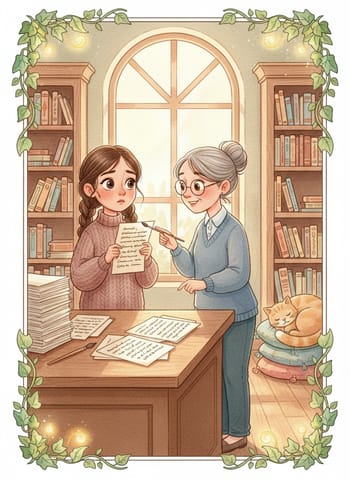
Her teacher was waiting at the desk with the essay already open. "Let's go through it together," she said. "You can stop me whenever you disagree."
Su profesora la esperaba en el escritorio con el ensayo ya abierto. «Vamos a repasarlo juntas», dijo. «Puedes interrumpirme cuando no estés de acuerdo».
The essay was about whether a city should close its center to cars. Dilnoza had written it in a single night, fueled by tea and certainty, and she had been proud of how quickly the sentences had come. "I thought the argument was strong," she began. "It's clear. It's well written."
El ensayo trataba de si una ciudad debería cerrar su centro a los autos. Dilnoza lo había escrito en una sola noche, alimentada por té y certeza, y se había sentido orgullosa de lo rápido que habían salido las frases. «Yo pensaba que el argumento era sólido», empezó. «Es claro. Está bien escrito».
"It is well written," her teacher agreed. "Let's start with the opening, then." She ran a finger down the first margin note. Where does this statistic come from?
«Está bien escrito», concedió la profesora. «Empecemos entonces por la introducción». Recorrió con un dedo la primera nota del margen. ¿De dónde sale esta estadística?
Dilnoza opened her mouth. The figure had come from something she had read, or possibly something someone had said. She couldn't remember. "I think it was an article," she said.
Dilnoza abrió la boca. La cifra venía de algo que había leído, o quizás de algo que alguien había dicho. No lo recordaba. «Creo que fue de un artículo», dijo.
"You think." The teacher said it gently. "If a reader asked you the same question, what would you tell them?"
«Crees». La profesora lo dijo con suavidad. «Si un lector te hiciera la misma pregunta, ¿qué le responderías?».
They moved on. The second paragraph had a note beside a sentence that began "Everybody knows." The third had a bracket around a sentence, with a comment: this contradicts your point in paragraph one. Dilnoza read it twice, then a third time, and felt her ears getting warm.
Siguieron adelante. El segundo párrafo tenía una nota junto a una oración que empezaba con «Todo el mundo sabe». El tercero tenía un corchete alrededor de una oración, con un comentario: esto contradice lo que dices en el párrafo uno. Dilnoza lo leyó dos veces, luego una tercera, y sintió que se le calentaban las orejas.
It did contradict it. She could see it clearly now, the way you see the dust on a table once someone has opened the curtains. In the same essay she had argued that shops would suffer and that shops would benefit. She had never noticed, because she had never read it back.
Sí lo contradecía. Ahora lo veía con claridad, como se ve el polvo sobre una mesa cuando alguien abre las cortinas. En el mismo ensayo había argumentado que las tiendas saldrían perjudicadas y que las tiendas saldrían beneficiadas. Nunca lo había notado, porque nunca lo había releído.
"I didn't give you a B for the writing," the teacher said. "The writing is an A. Your sentences are simply ahead of your evidence. That is the gap I marked."
«No te puse la B por la redacción», dijo la profesora. «La redacción es una A. Tus frases simplemente van por delante de tus pruebas. Esa es la brecha que marqué».
Dilnoza put the speech away somewhere at the back of her head. "If I rewrote it," she said slowly, "would it be an A?"
Dilnoza guardó el discurso en algún rincón del fondo de su cabeza. «Si lo reescribiera», dijo despacio, «¿sería una A?».
"If you rewrote it with sources, I would happily read it again. I can't promise a grade." The teacher almost smiled. "But I can promise to read the essay you could have written."
«Si lo reescribes con fuentes, con gusto lo leeré de nuevo. No puedo prometerte una nota». La profesora casi sonrió. «Pero sí puedo prometerte leer el ensayo que habrías podido escribir».
They spent the rest of the afternoon with the page between them. The teacher drew a small table on the back: claim, source, counterargument. Dilnoza filled it in with a pencil, three rows at a time, and for once she did not hurry.
Pasaron el resto de la tarde con la hoja entre ambas. La profesora dibujó una pequeña tabla al dorso: afirmación, fuente, contraargumento. Dilnoza la fue llenando con lápiz, tres filas a la vez, y por una vez no se apresuró.
By the time the corridor lights switched off, the table had grown into a full plan. It had a new order for the paragraphs and two sources that still had to be found. In the middle, she would argue against herself on purpose.
Para cuando se apagaron las luces del pasillo, la tabla se había convertido en un plan completo. Tenía un nuevo orden para los párrafos y dos fuentes que aún había que encontrar. En el medio, argumentaría contra sí misma a propósito.
She thanked her teacher, which she had not expected to do. Then she turned the essay over, plan side up, and read it again all the way down the empty corridor.
Le dio las gracias a su profesora, algo que no esperaba hacer. Luego dio la vuelta al ensayo, con el plan hacia arriba, y volvió a leerlo entero por el pasillo vacío.