Cap O' Rushes
A free B1-level English story for language learners, readable online in 7 languages, with an option to listen via the free Storyteller app.
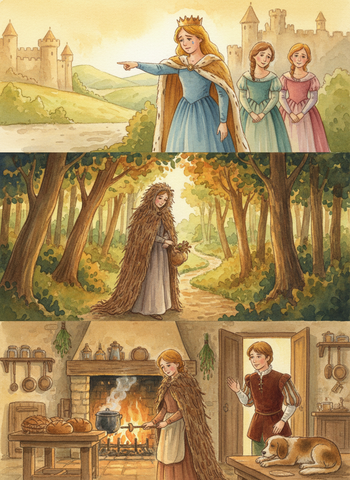
A father disowns his youngest daughter for an odd answer about her love for him, so she disguises herself in a cloak of rushes and finds work far from home.
Well, there was once a very rich gentleman, and he'd three daughters, and he thought he'd see how fond they were of him. So he says to the first, “How much do you love me, my dear?”
Pues bien, había una vez un caballero muy rico que tenía tres hijas, y pensó en comprobar cuánto lo querían. Así que le dijo a la primera: «¿Cuánto me quieres, querida?»
“Why,” says she, “as I love my life.”
«Pues», dijo ella, «como quiero a mi propia vida».
“That's good,” says he.
«Eso está bien», dijo él.
So he says to the second, “How much do you love me, my dear?”
Así que le dijo a la segunda: «¿Cuánto me quieres, querida?»
“Why,” says she, “better nor all the world.”
«Pues», dijo ella, «más que a todo el mundo».
“That's good,” says he.
«Eso está bien», dijo él.
So he says to the third, “How much do you love me, my dear?”
Así que le dijo a la tercera: «¿Cuánto me quieres, querida?»
“Why, I love you as fresh meat loves salt,” says she.
«Pues, te quiero como la carne fresca quiere a la sal», dijo ella.
Well, he was that angry. “You don't love me at all,” says he, “and in my house you stay no more.” So he drove her out there and then, and shut the door in her face.
Bueno, él se puso furioso. «No me quieres en absoluto», dijo él, «y en mi casa no te quedas ni un día más». Así que la echó de casa en ese mismo momento, y le cerró la puerta en la cara.
Well, she went away on and on till she came to a fen, and there she gathered a lot of rushes and made them into a kind of a sort of a cloak with a hood, to cover her from head to foot, and to hide her fine clothes. And then she went on and on till she came to a great house.
Bueno, ella se fue caminando y caminando hasta que llegó a un pantano, y allí recogió un montón de juncos y con ellos hizo una especie de capa con capucha, para cubrirse de la cabeza a los pies y ocultar sus finas ropas. Y luego siguió caminando hasta que llegó a una gran casa.
“Do you want a maid?” says she.
«¿Necesitan una criada?», dijo ella.
“No, we don't,” said they.
«No, no necesitamos», dijeron ellos.
“I haven't nowhere to go,” says she; “and I ask no wages, and do any sort of work,” says she.
«No tengo adónde ir», dijo ella; «y no pido salario, y hago cualquier tipo de trabajo», dijo ella.
“Well,” says they, “if you like to wash the pots and scrape the saucepans you may stay,” said they.
«Bueno», dijeron ellos, «si te gusta lavar las ollas y fregar las cacerolas, puedes quedarte», dijeron.
So she stayed there and washed the pots and scraped the saucepans and did all the dirty work. And because she gave no name they called her “Cap o' Rushes.”
Así que se quedó allí y lavaba las ollas y fregaba las cacerolas y hacía todo el trabajo sucio. Y como no dio ningún nombre, la llamaron «Capa de Juncos».
Well, one day there was to be a great dance a little way off, and the servants were allowed to go and look on at the grand people. Cap o' Rushes said she was too tired to go, so she stayed at home.
Bueno, un día iba a haber un gran baile no muy lejos, y a los sirvientes se les permitió ir a mirar a la gente elegante. Capa de Juncos dijo que estaba demasiado cansada para ir, así que se quedó en casa.
But when they were gone she offed with her cap o' rushes, and cleaned herself, and went to the dance. And no one there was so finely dressed as her.
Pero cuando se marcharon, se quitó su capa de juncos, se arregló, y fue al baile. Y nadie allí estaba tan finamente vestida como ella.
Well, who should be there but her master's son, and what should he do but fall in love with her the minute he set eyes on her. He wouldn't dance with any one else.
Bueno, quién estaba allí sino el hijo de su amo, y qué hizo sino enamorarse de ella en el instante en que puso los ojos en ella. No quiso bailar con nadie más.
But before the dance was done Cap o' Rushes slipt off, and away she went home. And when the other maids came back she was pretending to be asleep with her cap o' rushes on.
Pero antes de que terminara el baile, Capa de Juncos se escabulló, y se fue a casa. Y cuando las demás criadas regresaron, ella fingía estar dormida con su capa de juncos puesta.
Well, next morning they said to her, “You did miss a sight, Cap o' Rushes!”
Bueno, a la mañana siguiente le dijeron: «Te perdiste algo, Capa de Juncos».
“What was that?” says she.
«¿Qué fue?», dijo ella.
“Why, the beautifullest lady you ever see, dressed right gay and ga'. The young master, he never took his eyes off her.”
«Pues, la dama más hermosa que hayas visto jamás, vestida de gran gala. El joven amo nunca le quitó los ojos de encima».
“Well, I should have liked to have seen her,” says Cap o' Rushes.
«Bueno, me hubiera gustado verla», dijo Capa de Juncos.
“Well, there's to be another dance this evening, and perhaps she'll be there.”
«Bueno, habrá otro baile esta noche, y quizá ella esté allí».
But, come the evening, Cap o' Rushes said she was too tired to go with them. Howsoever, when they were gone, she offed with her cap o' rushes and cleaned herself, and away she went to the dance.
Pero, llegada la noche, Capa de Juncos dijo que estaba demasiado cansada para ir con ellas. Sin embargo, cuando se marcharon, se quitó su capa de juncos, se arregló, y se fue al baile.
The master's son had been reckoning on seeing her, and he danced with no one else, and never took his eyes off her. But, before the dance was over, she slipt off, and home she went, and when the maids came back she, pretended to be asleep with her cap o' rushes on.
El hijo del amo había estado esperando volver a verla, y no bailó con nadie más, y nunca le quitó los ojos de encima. Pero, antes de que terminara el baile, ella se escabulló, y se fue a casa, y cuando las criadas regresaron, ella fingía estar dormida con su capa de juncos puesta.
Next day they said to her again, “Well, Cap o' Rushes, you should ha' been there to see the lady. There she was again, gay and ga', and the young master he never took his eyes off her.”
Al día siguiente le dijeron de nuevo: «Bueno, Capa de Juncos, deberías haber estado allí para ver a la dama. Allí estaba otra vez, de gran gala, y el joven amo nunca le quitó los ojos de encima».
“Well, there,” says she, “I should ha' liked to ha' seen her.”
«Bueno, vaya», dijo ella, «me hubiera gustado verla».
“Well,” says they, “there's a dance again this evening, and you must go with us, for she's sure to be there.”
«Bueno», dijeron ellas, «hay otro baile esta noche, y debes venir con nosotras, porque seguro que ella estará allí».
Well, come this evening, Cap o' Rushes said she was too tired to go, and do what they would she stayed at home. But when they were gone she offed with her cap o' rushes and cleaned herself, and away she went to the dance.
Bueno, llegada esta noche, Capa de Juncos dijo que estaba demasiado cansada para ir, y por más que insistieron se quedó en casa. Pero cuando se marcharon, se quitó su capa de juncos, se arregló, y se fue al baile.
The master's son was rarely glad when he saw her. He danced with none but her and never took his eyes off her. When she wouldn't tell him her name, nor where she came from, he gave her a ring and told her if he didn't see her again he should die.
El hijo del amo se alegró muchísimo al verla. No bailó con nadie más que con ella y nunca le quitó los ojos de encima. Cuando ella no quiso decirle su nombre, ni de dónde venía, él le dio un anillo y le dijo que si no volvía a verla, moriría.
Well, before the dance was over, off she slipped, and home she went, and when the maids came home she was pretending to be asleep with her cap o' rushes on.
Bueno, antes de que terminara el baile, ella se escabulló, y se fue a casa, y cuando las criadas volvieron, ella fingía estar dormida con su capa de juncos puesta.
Well, next day they says to her, “There, Cap o' Rushes, you didn't come last night, and now you won't see the lady, for there's no more dances.”
Bueno, al día siguiente le dijeron: «Vaya, Capa de Juncos, no viniste anoche, y ahora no verás a la dama, porque ya no habrá más bailes».
“Well I should have rarely liked to have seen her,” says she.
«Bueno, me hubiera gustado muchísimo verla», dijo ella.
The master's son he tried every way to find out where the lady was gone, but go where he might, and ask whom he might, he never heard anything about her. And he got worse and worse for the love of her till he had to keep his bed.
El hijo del amo intentó de todas las maneras averiguar adónde se había ido la dama, pero adondequiera que iba, y a quienquiera que preguntara, nunca oyó nada sobre ella. Y se puso cada vez peor por su amor hasta que tuvo que guardar cama.
“Make some gruel for the young master,” they said to the cook. “He's dying for the love of the lady.” The cook she set about making it when Cap o' Rushes came in.
«Preparen unas gachas para el joven amo», le dijeron a la cocinera. «Se está muriendo de amor por la dama». La cocinera se puso a prepararlas cuando entró Capa de Juncos.
“What are you a-doing of?”, says she.
«¿Qué estás haciendo?», dijo ella.
“I'm going to make some gruel for the young master,” says the cook, “for he's dying for love of the lady.”
«Voy a preparar unas gachas para el joven amo», dijo la cocinera, «porque se está muriendo de amor por la dama».
“Let me make it,” says Cap o' Rushes.
«Déjame prepararlas a mí», dijo Capa de Juncos.
Well, the cook wouldn't at first, but at last she said yes, and Cap o' Rushes made the gruel. And when she had made it she slipped the ring into it on the sly before the cook took it upstairs.
Bueno, al principio la cocinera no quiso, pero al final dijo que sí, y Capa de Juncos preparó las gachas. Y cuando las hubo preparado, deslizó el anillo dentro a escondidas antes de que la cocinera las subiera.
The young man he drank it and then he saw the ring at the bottom.
El joven se las bebió y entonces vio el anillo en el fondo.
“Send for the cook,” says he.
«Manden llamar a la cocinera», dijo él.
So up she comes.
Así que ella subió.
“Who made this gruel here?” says he.
«¿Quién preparó estas gachas?», dijo él.
“I did,” says the cook, for she was frightened.
«Yo las hice», dijo la cocinera, pues estaba asustada.
And he looked at her,
Y él la miró,
“No, you didn't,” says he. “Say who did it, and you shan't be harmed.”
«No, tú no las hiciste», dijo él. «Di quién lo hizo, y no se te hará ningún daño».
“Well, then, 'twas Cap o' Rushes,” says she.
«Bueno, entonces, fue Capa de Juncos», dijo ella.
“Send Cap o' Rushes here,” says he.
«Manden venir a Capa de Juncos», dijo él.
So Cap o' Rushes came.
Así que Capa de Juncos vino.
“Did you make my gruel?” says he.
«¿Preparaste tú mis gachas?», dijo él.
“Yes, I did,” says she.
«Sí, las hice yo», dijo ella.
“Where did you get this ring?” says he.
«¿De dónde sacaste este anillo?», dijo él.
“From him that gave it me,” says she.
«De quien me lo dio», dijo ella.
“Who are you, then?” says the young man.
«¿Quién eres tú, entonces?», dijo el joven.
“I'll show you,” says she. And she offed with her cap o' rushes, and there she was in her beautiful clothes.
«Te lo mostraré», dijo ella. Y se quitó su capa de juncos, y allí estaba ella con sus hermosas ropas.
Well, the master's son he got well very soon, and they were to be married in a little time. It was to be a very grand wedding, and every one was asked far and near. And Cap o' Rushes' father was asked. But she never told anybody who she was.
Bueno, el hijo del amo se recuperó muy pronto, y iban a casarse dentro de poco tiempo. Iba a ser una boda muy grandiosa, y se invitó a todo el mundo de cerca y de lejos. Y el padre de Capa de Juncos fue invitado. Pero ella nunca le dijo a nadie quién era.
But before the wedding she went to the cook, and says she:
Pero antes de la boda fue a ver a la cocinera, y le dijo:
“I want you to dress every dish without a mite o' salt.”
«Quiero que prepares cada plato sin ni una pizca de sal».
“That'll be rare nasty,” says the cook.
«Eso será bien desagradable», dijo la cocinera.
“That doesn't signify,” says she.
«Eso no importa», dijo ella.
“Very well,” says the cook.
«Muy bien», dijo la cocinera.
Well, the wedding-day came, and they were married. And after they were married all the company sat down to the dinner. When they began to eat the meat, that was so tasteless they couldn't eat it. But Cap o' Rushes' father he tried first one dish and then another, and then he burst out crying.
Bueno, llegó el día de la boda, y se casaron. Y después de casarse toda la compañía se sentó a cenar. Cuando empezaron a comer la carne, estaba tan sosa que no podían comerla. Pero el padre de Capa de Juncos probó primero un plato y luego otro, y entonces rompió a llorar.
“What is the matter?” said the master's son to him.
«¿Qué te pasa?», le dijo el hijo del amo.
“Oh!” says he, “I had a daughter. And I asked her how much she loved me. And she said 'As much as fresh meat loves salt.' And I turned her from my door, for I thought she didn't love me. And now I see she loved me best of all. And she may be dead for aught I know.”
«¡Ay!», dijo él, «yo tenía una hija. Y le pregunté cuánto me quería. Y ella dijo: 'Tanto como la carne fresca quiere a la sal'. Y yo la eché de mi puerta, porque pensé que no me quería. Y ahora veo que me quería más que a nadie. Y puede que esté muerta, hasta donde yo sé».
“No, father, here she is!” says Cap o' Rushes. And she goes up to him and puts her arms round him.
«No, padre, ¡aquí está ella!», dijo Capa de Juncos. Y se acercó a él y le rodeó con los brazos.
And so they were happy ever after.
Y así fueron felices para siempre.
