The Radio That Knew Tomorrow
قصة إنجليزية مجانية بالمستوى A1 لمتعلمي اللغات، يمكن قراءتها على الإنترنت بلغات عددها 8، مع إمكانية الاستماع إليها عبر تطبيق Storyteller المجاني.
An old computer at a night radio station prints song requests for the next day, and every one of them comes true.
انتهى المقطع التجريبي! استمع إلى القصة كاملة في تطبيق Storyteller المجاني. حمّل التطبيق
الصوت غير متاح الآن.
Stellan worked the night shift at a small radio station. He played music from ten at night to six. Only a few people listened. He liked it that way.
كان ستيلان يعمل في نوبة الليل في محطة إذاعية صغيرة. وكان يشغّل الموسيقى من العاشرة ليلًا حتى السادسة. ولم يكن يستمع إليه سوى قلة من الناس. وكان ذلك يعجبه.
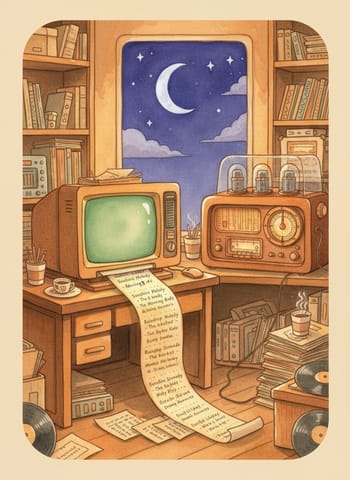
The station had an old computer in the corner. It made a list of song requests. Listeners sent the requests by phone and by mail. Every night Stellan printed the list.
وكان في المحطة حاسوب قديم في الزاوية. كان يعدّ قائمة بطلبات الأغاني. وكان المستمعون يرسلون الطلبات بالهاتف وبالبريد. وكل ليلة كان ستيلان يطبع القائمة.
One Tuesday the printer made a strange sound. A long paper came out. Stellan read it and frowned. The date at the top was Wednesday.
في إحدى ليالي الثلاثاء، أصدرت الطابعة صوتًا غريبًا. وخرجت ورقة طويلة. قرأها ستيلان وعبس. كان التاريخ في أعلاها يوم الأربعاء.
"That is wrong," he said. "Today is Tuesday."
«هذا خطأ»، قال. «اليوم هو الثلاثاء.»
Under the date were five song requests. Some names were new to him. One said, "For Mrs. Lind, who cannot sleep." Another said, "For the bus driver on Route Nine."
تحت التاريخ كانت هناك خمسة طلبات لأغنيات. وكانت بعض الأسماء جديدة عليه. مكتوب في أحدها: «إلى السيدة ليند، التي لا تستطيع النوم.» وفي آخر: «إلى سائق الحافلة على الخط التاسع.»
Stellan put the paper on his desk. He played his usual songs. He drank his coffee. He looked at the paper again and again.
وضع ستيلان الورقة على مكتبه. وشغّل أغانيه المعتادة. وشرب قهوته. ونظر إلى الورقة مرارًا وتكرارًا.
At two in the morning the phone rang.
في الثانية صباحًا رن الهاتف.
"Hello, station," said Stellan.
«ألو، المحطة»، قال ستيلان.
"Hello," said an old voice. "I am Mrs. Lind. I cannot sleep. Can you play a quiet song for me?"
«مرحبًا»، قال صوت عجوز. «أنا السيدة ليند. لا أستطيع النوم. هل يمكنك أن تشغّل لي أغنية هادئة؟»
Stellan held the paper in his hand. The first line said, "For Mrs. Lind, who cannot sleep." His mouth opened.
كان ستيلان يمسك الورقة بيده. كان مكتوبًا في السطر الأول: «إلى السيدة ليند، التي لا تستطيع النوم.» وانفتح فمه.
"Yes," he said slowly. "I have a song for you."
«نعم»، قال ببطء. «عندي أغنية لك.»
He played the first request on the list. It was a soft song with a piano. Mrs. Lind said thank you and hung up.
شغّل أول طلب في القائمة. كانت أغنية رقيقة على البيانو. وشكرته السيدة ليند وأغلقت الخط.
Stellan sat very still. Then he looked at the second request. "For the bus driver on Route Nine."
جلس ستيلان ساكنًا تمامًا. ثم نظر إلى الطلب الثاني. «إلى سائق الحافلة على الخط التاسع.»
At four the phone rang again. A man said, "Hi. I drive the early bus. Do you have a happy song for me?"
في الرابعة رن الهاتف مرة أخرى. قال رجل: «مرحبًا. أنا أقود حافلة الصباح الباكر. هل عندك أغنية مرحة لي؟»
"I do," said Stellan. He played a fast, bright song with drums. The man laughed on the phone.
«نعم، عندي»، قال ستيلان. وشغّل أغنية سريعة مبهجة بالطبول. فضحك الرجل على الهاتف.
Now Stellan was sure. The old computer knew the requests before the people called. It was a gift, or maybe a joke.
الآن تأكد ستيلان. كان الحاسوب القديم يعرف الطلبات قبل أن يتصل الناس. كان ذلك هدية، أو ربما مزحة.
He read the last request. It said, "For the night man, from the radio."
قرأ الطلب الأخير. كان مكتوبًا فيه: «إلى رجل الليل، من الراديو.»
Stellan did not understand. He played the song anyway. It was a slow song about a light at night. He listened to the whole song. Nobody called. The room was quiet. Outside, the first bird began to sing.
لم يفهم ستيلان. لكنه شغّل الأغنية على أي حال. كانت أغنية بطيئة عن ضوء في الليل. واستمع إلى الأغنية كلها. ولم يتصل أحد. وكانت الغرفة هادئة. وفي الخارج، بدأ أول عصفور بالتغريد.
At six o'clock the morning man came in. His name was Gabe. He put a bag of bread on the desk.
في الساعة السادسة جاء رجل الصباح. كان اسمه غايب. ووضع كيسًا من الخبز على المكتب.
"You look tired," Gabe said. "Any news?"
«تبدو متعبًا»، قال غايب. «هل من أخبار؟»
Stellan pointed to the long paper. "The computer made a list for tomorrow. Every song was right."
أشار ستيلان إلى الورقة الطويلة. «صنع الحاسوب قائمة للغد. وكانت كل أغنية فيها في محلها.»
Gabe read the paper. He laughed. "Old machines do strange things. Maybe it just guessed."
قرأ غايب الورقة. وضحك. «الآلات القديمة تفعل أشياء غريبة. ربما خمنت ذلك فقط.»
"Maybe," Stellan said. But he did not think so.
«ربما»، قال ستيلان. لكنه لم يكن يظن ذلك.
The next night he came to work early. The printer sat quiet. At midnight the machine made a small sound. A new paper came out.
في الليلة التالية وصل إلى العمل مبكرًا. كانت الطابعة ساكنة. وعند منتصف الليل أصدرت الآلة صوتًا خافتًا. وخرجت ورقة جديدة.
Stellan picked it up. The date said Thursday. There were three requests. The first one said, "For the night man, with thanks."
التقطها ستيلان. كان التاريخ يوم الخميس. وكانت فيها ثلاثة طلبات. وكان أولها: «إلى رجل الليل، مع الشكر.»
He smiled. He pressed the button on the microphone.
ابتسم. وضغط الزر على الميكروفون.
"Good evening," he said. "This is your night man. Here is a song for you."
«مساء الخير»، قال. «معكم رجل الليل. وهذه أغنية لكم.»