The Goose-Girl
قصة إنجليزية مجانية بالمستوى B1 لمتعلمي اللغات، يمكن قراءتها على الإنترنت بلغات عددها 8، مع إمكانية الاستماع إليها عبر تطبيق Storyteller المجاني.
A princess is sent to marry a foreign prince, but her treacherous maid steals her identity on the journey. Reduced to tending geese, the true princess waits — and the truth slowly finds its way to light.
انتهى المقطع التجريبي! استمع إلى القصة كاملة في تطبيق Storyteller المجاني. حمّل التطبيق
الصوت غير متاح الآن.
The king of a great land died, and left his queen to take care of their only child. This child was a daughter, who was very beautiful; and her mother loved her dearly, and was very kind to her. And there was a good fairy too, who was fond of the princess, and helped her mother to watch over her.
مات ملك بلاد عظيمة، وترك ملكته لترعى ابنتهما الوحيدة. وكانت هذه الابنة فتاة جميلة جدًا؛ وكانت أمها تحبها حبًّا جمًّا وتعاملها بلطف كبير. وكانت هناك أيضًا جنية طيبة تحب الأميرة، وتساعد أمها على رعايتها.
When she grew up, she was betrothed to a prince who lived a great way off; and as the time drew near for her to be married, she got ready to set off on her journey to his country. Then the queen her mother, packed up a great many costly things; jewels, and gold, and silver; trinkets, fine dresses, and in short everything that became a royal bride. And she gave her a waiting-maid to ride with her, and give her into the bridegroom’s hands; and each had a horse for the journey. Now the princess’s horse was the fairy’s gift, and it was called Falada, and could speak.
وحين كبرت خُطبت لأمير يعيش بعيدًا جدًا؛ ومع اقتراب موعد زواجها استعدت للانطلاق في رحلتها إلى بلاده. فجهزت أمها الملكة أشياء كثيرة ثمينة؛ جواهر وذهبًا وفضة، وحليًّا وثيابًا فاخرة، وباختصار كل ما يليق بعروس ملكية. وأعطتها وصيفة لتركب معها وتسلّمها إلى يدي العريس؛ وكان لكل منهما حصان للرحلة. وكان حصان الأميرة هدية الجنية، واسمه فالادا، وكان يتكلم.
When the time came for them to set out, the fairy went into her bed-chamber, and took a little knife, and cut off a lock of her hair, and gave it to the princess, and said, ‘Take care of it, dear child; for it is a charm that may be of use to you on the road.’ Then they all took a sorrowful leave of the princess; and she put the lock of hair into her bosom, got upon her horse, and set off on her journey to her bridegroom’s kingdom.
وحين حان وقت انطلاقهم ذهبت الجنية إلى غرفة نومها، وأخذت سكينًا صغيرة، وقصّت خصلة من شعرها، وأعطتها للأميرة وقالت: «احتفظي بها يا ابنتي العزيزة؛ فهي تميمة قد تنفعك في الطريق.» ثم ودّع الجميع الأميرة بحزن؛ فوضعت خصلة الشعر في صدرها، وركبت حصانها، وانطلقت في رحلتها إلى مملكة عريسها.
One day, as they were riding along by a brook, the princess began to feel very thirsty: and she said to her maid, ‘Pray get down, and fetch me some water in my golden cup out of yonder brook, for I want to drink.’ ‘Nay,’ said the maid, ‘if you are thirsty, get off yourself, and stoop down by the water and drink; I shall not be your waiting-maid any longer.’ Then she was so thirsty that she got down, and knelt over the little brook, and drank; for she was frightened, and dared not bring out her golden cup; and she wept and said, ‘Alas! what will become of me?’ And the lock answered her, and said:
وفي أحد الأيام، بينما كانوا يركبون خيولهم بجانب جدول، بدأت الأميرة تشعر بعطش شديد: فقالت لوصيفتها: «انزلي من فضلكِ، وأحضري لي ماءً في كأسي الذهبي من ذلك الجدول، فأنا أريد أن أشرب.» «كلا»، قالت الوصيفة، «إن كنتِ عطشى فانزلي بنفسكِ، وانحني عند الماء واشربي؛ لن أكون وصيفتكِ بعد الآن.» فاشتد بها العطش إلى أن نزلت، وركعت فوق الجدول الصغير، وشربت؛ فقد كانت خائفة، ولم تجرؤ على إخراج كأسها الذهبي؛ وبكت وقالت: «يا لتعاستي! ماذا سيحل بي؟» فأجابتها الخصلة وقالت:
‘Alas! alas! if thy mother knew it, Sadly, sadly, would she rue it.’
«واحسرتاه، واحسرتاه! لو علمت أمكِ بالأمر، لحزنت، لحزنت حزنًا شديدًا.»
But the princess was very gentle and meek, so she said nothing to her maid’s ill behaviour, but got upon her horse again.
لكن الأميرة كانت لطيفة ووديعة جدًا، فلم تقل شيئًا عن سوء تصرف وصيفتها، بل ركبت حصانها مرة أخرى.
Then all rode farther on their journey, till the day grew so warm, and the sun so scorching, that the bride began to feel very thirsty again; and at last, when they came to a river, she forgot her maid’s rude speech, and said, ‘Pray get down, and fetch me some water to drink in my golden cup.’ But the maid answered her, and even spoke more haughtily than before: ‘Drink if you will, but I shall not be your waiting-maid.’
ثم واصلوا جميعًا رحلتهم، حتى اشتد الحر في النهار وصارت الشمس حارقة إلى درجة أن العروس بدأت تشعر بعطش شديد مرة أخرى؛ وأخيرًا، حين وصلوا إلى نهر، نسيت كلام وصيفتها الفظ، وقالت: «انزلي من فضلكِ، وأحضري لي ماءً لأشربه في كأسي الذهبي.» لكن الوصيفة أجابتها، وتكلمت بغطرسة أشد من قبل: «اشربي إن شئتِ، لكنني لن أكون وصيفتكِ.»
Then the princess was so thirsty that she got off her horse, and lay down, and held her head over the running stream, and cried and said, ‘What will become of me?’ And the lock of hair answered her again:
عندئذ اشتد العطش بالأميرة إلى أن نزلت عن حصانها، واستلقت، ومدّت رأسها فوق مجرى الماء الجاري، وبكت وقالت: «ماذا سيحل بي؟» فأجابتها خصلة الشعر مرة أخرى:
‘Alas! alas! if thy mother knew it, Sadly, sadly, would she rue it.’
«واحسرتاه، واحسرتاه! لو علمت أمكِ بالأمر، لحزنت، لحزنت حزنًا شديدًا.»
And as she leaned down to drink, the lock of hair fell from her bosom, and floated away with the water. Now she was so frightened that she did not see it; but her maid saw it, and was very glad, for she knew the charm; and she saw that the poor bride would be in her power, now that she had lost the hair. So when the bride had done drinking, and would have got upon Falada again, the maid said, ‘I shall ride upon Falada, and you may have my horse instead’; so she was forced to give up her horse, and soon afterwards to take off her royal clothes and put on her maid’s shabby ones.
وبينما كانت تنحني لتشرب، سقطت خصلة الشعر من صدرها، وطفت مع الماء. وكانت الأميرة خائفة جدًا فلم ترها؛ لكن وصيفتها رأتها وفرحت كثيرًا، لأنها كانت تعرف التميمة؛ ورأت أن العروس المسكينة ستصير في قبضتها الآن بعد أن فقدت الشعر. فلما انتهت العروس من الشرب وأرادت أن تركب فالادا مرة أخرى، قالت الوصيفة: «سأركب أنا فالادا، وخذي أنتِ حصاني بدلًا منه»؛ فاضطرت إلى التخلي عن حصانها، وبعد قليل إلى خلع ثيابها الملكية وارتداء ثياب وصيفتها البالية.
At last, as they drew near the end of their journey, this treacherous servant threatened to kill her mistress if she ever told anyone what had happened. But Falada saw it all, and marked it well.
وأخيرًا، حين اقتربوا من نهاية الرحلة، هددت هذه الخادمة الخائنة بقتل سيدتها إن أخبرت أحدًا بما حدث. لكن فالادا رأى كل شيء، وحفظه جيدًا.
Then the waiting-maid got upon Falada, and the real bride rode upon the other horse, and they went on in this way till at last they came to the royal court. There was great joy at their coming, and the prince flew to meet them, and lifted the maid from her horse, thinking she was the one who was to be his wife; and she was led upstairs to the royal chamber; but the true princess was told to stay in the court below.
ثم ركبت الوصيفة فالادا، وركبت العروس الحقيقية الحصان الآخر، وواصلتا السير هكذا حتى وصلتا أخيرًا إلى البلاط الملكي. وكان هناك فرح عظيم بقدومهما، وأسرع الأمير لاستقبالهما، وأنزل الوصيفة من حصانها، ظانًّا أنها هي التي ستكون زوجته؛ وقيدت إلى الطابق العلوي إلى الغرفة الملكية؛ لكن الأميرة الحقيقية قيل لها أن تبقى في الفناء بالأسفل.
Now the old king happened just then to have nothing else to do; so he amused himself by sitting at his kitchen window, looking at what was going on; and he saw her in the courtyard. As she looked very pretty, and too delicate for a waiting-maid, he went up into the royal chamber to ask the bride who it was she had brought with her, that was thus left standing in the court below.
وصادف الملك العجوز في تلك اللحظة أنه لا يجد ما يفعله؛ فسلّى نفسه بالجلوس عند نافذة مطبخه ينظر إلى ما يجري، فرآها في الفناء. ولأنها كانت جميلة جدًا، ورقيقة أكثر من أن تكون وصيفة، صعد إلى الغرفة الملكية ليسأل العروس من هذه التي جاءت بها معها وتُركت تقف في الفناء بالأسفل.
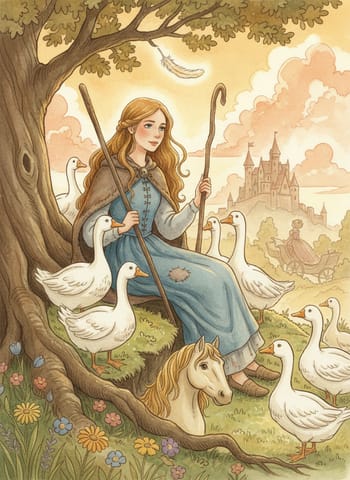
‘I brought her with me for the sake of her company on the road,’ said she; ‘pray give the girl some work to do, that she may not be idle.’ The old king could not for some time think of any work for her to do; but at last he said, ‘I have a lad who takes care of my geese; she may go and help him.’ Now the name of this lad, that the real bride was to help in watching the king’s geese, was Curdken.
«أحضرتُها معي من أجل رفقتها في الطريق»، قالت؛ «أرجوك أعط الفتاة عملًا تقوم به، حتى لا تبقى بلا شغل.» ولم يخطر ببال الملك العجوز زمنًا أي عمل لها؛ لكنه قال أخيرًا: «عندي غلام يرعى إوزّي؛ يمكنها أن تذهب وتساعده.» وكان اسم هذا الغلام، الذي ستساعده العروس الحقيقية في رعاية إوز الملك، كوردكن.
But the false bride said to the prince, ‘Dear husband, pray do me one piece of kindness.’ ‘That I will,’ said the prince. ‘Then tell one of your slaughterers to cut off the head of the horse I rode upon, for it was very unruly, and plagued me sadly on the road’; but the truth was, she was very much afraid lest Falada should some day or other speak, and tell all she had done to the princess.
لكن العروس الكاذبة قالت للأمير: «يا زوجي العزيز، أرجوك أسدِ إليّ معروفًا واحدًا.» «سأفعل»، قال الأمير. «إذًا اطلب من أحد جزاريك أن يقطع رأس الحصان الذي ركبته، فقد كان جامحًا جدًا وأزعجني كثيرًا في الطريق»؛ لكن الحقيقة أنها كانت خائفة جدًا من أن يتكلم فالادا يومًا ما ويخبر الأميرة بكل ما فعلته.
She carried her point, and the faithful Falada was killed; but when the true princess heard of it, she wept, and begged the man to nail up Falada’s head against a large dark gate of the city, through which she had to pass every morning and evening, that there she might still see him sometimes. Then the slaughterer said he would do as she wished; and cut off the head, and nailed it up under the dark gate.
ونالت ما أرادت، وقُتل فالادا الوفي؛ لكن حين سمعت الأميرة الحقيقية بذلك بكت، وتوسلت إلى الرجل أن يسمّر رأس فالادا على بوابة كبيرة مظلمة في المدينة، يجب أن تمر منها كل صباح ومساء، لكي تراه هناك أحيانًا. فقال الجزار إنه سيفعل ما تريد؛ وقطع الرأس، وسمّره تحت البوابة المظلمة.
Early the next morning, as she and Curdken went out through the gate, she said sorrowfully:
وفي الصباح الباكر من اليوم التالي، وبينما كانت هي وكوردكن يخرجان من البوابة، قالت بحزن:
‘Falada, Falada, there thou hangest!’
«فالادا، فالادا، ها أنت معلّق هناك!»
and the head answered:
وأجاب الرأس:
‘Bride, bride, there thou gangest! Alas! alas! if thy mother knew it, Sadly, sadly, would she rue it.’
«أيتها العروس، أيتها العروس، ها أنتِ تمضين هناك! واحسرتاه، واحسرتاه! لو علمت أمكِ بالأمر، لحزنت، لحزنت حزنًا شديدًا.»
Then they went out of the city, and drove the geese on. And when she came to the meadow, she sat down upon a bank there, and let down her waving locks of hair, which were all of pure silver; and when Curdken saw it glitter in the sun, he ran up, and would have pulled some of the locks out, but she cried:
ثم خرجا من المدينة، وساقا الإوز أمامهما. وحين وصلت إلى المرج جلست على ضفة هناك، وأرخت خصلات شعرها المتموجة، التي كانت كلها من الفضة الخالصة؛ وحين رآها كوردكن تلمع في الشمس ركض إليها، وكاد ينتزع بعض الخصلات، لكنها صاحت:
‘Blow, breezes, blow! Let Curdken’s hat go! Blow, breezes, blow! Let him after it go! O’er hills, dales, and rocks, Away be it whirl’d Till the silvery locks Are all comb’d and curl’d!
«هبّي أيتها النسائم، هبّي! دعي قبعة كوردكن تطير! هبّي أيتها النسائم، هبّي! دعيه يجري خلفها! فوق التلال والوديان والصخور، فلتتطاير بعيدًا حتى تُمشَّط الخصلات الفضية كلها وتُجعَّد!»
Then there came a wind, so strong that it blew off Curdken’s hat; and away it flew over the hills: and he was forced to turn and run after it; till, by the time he came back, she had done combing and curling her hair, and had put it up again safe. Then he was very angry and sulky, and would not speak to her at all; but they watched the geese until it grew dark in the evening, and then drove them homewards.
عندئذ هبت ريح قوية إلى حد أنها نزعت قبعة كوردكن؛ فطارت القبعة بعيدًا فوق التلال: فاضطر إلى أن يستدير ويركض خلفها؛ حتى إذا عاد كانت قد انتهت من تمشيط شعرها وتجعيده، وكانت قد رفعته مرة أخرى بأمان. فغضب كثيرًا وعبس، ولم يرض أن يكلمها أبدًا؛ لكنهما راقبا الإوز حتى حل الظلام في المساء، ثم ساقاه عائدين إلى البيت.
The next morning, as they were going through the dark gate, the poor girl looked up at Falada’s head, and cried:
وفي الصباح التالي، بينما كانا يعبران البوابة المظلمة، رفعت الفتاة المسكينة بصرها إلى رأس فالادا، وصاحت:
‘Falada, Falada, there thou hangest!’
«فالادا، فالادا، ها أنت معلّق هناك!»
and the head answered:
وأجاب الرأس:
‘Bride, bride, there thou gangest! Alas! alas! if thy mother knew it, Sadly, sadly, would she rue it.’
«أيتها العروس، أيتها العروس، ها أنتِ تمضين هناك! واحسرتاه، واحسرتاه! لو علمت أمكِ بالأمر، لحزنت، لحزنت حزنًا شديدًا.»
Then she drove on the geese, and sat down again in the meadow, and began to comb out her hair as before; and Curdken ran up to her, and wanted to take hold of it; but she cried out quickly:
ثم ساقت الإوز، وجلست مرة أخرى في المرج، وبدأت تمشط شعرها كما فعلت من قبل؛ وركض كوردكن إليها، وأراد أن يمسك به؛ لكنها صاحت بسرعة:
‘Blow, breezes, blow! Let Curdken’s hat go! Blow, breezes, blow! Let him after it go! O’er hills, dales, and rocks, Away be it whirl’d Till the silvery locks Are all comb’d and curl’d!
«هبّي أيتها النسائم، هبّي! دعي قبعة كوردكن تطير! هبّي أيتها النسائم، هبّي! دعيه يجري خلفها! فوق التلال والوديان والصخور، فلتتطاير بعيدًا حتى تُمشَّط الخصلات الفضية كلها وتُجعَّد!»
Then the wind came and blew away his hat; and off it flew a great way, over the hills and far away, so that he had to run after it; and when he came back she had bound up her hair again, and all was safe. So they watched the geese till it grew dark.
ثم جاءت الريح ونزعت قبعته؛ وطارت بعيدًا إلى مسافة كبيرة، فوق التلال وبعيدًا، فاضطر إلى الركض خلفها؛ وحين عاد كانت قد ربطت شعرها مرة أخرى، وكان كل شيء بأمان. فراقبا الإوز حتى حل الظلام.
In the evening, after they came home, Curdken went to the old king, and said, ‘I cannot have that strange girl to help me to keep the geese any longer.’ ‘Why?’ said the king. ‘Because, instead of doing any good, she does nothing but tease me all day long.’ Then the king made him tell him what had happened. And Curdken said, ‘When we go in the morning through the dark gate with our flock of geese, she cries and talks with the head of a horse that hangs upon the wall, and says:
وفي المساء، بعد أن عادا إلى البيت، ذهب كوردكن إلى الملك العجوز وقال: «لا أستطيع أن أبقي هذه الفتاة الغريبة لتساعدني في رعاية الإوز بعد الآن.» «لماذا؟» قال الملك. «لأنها بدل أن تنفعني لا تفعل شيئًا سوى أن تضايقني طوال النهار.» عندئذ جعله الملك يخبره بما حدث. فقال كوردكن: «حين نمر في الصباح عبر البوابة المظلمة مع قطيع الإوز، تبكي وتتحدث مع رأس حصان معلق على الجدار، وتقول:»
‘Falada, Falada, there thou hangest!’
«فالادا، فالادا، ها أنت معلّق هناك!»
and the head answers:
ويجيب الرأس:
‘Bride, bride, there thou gangest! Alas! alas! if thy mother knew it, Sadly, sadly, would she rue it.’
«أيتها العروس، أيتها العروس، ها أنتِ تمضين هناك! واحسرتاه، واحسرتاه! لو علمت أمكِ بالأمر، لحزنت، لحزنت حزنًا شديدًا.»
And Curdken went on telling the king what had happened upon the meadow where the geese fed; how his hat was blown away; and how he was forced to run after it, and to leave his flock of geese to themselves.
وواصل كوردكن يخبر الملك بما حدث في المرج الذي ترعى فيه الإوز؛ كيف طارت قبعته؛ وكيف اضطر إلى أن يركض خلفها، ويترك قطيع إوزه وحده.
But the old king told the boy to go out again the next day: and when morning came, he placed himself behind the dark gate, and heard how she spoke to Falada, and how Falada answered. Then he went into the field, and hid himself in a bush by the meadow’s side; and he soon saw with his own eyes how they drove the flock of geese; and how, after a little time, she let down her hair that glittered in the sun. And then he heard her say:
لكن الملك العجوز أمر الغلام بأن يخرج مرة أخرى في اليوم التالي: وحين جاء الصباح وقف خلف البوابة المظلمة، وسمع كيف كانت تكلم فالادا وكيف أجابها فالادا. ثم ذهب إلى الحقل، واختبأ في شجيرة عند جانب المرج؛ ورأى بعينيه كيف ساقا قطيع الإوز؛ وكيف أرخت شعرها الذي يلمع في الشمس بعد قليل. ثم سمعها تقول:
‘Blow, breezes, blow! Let Curdken’s hat go! Blow, breezes, blow! Let him after it go! O’er hills, dales, and rocks, Away be it whirl’d Till the silvery locks Are all comb’d and curl’d!
«هبّي أيتها النسائم، هبّي! دعي قبعة كوردكن تطير! هبّي أيتها النسائم، هبّي! دعيه يجري خلفها! فوق التلال والوديان والصخور، فلتتطاير بعيدًا حتى تُمشَّط الخصلات الفضية كلها وتُجعَّد!»
And soon came a gale of wind, and carried away Curdken’s hat, and away went Curdken after it, while the girl went on combing and curling her hair. All this the old king saw: so he went home without being seen; and when the little goose-girl came back in the evening he called her aside, and asked her why she did so: but she burst into tears, and said, ‘That I must not tell you or any man, or I shall lose my life.’
وسرعان ما جاءت عاصفة من الريح، وحملت قبعة كوردكن، وذهب كوردكن خلفها، بينما واصلت الفتاة تمشيط شعرها وتجعيده. رأى الملك العجوز كل هذا: فعاد إلى البيت دون أن يراه أحد؛ وحين عادت راعية الإوز الصغيرة في المساء نادى عليها جانبًا وسألها لماذا تفعل ذلك: لكنها انفجرت باكية وقالت: «لا يجوز لي أن أخبرك بذلك ولا أي رجل، وإلا خسرتُ حياتي.»
But the old king begged so hard, that she had no peace till she had told him all the tale, from beginning to end, word for word. And it was very lucky for her that she did so, for when she had done the king ordered royal clothes to be put upon her, and gazed on her with wonder, she was so beautiful.
لكن الملك العجوز ألحّ عليها إلى درجة أنها لم تنل راحة حتى حكت له القصة كلها، من البداية إلى النهاية، كلمة كلمة. وكان من حسن حظها أنها فعلت ذلك، لأنها حين انتهت أمر الملك بأن تُلبس ثيابًا ملكية، وحدّق فيها بدهشة، فقد كانت جميلة جدًا.
Then he called his son and told him that he had only a false bride; for that she was merely a waiting-maid, while the true bride stood by. And the young king rejoiced when he saw her beauty, and heard how meek and patient she had been; and without saying anything to the false bride, the king ordered a great feast to be got ready for all his court.
ثم نادى ابنه وأخبره بأن عروسه ليست إلا عروسًا كاذبة؛ فهي مجرد وصيفة، بينما تقف العروس الحقيقية بجانبه. وفرح الملك الشاب حين رأى جمالها، وسمع كم كانت وديعة وصبورة؛ ودون أن يقول شيئًا للعروس الكاذبة، أمر الملك بإعداد وليمة كبيرة لكل بلاطه.
The bridegroom sat at the top, with the false princess on one side, and the true one on the other; but nobody knew her again, for her beauty was quite dazzling to their eyes; and she did not seem at all like the little goose-girl, now that she had her brilliant dress on.
جلس العريس في الصدر، والأميرة الكاذبة على أحد جانبيه، والحقيقية على الجانب الآخر؛ لكن لم يعرفها أحد مرة أخرى، فقد كان جمالها يبهر عيونهم؛ ولم تبد على الإطلاق كراعية الإوز الصغيرة، الآن وقد ارتدت ثوبها الباهر.
When they had eaten and drank, and were very merry, the old king said he would tell them a tale. So he began, and told all the story of the princess, as if it was one that he had once heard; and he asked the true waiting-maid what she thought ought to be done to anyone who would behave thus. ‘Nothing better,’ said this false bride, ‘than that she should be thrown into a cask stuck round with sharp nails, and that two white horses should be put to it, and should drag it from street to street till she was dead.’
وحين أكلوا وشربوا وصاروا في غاية المرح، قال الملك العجوز إنه سيحكي لهم حكاية. فبدأ وحكى قصة الأميرة كلها، كأنها قصة سمعها يومًا؛ وسأل الوصيفة الحقيقية عما تظن أنه يجب أن يُفعل بكل من يتصرف هكذا. «لا شيء أفضل»، قالت هذه العروس الكاذبة، «من أن تُلقى في برميل مغروس حوله مسامير حادة، ويُربط به حصانان أبيضان، ويجراه من شارع إلى شارع حتى تموت.»
‘Thou art she!’ said the old king; ‘and as thou has judged thyself, so shall it be done to thee.’ And the young king was then married to his true wife, and they reigned over the kingdom in peace and happiness all their lives; and the good fairy came to see them, and restored the faithful Falada to life again.
«أنتِ هي!» قال الملك العجوز؛ «وكما حكمتِ على نفسكِ، فهكذا سيُفعل بكِ.» وتزوج الملك الشاب زوجته الحقيقية، وحكما المملكة بسلام وسعادة طوال حياتهما؛ وجاءت الجنية الطيبة لزيارتهما، وأعادت فالادا الوفي إلى الحياة.