The Unmentioned Sketchbook
一个面向英语学习者的免费 C1 级英语故事,可用 7 种语言在线阅读,也可以在免费的 Storyteller 应用中收听。
Packing up her dismissive grandmother's closet, a teenage artist finds a hidden sketchbook that reveals why her grandmother always discouraged art.
试听结束!在免费的 Storyteller 应用中收听完整故事。 下载应用
音频暂时无法播放。
Marnie's grandmother Agnes had never once said a kind word about the portfolio Marnie was building for art school, calling it, more than once, "a nice hobby for someone with a real plan B."
玛妮的奶奶艾格尼丝从来没有对玛妮为艺术学院准备的作品集说过一句好话,还不止一次称它是“一个不错的爱好,适合有真正备选计划的人”。
Marnie had learned to stop showing Agnes new work months ago, tired of watching real enthusiasm curdle into polite, distancing comments the moment a piece was finished. It was easier, she had decided, to simply keep that part of her life somewhere Agnes couldn't reach it.
几个月前,玛妮就学会了不再把新作品拿给艾格尼丝看,她厌倦了眼看着自己真心的热情,在作品完成的那一刻,变成客气而疏远的评语。她想,干脆把生活里的这一部分放在奶奶够不到的地方,会容易些。
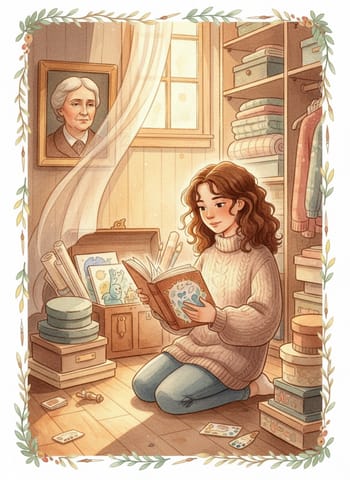
Agnes broke her hip and moved in with Marnie's parents for recovery. So it was strange, packing up her closet, to find a sketchbook wedged behind a stack of winter coats, its spine cracked from age rather than use.
艾格尼丝摔断了髋骨,搬到玛妮父母家养伤。所以,玛妮收拾她的衣柜时,在一摞冬衣后面发现了一本素描本,实在有些奇怪,那本子的书脊已经裂开,是因为年头久,而不是因为翻得多。
Inside were drawings Marnie recognized immediately as genuinely good: careful studies of hands, and of the same tree from six different angles across what must have been several seasons. There was also a self-portrait, dated on the inside cover to a year that would have made Agnes seventeen.
里面的画,玛妮一眼就看出画得确实好:有对手的细致习作,有同一棵树的六个不同角度,想必画了好几个季节。还有一幅自画像,内封上标注的年份,那时的艾格尼丝才十七岁。
Had Marnie not broken her own rule and shown Agnes anything that week, she might never have mentioned finding it at all. Instead, unable to stop herself, she brought the sketchbook to her grandmother's temporary bedroom and set it, without a word, on the blanket across her lap.
如果玛妮那一周没有打破自己的规矩、拿什么给艾格尼丝看过,她也许根本不会提起自己发现了这本素描本。可她没能忍住,还是把素描本拿到奶奶临时的卧室,一句话也没说,放在了她盖着毯子的膝头上。
Agnes went quiet for longer than Marnie had ever seen her go quiet, turning pages slowly, her expression somewhere between recognition and something closer to grief.
艾格尼丝沉默了很久,比玛妮见过的任何一次都久。她慢慢地翻着页,神情介于认出旧物和某种更接近悲伤的情绪之间。
"I was going to apply," Agnes finally said. "To a program, in the city. My mother needed help at home instead, and by the time she didn't, I'd already stopped thinking of myself as someone who drew."
“我本来打算去申请的,”艾格尼丝终于开口,“城里的一个项目。那时我母亲需要有人在家帮忙,等她不再需要的时候,我已经不再把自己当成会画画的人了。”
"You never told anyone this existed."
“您从来没告诉过任何人有这本东西。”
"What was there to tell? I stopped. People who stop don't usually bring it up."
“有什么好说的?我不画了。不画的人通常不会再提起它。”
What surprised Marnie most was not the sketchbook itself but a sudden, uncomfortable recognition. She realized where Agnes's discouragement had actually been coming from all along: not indifference, and certainly not malice, but an old, carefully buried grief dressed up as practical advice.
最让玛妮意外的不是素描本本身,而是突如其来的、令人不自在的领悟。她明白了,奶奶的泼冷水到底是从哪里来的:不是漠不关心,更不是恶意,而是一份古老的、被小心埋起来的悲伤,穿着实用建议的外衣。
"Is that why you always said art wasn't a real plan?" Marnie asked, quieter than she meant to.
“所以您才总说艺术不算真正的计划吗?”玛妮问,声音比她想的要轻。
Agnes didn't answer directly. "I didn't want you disappointed the way I was," she said eventually. "I'm starting to think I did it badly."
艾格尼丝没有直接回答。“我不想让你像我一样失望,”她过了一会儿才说,“我现在觉得,我做得很糟。”
This did not resolve into forgiveness in one conversation, nor into Agnes suddenly championing Marnie's portfolio the way Marnie might once have wished. What it did was quieter and more complicated. Marnie began to see her grandmother's discouragement as a warning shaped by real loss rather than simple disapproval. That made it easier to hear, and, somehow, harder to fully forgive, at the same time.
这并没有在一次谈话里就化为原谅,艾格尼丝也没有突然像玛妮曾经希望的那样,成为她作品集的支持者。它带来的变化更安静,也更复杂。玛妮开始把奶奶的泼冷水看作一种由真实的失去塑造出来的警告,而不是单纯的不赞成。这让那些话更容易听进去,同时又不知怎的,更难完全原谅。
She kept building her portfolio anyway. She also kept the old sketchbook, eventually, in a drawer of her own, unsure which of them it now actually belonged to.
她还是继续准备自己的作品集。后来,她也把那本旧素描本留了下来,放在自己的一个抽屉里,不确定它如今到底属于她们俩中的哪一个。