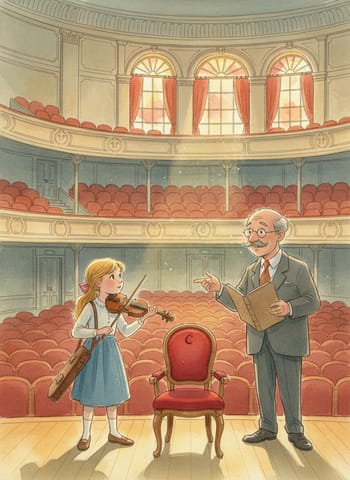
By her third concert with the youth orchestra, Noor had stopped expecting seat C7 to be occupied.
到了参加青年管弦乐团的第三场音乐会时,努尔已经不再指望C7这个座位会有人坐了。
Someone bought it every single time. The box office confirmed as much whenever she asked, waving a printout of the seating chart at her like proof of something she hadn't quite accused them of. And yet, whenever the house lights dimmed and Noor found the seat with her eyes from the second violin section, C7 sat empty, coat-less, program-less, under a small reserved sign nobody seemed willing to explain.
每一次都有人买下它。每当她去问,售票处都会确认这一点,还挥着一张座位图的打印件给她看,好像那是对什么事的证明,尽管她并没有真正指责过他们。可是,每当场灯暗下来,努尔从第二小提琴声部的位置用目光找到那个座位时,C7总是空着,没有外套,没有节目单,只立着一块小小的“已预留”牌子,似乎没有人愿意解释。
"Maybe it's superstition," her stand partner, Callum, offered after a rehearsal. "Some old patron who died in that seat and everyone's too polite to sell it."
“也许是迷信吧,”排练后,她的同谱架搭档卡勒姆说,“可能是某个老观众死在了那个座位上,大家都客气得不好意思再卖。”
Noor doubted that. What struck her as far stranger than an empty seat was how precisely it stayed the same seat, concert after concert, season after season. It was as though someone had made a decision once, and nobody since had thought to question it. She started watching the house manager, Desmond Ochoa, a quiet man who arrived early and checked every row himself before doors opened, C7 included. Pausing at that one row a beat longer than any other, he would run his hand once along the seatback before moving on, a habit Noor doubted he knew he had.
努尔不这么想。比一个空座位更让她觉得奇怪的是,它每一场音乐会、每一个演出季都分毫不差地是同一个座位。就像是有人曾经做过一个决定,此后再没有人想到过去质疑它。她开始留意剧场经理德斯蒙德·奥乔亚,一个安静的男人,总是早早到场,在开门前亲自检查每一排,包括C7。每到那一排,他都会比别的排多停留片刻,用手顺着椅背抚过一下再走开,努尔怀疑他自己都不知道有这个习惯。
Not until her fourth concert did she work up the nerve to ask him directly. She caught him in the lobby folding programs, and he didn't look surprised by the question, only tired in a way that suggested he had answered some version of it before.
直到第四场音乐会,她才鼓起勇气直接去问他。她在大厅里碰到他正在折节目单,他对这个问题并不显得意外,只是疲惫,那种疲惫说明他以前回答过某个版本的这个问题。
"That seat belonged to a teacher of mine," he said. "Mrs. Alvear. She taught cello here for thirty years, right up until she couldn't hold the bow steady anymore. Told me once that C7 had the best sightline to the cello section in the whole hall. She meant to sit there every year for the rest of her life, whether she was well enough to play or not."
“那个座位属于我的一位老师,”他说,“阿尔维尔太太。她在这里教了三十年大提琴,一直教到她再也握不稳琴弓为止。她曾经跟我说,C7是整个大厅里看大提琴声部视线最好的位置。她打算在余生每一年都坐在那里,不管她还能不能演奏。”
"Is she—" Noor started, unsure how to finish the question politely.
“她是不是……”努尔开了口,不知该怎么礼貌地把问题说完。
"She's alive. Ninety-one, in a care home two towns over. She hasn't made it to a concert in six years." Desmond folded another program before he went on. "I buy the seat every season out of my own pocket. Not because she'll ever sit in it again. Because somebody has to keep the promise she made to herself, now that she can't."
“她还活着。九十一岁,住在两个镇之外的一家护理院里。她已经有六年没能来听音乐会了。”德斯蒙德又折了一份节目单,才接着说。“每个演出季,我都自己掏钱买下那个座位。不是因为她还会再坐上去。而是因为现在她做不到了,总得有人替她守住她对自己许下的承诺。”
Noor didn't know what to say to that, so for once she didn't try. It was only later, tuning her violin before the next concert, that she understood what had actually bothered her about the empty seat all along. It was not the mystery of who had reserved it, but her own quiet assumption that an empty chair must mean nobody was watching.
努尔不知道该对此说什么,所以这一次她没有试着说。直到后来,在下一场音乐会前调小提琴的时候,她才明白,那个空座位究竟一直让她哪里不安。不是谁预订了它这个谜,而是她自己那个悄悄的假设:一把空椅子一定意味着没有人在看。
She played the second half looking toward C7 more than once that night, not because she expected it to fill, but because it no longer felt empty in the way it once had.
那天晚上,下半场演奏时,她不止一次朝C7望去,不是因为指望它会坐满,而是因为它已经不再像从前那样让人觉得空了。